Puente Inca Route Closure at Machu Picchu Runs 20 to 25 September
Peru · Travel
Key Facts
- —What happened Peru’s Ministry of Culture will close Route 1-D, the Puente Inka route inside Machu Picchu, from 20 to 25 September 2026.
- —Who is affected Only visitors holding tickets for Ruta 1-D of Circuito 1 on those six days. All other routes stay open.
- —What you get instead Those tickets are redirected automatically to Ruta 1-C, the Portada Intipunku route that leads to the Sun Gate.
- —The catch The notice offers redirection only. It sets out no refund, no rescheduling option and no reopening date for Route 1-D.
- —What the works are Emergency structural repair to a pre-Hispanic wall segment and an unstable path platform in the Puente Inka sector.
- —Why it matters Machu Picchu entry is by timed ticket tied to one numbered route, so a closed route changes the whole visit.
Peru’s Ministry of Culture is shutting one walking route inside the Machu Picchu citadel for six days. Ticket holders will be moved to another route.
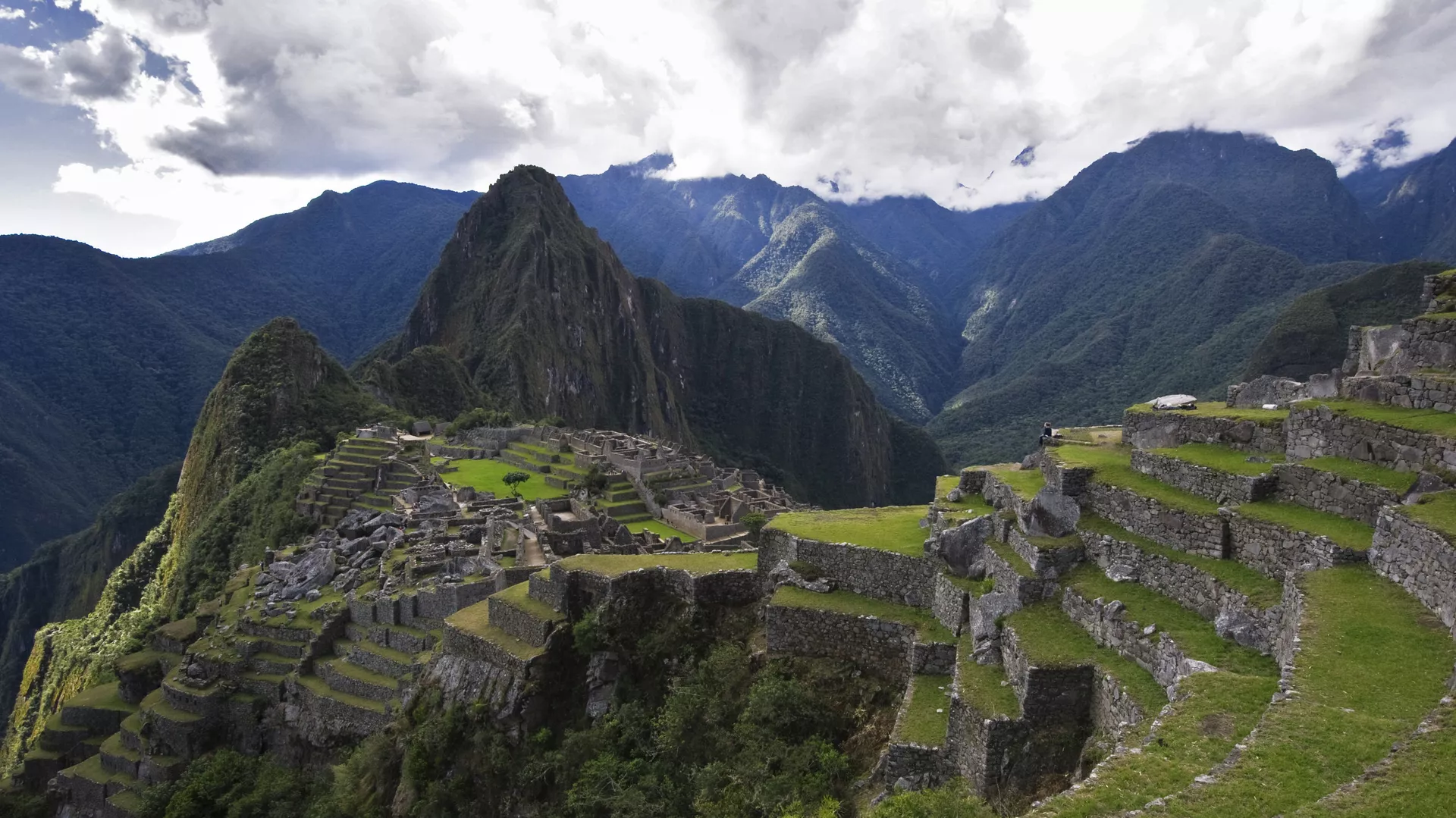
The Puente Inca route closure at Machu Picchu will shut one walking route inside the citadel for six days. It runs from 20 to 25 September 2026, both days included.
Only ticket holders for one numbered route are affected. Everyone else walks the site as normal.
What exactly is closed
Machu Picchu is not a single open field of ruins. Entry is by timed ticket tied to a numbered circuit and a numbered route within it.
The route being closed is Ruta 1-D, which runs to the Puente Inka sector. It belongs to Circuito 1, the panoramic circuit, and the sector itself lies in the eastern zone.
The ministry spells the sector Puente Inka, with a k. Peruvian newspapers mostly write Puente Inca.
This is a sector inside the ticketed archaeological site. It is not the Puente del Inca rock bridge in Mendoza, Argentina, and not a bridge on the Inca Trail approach.
Every other route stays open. The closure touches exactly one of the ten routes on sale.
That leaves 1-A, 1-B and 1-C on Circuito 1 running as usual. Circuito 2 keeps both its routes, 2-A and 2-B.
Circuito 3, the royalty circuit, is untouched as well. Its four routes are 3-A, 3-B, 3-C and 3-D.
Who announced it, and in what document
The Puente Inca route closure was announced by Peru’s Ministry of Culture through its regional arm in Cusco. That body is the Dirección Desconcentrada de Cultura, or DDC Cusco.
The notice was posted on 16 September 2026. It is headed “Comunicado — Acerca de trabajos de intervención de emergencia en sector Puente Inka”.
It is addressed to tour guides, travel agencies, tour operators and the visiting public. Andina and La República both carried it on 18 September 2026.
The DDC Cusco ordered the closure of Ruta 1-D. It and Gercetur Cusco, the regional tourism directorate, jointly urged the trade and visitors to plan ahead.
What the emergency works actually are
The notice describes emergency structural work on a segment of pre-Hispanic wall. It also covers a stretch of path platform that is showing instability.
Both sit in the Puente Inka sector. The stated objective is to safeguard the archaeological heritage and the safety of visitors.
The notice carries a caveat of its own. The schedule may be adjusted for weather or for events during the works, and any change will be announced.
What happens to a ticket already bought
The Puente Inca route closure comes with one published remedy. Visitors holding reserved or purchased tickets for Ruta 1-D during the period are redirected automatically to Ruta 1-C.
Ruta 1-C is the Portada Intipunku route, which leads to the Inti Punku, or Sun Gate. The notice describes it as enabled for the safe transit of visitors.
No refund is set out in the notice, and no rescheduling option is offered. Andina, Gestión and La República all reported the automatic redirection and mentioned neither.
Both routes sit in the same tariff band under the ministry’s 2026 resolution. The notice sets out no price adjustment for the swap.
The two routes are on opposite sides of the site. Puente Inka lies in the eastern zone, while the Intipunku route runs through the south-western zone.
So the substitute is not a nearby detour, but a walk in the other direction.
How a Machu Picchu ticket works
Tickets are sold by the Ministry of Culture through its official site, tuboleto.cultura.pe. Each ticket names a circuit, a route and an entry window.
There are ten routes across the three circuits. Circuito 1 is the panoramic circuit, Circuito 2 the classic, and Circuito 3 the royalty circuit.
The morning window runs from 6 a.m. Peru time until noon, and the afternoon from noon until 6 in the evening.
A full-day ticket covers 6 in the morning to 6 in the evening. PeruRail puts a whole visit at four to six hours.
It also publishes per-route limits. Those run to two and a half hours on the classic circuits and up to four hours on the mountain routes.
A small counter sale exists as well, at the Centro Cultural del Mincul in Machu Picchu Pueblo. Up to 1,000 tickets a day are sold there in person, for entry the following day.
That counter is open from 3 p.m. until 10 at night, Peru time, according to the rail operator PeruRail.
The soles prices are not the tourist price
This is where foreign visitors are most often caught out. The soles figures the ministry publishes are promotional tariffs, not the rate most tourists pay.
They come from Ministerial Resolution 000284-2025-MC of 1 November 2025. It was signed by Culture Minister Alfredo Luna Briceño.
The schedule is open to Peruvians, to foreign residents in Peru and to Andean Community citizens. Proof is required: a Peruvian DNI card, a carné de extranjería or a passport.
Without one of those documents, the promotional rate does not apply.
Within that schedule, the adult band is what the resolution calls the tarifa general. Routes 1-A, 3-A and 3-C fall in the S/112 (about US$33.18) band.
Every other route, including 1-C and 1-D, sits in the S/64 (about US$18.96) band. Reduced rates apply to students and to visitors aged three to 17.
Those reduced rates are S/80 (about US$23.70) in the higher band and S/32 (about US$9.48) in the lower one. Children under three enter free.
PeruRail lists Ruta 1-D as open only to visitors aged 18 and over. The reduced youth rates therefore apply on the routes that admit minors.
Soles are converted here at 3.3757 to one US dollar. That is an indicative commercial market rate quoted for 18 September 2026.
What a foreign tourist pays
Travellers who cannot show that status pay a separate, higher rate. PeruRail lists it as US$60 for adults, US$35 for students and US$21 for children.
On a route in the S/64 (about US$18.96) band, that is more than three times the promotional adult tariff.
A visitor without those papers should budget from the PeruRail figure, not from the soles tariff.
How busy the citadel will be
The closure falls inside the longest of four high-season windows in 2026. That window runs from 19 June to 2 November, at a daily cap of 5,600 visitors.
The other three windows are short. They are 1 January 2026, 2 to 5 April 2026, and 30 to 31 December 2026.
The rest of the year is capped at 4,500 visitors a day. Those caps come from Ministerial Resolution 000285-2025-MC, the companion to the tariff resolution.
Routes 1-C and 1-D are sold in high season only. So the closure lands in the busiest stretch of the calendar.
The gaps a traveller should plan around
The notice gives no reopening date for Ruta 1-D. It closes the route from 20 to 25 September 2026 and says nothing beyond that.
No contractor, budget or cost has been published. Nor does the notice give a phone number or an email for affected ticket holders.
So the Puente Inca route closure leaves one practical step to the visitor. Anyone holding a Ruta 1-D ticket for those dates should plan on walking Ruta 1-C.
More: Peru coverage, every day from The Rio Times.
Frequently Asked Questions
Which Machu Picchu routes are closed, and which are not
Only Ruta 1-D, the route to the Puente Inka sector, is closed. It belongs to Circuito 1, the panoramic circuit. Every other route remains open: 1-A, 1-B and 1-C on Circuito 1, 2-A and 2-B on Circuito 2, and 3-A, 3-B, 3-C and 3-D on Circuito 3. The closure applies from 20 to 25 September 2026, with both dates included.
What happens to a ticket already bought for Route 1-D
The Ministry of Culture notice says those visitors are redirected automatically to Ruta 1-C, the Portada Intipunku route to the Sun Gate. The notice offers redirection only. It sets out no refund and no rescheduling option, and reports by Andina, Gestión and La República mention neither. Both routes sit in the same tariff band, S/64 (about US$18.96) at the promotional adult rate for Peruvians, Peruvian residents and Andean Community citizens. Foreign tourists pay PeruRail’s listed rate of US$60 for adults. The two routes also lie on opposite sides of the site, Puente Inka in the eastern zone and Intipunku in the south-western one.
Why is the route being closed
The Ministry of Culture ordered emergency structural work on a segment of pre-Hispanic wall and on a stretch of path platform that is unstable. Both are in the Puente Inka sector. The stated purpose is to protect the archaeological heritage and the safety of visitors. The notice warns that the schedule may shift with the weather or with events during the works.
How does the Machu Picchu ticket system work
Entry is sold by Peru’s Ministry of Culture at tuboleto.cultura.pe. Each ticket carries a circuit, a numbered route within that circuit and a timed entry window of 6 a.m. to noon, noon to 6 p.m., or the full day, all Peru time. Ten routes run across three circuits, and PeruRail puts a whole visit at four to six hours. The closure of Ruta 1-D affects one of those ten routes only.
Sources: Dirección Desconcentrada de Cultura de Cusco on the closure notice, Andina on the Puente Inka sector inside the citadel, La República on the closure dates, Gestión on the closure of Ruta 1-D, Gestión on the 2026 tariffs and daily capacity, Infobae on the promotional circuit tariffs, PeruRail on foreign-tourist prices and ticket sales
This article was produced by The Rio Times’ automated newsroom system. How we use AI · Report an error
Read More from The Rio Times