In a decisive internal election this Sunday, Álvaro Delgado clinched the National Party’s (PN) nomination for President of Uruguay.
The 55-year-old captured 74% of the vote, eclipsing his competitor Laura Raffo’s 19%. This result sets the stage for the national elections on October 27.
Post-midnight, Delgado pledged to uphold President Luis Lacalle Pou’s policies before a crowd at the party headquarters.
In a strategic shift, he introduced Valeria Ripoll, a union leader from Montevideo, as his vice-presidential pick.
This addition signals a bridge to left-leaning sectors, a new direction for the party.
Delgado emphasized this moment as a pivot from government backing to pioneering hope. He confirmed support from Lacalle Pou, who will join the PN’s Senate campaign.
The party, under Lacalle Pou, garnered over 300,000 votes in the primaries, trailing only the opposition Broad Front’s 400,000.
With a background as a veterinarian and legislator, Delgado played a central role in the PN, comparable to a prime minister.
He founded the “Aire Fresco” sector within the PN and now promises transformative policies to advance Uruguay as a leader in Latin America.
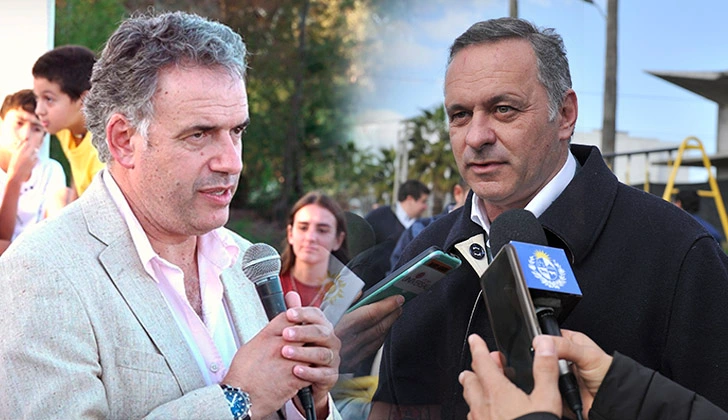
Meanwhile, the Broad Front, a former ruling party, continues to be a significant contender with its leader Yamandú Orsi choosing Carolina Cosse as his vice.
This sets a competitive tone for the upcoming elections, which might extend into a November runoff.
Presidential Contenders Set for Uruguay’s Upcoming Race
The new government must address Uruguay’s pressing issues: high crime rates, social welfare improvement, and economic relations, especially with China.
With 3.35% economic growth projected, high stakes loom. Dissatisfaction with the ruling coalition over drug crimes, welfare issues, and corruption shifts public opinion towards the left-leaning Broad Front.
Despite a low primary turnout of 36%, suggesting widespread voter disillusionment, the race remains tight.
Lacalle Pou, though popular, faces criticism over corruption and cannot seek immediate re-election.
As Uruguay heads to the polls, the election is not just about leadership but defining the nation’s path amid regional turmoil and global economic pressures.
More: Uruguay news in English, every day from The Rio Times.
This article was produced by The Rio Times’ automated newsroom system. How we use AI · Report an error
Read More from The Rio Times