Nigeria Seeks 4.6% Cut to 2026 Budget
The president wants a smaller 2026 budget with the same deficit and the same borrowing, and he has asked lawmakers to move quickly.

NIGERIA · BUDGET
President Bola Tinubu has asked the House of Representatives, the lower chamber of Nigeria’s parliament, to cut the 2026 federal budget by 3.15 trillion naira (N3.15 trillion, about US$2.3 billion at the N1,346.50 per dollar rate used in the revised fiscal framework). His letter to Speaker Tajudeen Abbas, the House’s presiding officer, is dated 20 November 2026 and was read on the floor on Tuesday 24 November.
The approved N68.323 trillion (about US$50.7 billion) budget would fall to N65.176 trillion (about US$48.4 billion), a cut of about 4.6%. The deficit and the borrowing ceiling do not change.
Key Facts
- Who: President Bola Tinubu asks Nigeria’s House of Representatives, the lower chamber, to approve a lower budget.
- What: The 2026 budget falls 4.6%, to N65.176 trillion (about US$48.4 billion).
- When: Letter dated 20 November, read in the House on Tuesday 24 November.
- Unchanged: Deficit and borrowing stay as in the April budget law.
- As of: 24 November 2026, 20:00 GMT
The president wants a smaller 2026 budget with the same deficit and the same borrowing, and he has asked lawmakers to move quickly.
Tinubu signed the 2026 Appropriation Act, the law that authorises the year’s spending, on 17 April 2026, effective from 1 April. The new bill would repeal and re-enact that law, which means replacing it with a new version, with a revised 2026 Federal Government Fiscal Framework for Nigeria.
It is not the first rewrite of a Nigerian budget in a year. In a letter dated 18 December 2025 to the same Speaker, Tinubu sought to repeal and re-enact the 2024 and 2025 budgets and to extend the 2025 spending period to 31 March 2026.
The letter says the revision aligns the budget with existing government obligations and available resources. It does not name a specific resource that fell short.
Capital spending, the money for building projects, falls to N26.232 trillion (about US$19.5 billion) from N32.2 trillion (about US$23.9 billion) in the act as signed in April. That is a drop of about N6 trillion (about US$4.4 billion), against a total cut of N3.15 trillion, so other lines must rise by roughly N2.8 trillion (about US$2.1 billion).
The deficit stays at N31.457 trillion (about US$23.4 billion), or 5.64% of gross domestic product, the size of the economy. Borrowing stays at N29.218 trillion (about US$21.7 billion), and external borrowing stays at US$7.7 billion, so the ceiling does not rise.
The US$7.7 billion of external borrowing (about N10.368 trillion at the N1,346.50 rate) finances the existing foreign-borrowing provision, the letter says. Domestic borrowing stays at N18.428 trillion (about US$13.7 billion) and foreign borrowing at N10.790 trillion (about US$8.0 billion).
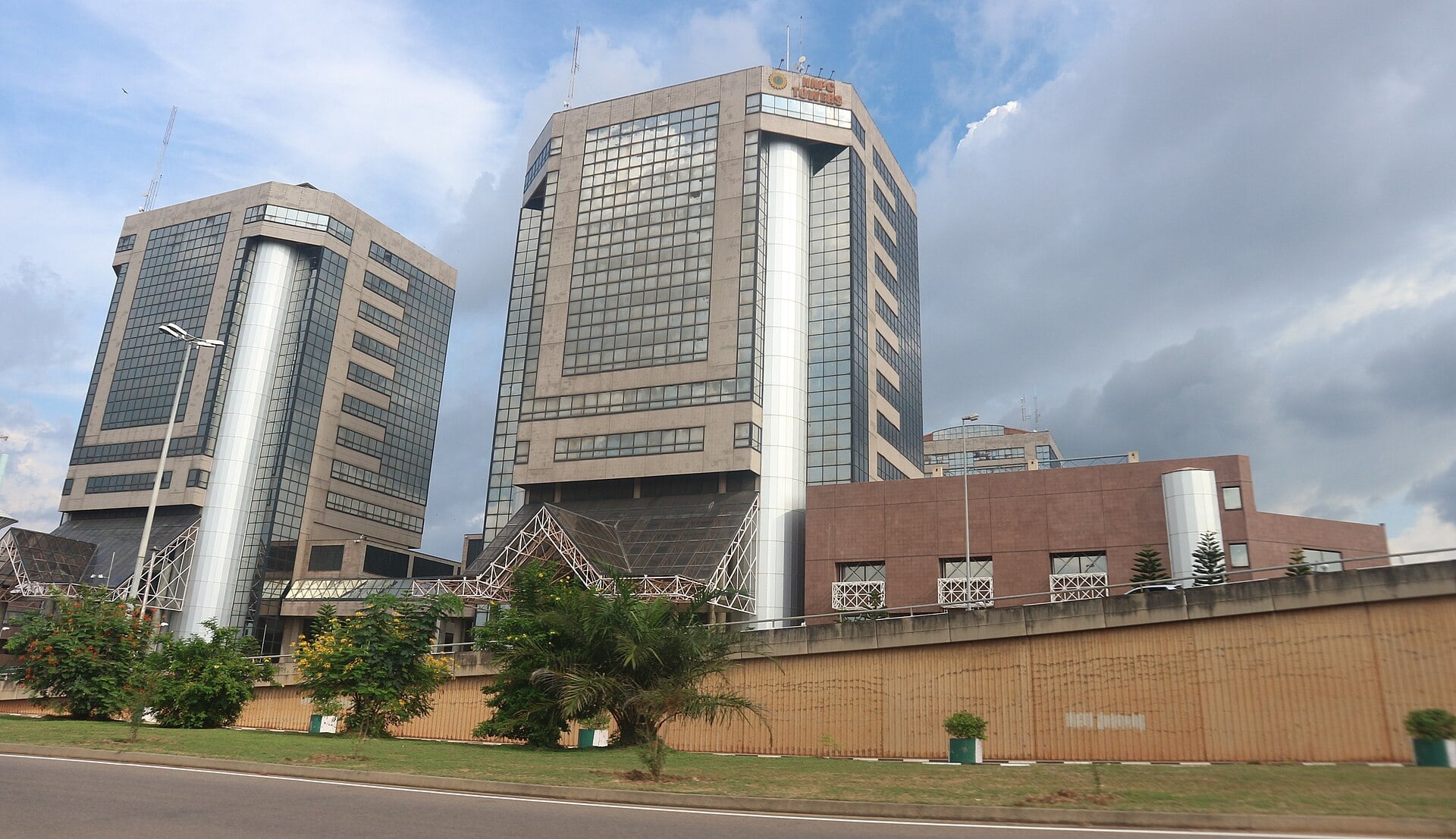
The letter gives several reasons for the rewrite. They include regularising spending by NNPC Limited, the state oil company, that was incurred for the federal government, and covering debt service, the cost of paying interest and principal on loans, that the original act under-provided.
It also covers refunding ministries and special accounts, which are dedicated government funds. It also adds some new capital and overhead items, among them critical roads, agricultural production and water-related challenges.
Tinubu says the aim is to prioritise existing commitments, improve the credibility of capital spending and keep fiscal restraint. Projected federal revenue in the revised framework is N33.720 trillion (about US$25.0 billion), including receipts from government-owned enterprises.
It is not clear whether that figure differs from the one in the April act. He asked the House for “expeditious consideration and passage” of the bill.
No date for a vote has been published. The reasons reported from the letter do not cite oil income.
In December 2025 the House backed an oil price of US$64.85 a barrel in the medium-term spending framework, the multi-year plan behind the 2026 budget, while the Senate, the upper chamber, wanted US$60. For the oil side of the gap, see Nigeria’s oil revenue against the budget.
The oil price written into the final act is not confirmed. No response from lawmakers, opposition parties or economists had been published by Tuesday evening.
The next step is House consideration of the repeal and re-enactment bill.
Frequently Asked Questions
Does Nigeria borrow more under the revised budget?
No. The letter leaves the deficit and the borrowing ceiling unchanged.
Why is the budget being cut?
The letter says it aligns spending with obligations and available resources. It gives no further cause.
What happens next?
The House must consider and pass the repeal and re-enactment bill. No vote date has been set.
Sources
Presidency letter from President Bola Tinubu to House Speaker Tajudeen Abbas, dated 20 November 2026, read on the House floor on 24 November 2026
Presidency letter to the Speaker, dated 18 December 2025, on the 2024 and 2025 budgets
2026 Appropriation Act, signed 17 April 2026
This article was produced by The Rio Times’ automated AI newsroom. Editorial responsibility: Matthias Camenzind, Publisher and Editor-in-Chief. The Rio Times also runs Ask Rio Times, which answers from 100,000+ of our own articles, the daily Latin America Power Map, and prediction-market odds on elections and markets.. How we use AI · Report an error