Elon Musk’s Neuralink intends to recruit volunteers for groundbreaking brain-computer implant trials.
The goal is to control devices with thoughts. An official statement confirms that the company has the green light for its first human test.
The PRIME study aims to help paralyzed people operate gadgets using their minds.
A robot will surgically place a thin, flexible implant into the brain. This implant will focus on a region that manages movement.
Once in place, the implant will be almost invisible. It will wirelessly send brain signals to an app. This app will decode the user’s intent to move.
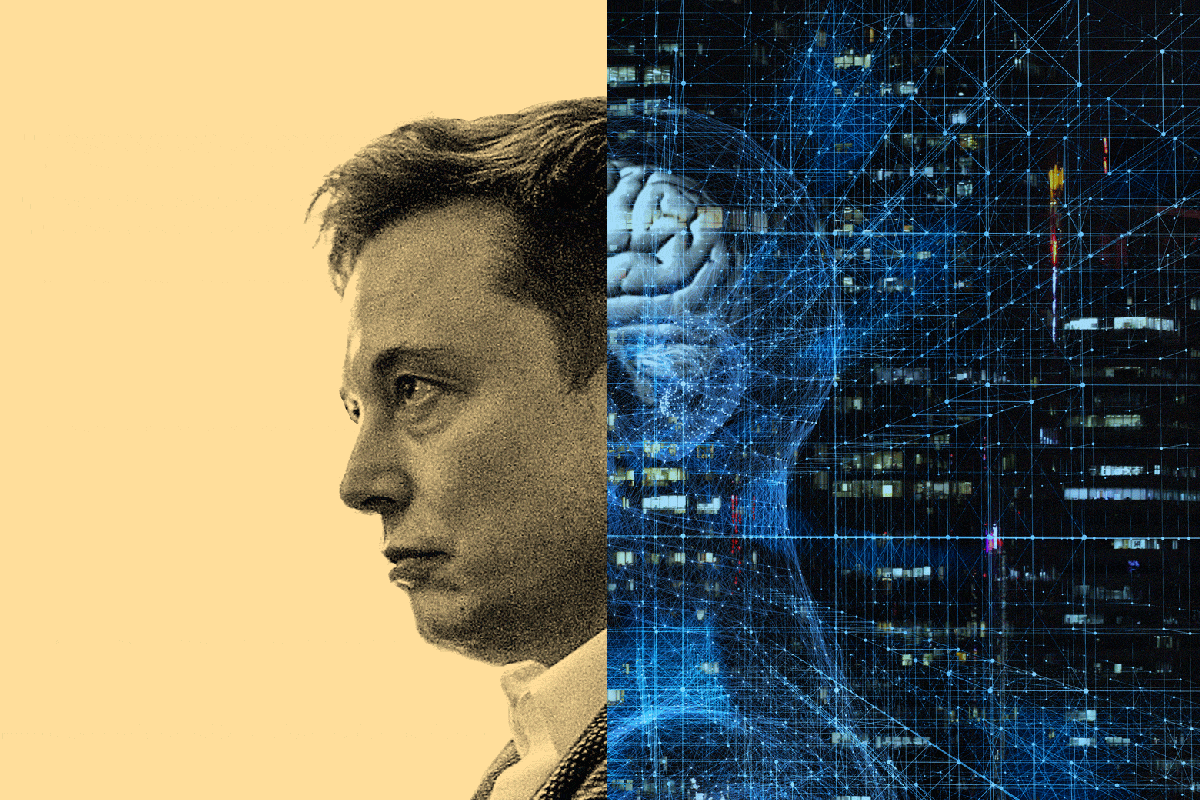
(Neuralink Starts Recruiting for Brain-Implant Volunteers)
The U.S. Food and Drug Administration (FDA) has approved this study.
The initiative marks a key step for Neuralink. Their mission is to create a universal brain interface.
It will offer autonomy to those with unmet medical needs. People with quadriplegia or ALS may qualify.
Background
The Neuralink project is undoubtedly ambitious. It promises to revolutionize the field of assistive technology.
However, ethical considerations come into play. What safeguards will protect volunteers’ mental privacy?
Similarly, what measures will prevent misuse of this tech? These concerns shouldn’t be taken lightly.
Financially, the stakes are high. The neurotech market is predicted to grow considerably. Thus, Neuralink’s success could spur industry-wide growth.
Conversely, a failure could hit investor confidence hard. It might slow down advancements in this emerging field.
Therefore, the PRIME study is much more than a clinical trial. It’s a litmus test for the public’s trust in merging humans with technology.
The implications are vast, affecting healthcare, tech investments, and ethical norms. This makes the study’s outcome a significant milestone in tech history.
This article was produced by The Rio Times’ automated newsroom system. How we use AI · Report an error
Read More from The Rio Times