Mali Gold Exports Jump 71% as Output Falls
Mali’s gold income rose sharply in 2025 while industrial output fell, and the arithmetic of price alone does not close the gap.

Mali Gold
Mali’s gold exports earned 2,750 billion CFA francs (about US$4.6 billion) in 2025, up 71% from 1,610 billion (about US$2.7 billion) in 2024, Mines Minister Amadou Keïta said. He discussed the figures on state television, according to reports on Friday 20 November 2026, and Le360 Afrique had reported them from his presentation in Bamako, the capital, on 25 October.
The jump came while industrial gold output fell 22.9%, to 42.2 tonnes from 54.8 tonnes. For investors in gold miners, that raises a question the published figures only partly answer.
Key Facts
- Who. Amadou Keïta, Mali’s Mines Minister, who presented the figures.
- What. Gold exports earned 2,750 billion CFA francs (about US$4.6 billion) in 2025, up 71%.
- Output. Industrial gold output fell 22.9% to 42.2 tonnes; the 2026 projection is 43.2 tonnes.
- Open. We could not open a statistics-office release with the annual totals.
- As of. 20 November 2026, 18:30 GMT.
Mali’s gold income rose sharply in 2025 while industrial output fell, and the arithmetic of price alone does not close the gap.
Keïta spoke on “Mali Kura Taasira”, a government information programme broadcast by the state broadcaster ORTM, according to Seneweb (a Senegalese news site) and Echos Médias (a Malian outlet). Madar (a Mauritanian news agency) and Lefaso.net (a Burkinabè site citing Maliweb, a Malian news site) reported the same numbers on 20 November.
Le360 Afrique, a Moroccan news site, reported on 25 October that Keïta had presented the export figures in Bamako the previous Thursday. We could not open a statistics-office release with the annual export totals, so the figures stand as the ministry’s presentation.
CFA francs are the West African currency pegged to the euro at 655.957 per euro. This report converts them at 598 CFA francs per US$.
Mali adopted a new mining code in 2023, Le360 reported on 16 January 2026. The government says an audit of mining companies recovered 761 billion CFA francs (about US$1.27 billion) in arrears.
The minister presented measures to clean up the sector, tighten controls and raise mining’s contribution to the economy, according to Echos Médias and Lefaso.net. Echos Médias reported that three mining operating permits have been withdrawn after serious breaches of mining, customs, environmental and social rules.
The sharpest dispute involved Loulo-Gounkoto, a large gold mining complex that Barrick, a Canadian gold miner, operates. Barrick said on Monday 24 November 2025 that it had resolved its disputes with Mali, and Reuters, the news agency, reported that provisional state administration of the complex would end.
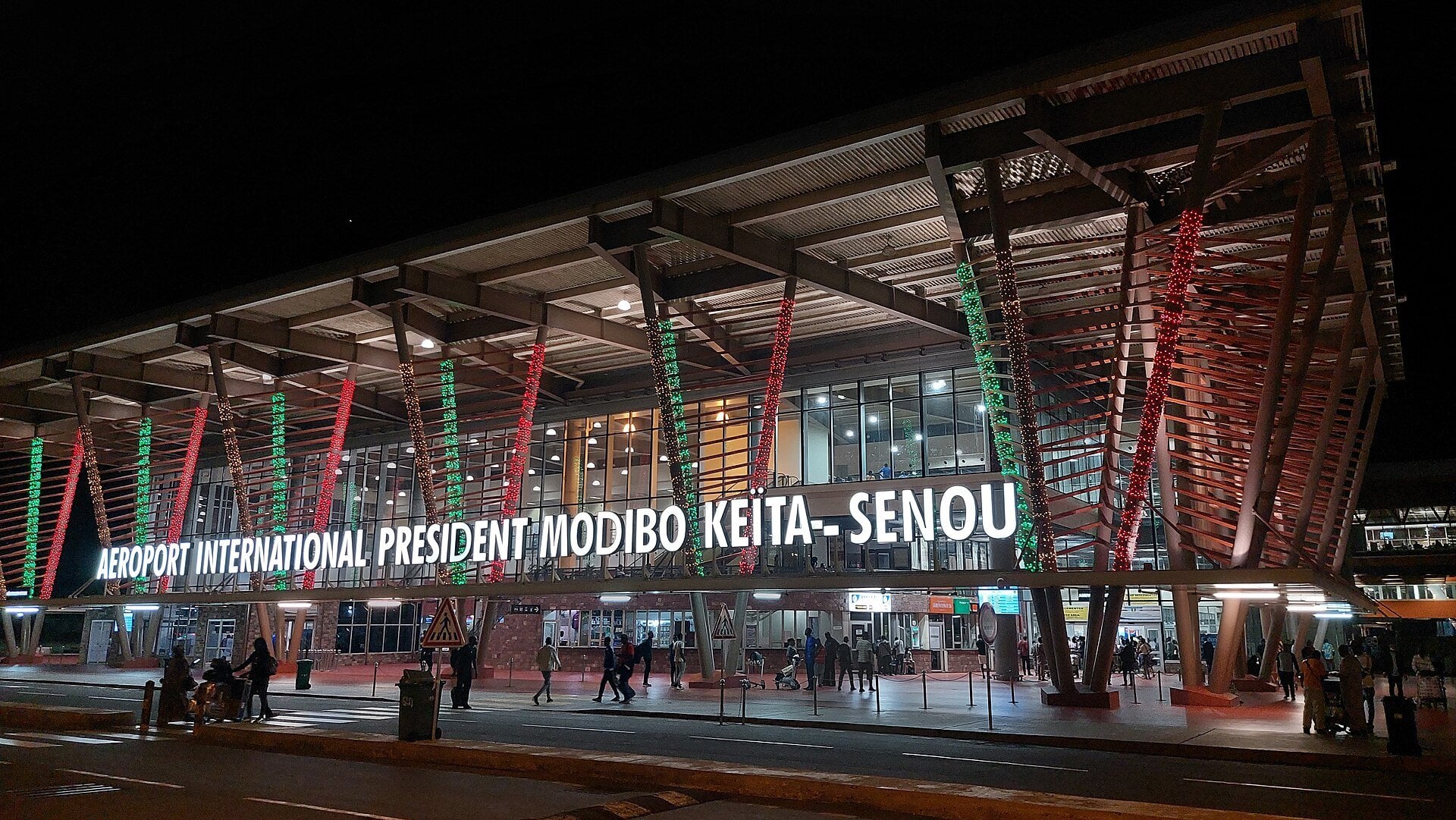
The minister attributed the fall in 2025 output to Loulo-Gounkoto, where production dropped from 22.5 tonnes to 5.5 tonnes, Madar reported. Le360 reported on 16 January 2026 that the gold miners B2Gold and Allied Gold produced 17.5 and 9.58 tonnes in 2025, while artisanal output stayed near 6 tonnes.
The World Gold Council, a gold-market research body, reported that the London Bullion Market Association (LBMA) benchmark price averaged US$3,431.5 per ounce in 2025, up 44% from US$2,386.2 in 2024. That was the highest annual average, the council said.
A price 44% higher and industrial output 23% lower would, other things equal, lift value by roughly 11% (1.44 x 0.77 = 1.11), yet export value rose 71%. A senior ministry official, speaking anonymously, told Reuters in June that record gold prices had offset the output loss, but the ministry has not published a breakdown of the rest of the gap.
Mining companies paid the state 888.5 billion CFA francs (about US$1.49 billion) in 2025, up 6.4% from 835.1 billion, according to ministry data reviewed by Reuters. Taxes made up 66.1% of that, customs duties 10.5%, and state revenue classified as “domaines”, mainly dividends, 23.3%.
Output has begun to recover in 2026: Mali produced 23.5 tonnes in the first half against a forecast of 21.2 tonnes, Le360 reported on 25 October. The Loulo mine produced 6.9 tonnes and Fekola, another large mine, 8.85 tonnes in that period, and the ministry projects 43.2 tonnes for the full year, still below the 54.8 tonnes of 2024.
The sources differ on one figure: Le360 reported in October that companies paid the state 940 billion CFA francs (about US$1.57 billion), against the 888.5 billion in the ministry data. We use the ministry data and found no reconciliation of the two.
For wider context, see our report on gold output in the first half of 2026 and B2Gold’s third-quarter results. Our Mali explained guide and Mali coverage give the background.
Frequently Asked Questions
Why did Mali’s gold exports rise when output fell?
Higher gold prices are the main reason a ministry official gave Reuters. The ministry has not published a breakdown of the rest.
Which mine caused the fall in output?
The minister pointed to Loulo-Gounkoto, the complex at the centre of the dispute with Barrick. Barrick said in November 2025 that the dispute was resolved.
What comes next for Mali’s gold figures?
The ministry has set a full-year projection for 2026 production. No date for the next official figures has been published.
Sources
Seneweb (20 November 2026) · Echos Médias (20 November 2026) · Madar (20 November 2026) · Lefaso.net (20 November 2026) · Le360 Afrique (25 October 2026) · Le360 Afrique (16 January 2026) · Reuters via Zawya (June 2026) · Reuters via Yahoo Finance (24 November 2025) · World Gold Council (Gold Demand Trends, full year 2025)
This article was produced by The Rio Times’ automated AI newsroom. Editorial responsibility: Matthias Camenzind, Publisher and Editor-in-Chief. The Rio Times also runs Ask Rio Times, which answers from 100,000+ of our own articles, the daily Latin America Power Map, and prediction-market odds on elections and markets.. How we use AI · Report an error