Liberia Secures Major EU Funding: A Look at the Global Gateway in Africa
The European Union has granted Liberia €108 million, marking a significant milestone in their long-standing partnership. This generous funding will support various initiatives in the West African nation.
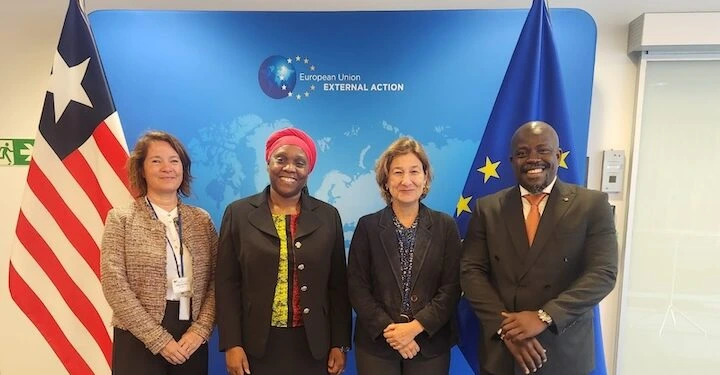
Liberia’s Foreign Minister, Sara Beysolow-Nyanti, secured the grant during her recent diplomatic visit to Brussels. Beysolow-Nyanti met with high-ranking EU officials, including Jutta Urpilainen, the Commissioner for International Partnerships.
Their discussions focused on Liberia’s development priorities and its role in regional stability. The minister outlined President Joseph N. Boakai Sr.’s “Arrest Program” and promoted Liberia’s bid for a UN Security Council seat.
The EU’s support for Liberia extends beyond this recent grant. Since the 1970s, the two entities have maintained a strong relationship.
Currently, the EU aids Liberia through two main financial frameworks: the Global Gateway and the Multiannual Indicative Program.
These initiatives target key areas such as infrastructure, the rule of law, and education. They also address maritime security and democratic participation.
The new grant will bolster these efforts and enhance Liberia’s development prospects. Liberia’s importance to the EU stems from its strategic location in West Africa.
The country’s potential for economic growth and its role in maintaining regional peace make it a valuable partner. European leaders have praised Liberia’s contributions to stability in the Mano River Union.
EU’s Engagement with Liberia
The EU’s engagement with Liberia is part of its broader strategy in Africa. Through the Global Gateway program, the EU aims to support sustainable development across the continent.
However, this initiative focuses on infrastructure, digital transformation, and climate action. The EU’s approach differs from that of other global powers active in Africa.
China’s Belt and Road Initiative has seen decreased lending to African countries in recent years. The United States has maintained its aid budgets but hasn’t significantly increased funding.
In contrast, the EU’s Global Gateway initiative offers a sustainable and value-driven alternative. It aims to provide €300 billion in investments by 2027. This approach emphasizes partnerships based on shared values and mutual benefits.
Liberia’s €108 million grant is part of a larger EU commitment to the country. Between 2021 and 2024, the EU has allocated €191 million in grant funding for Liberia.
This support builds on previous contributions, which totaled approximately $432 million between 2014 and 2023. The success of the EU’s engagement in Liberia will depend on the effective implementation of programs.
Adapting to changing needs and challenges in the region will be crucial. The EU’s commitment to sustainable development in Africa faces competition from other global powers.
In addition, as Africa becomes increasingly important on the global stage, the EU’s approach may set a new standard.
The focus on sustainable, value-driven partnerships could reshape international development cooperation. Liberia’s progress under this new grant will be closely watched by other African nations and global observers.
This article was produced by The Rio Times’ automated newsroom system. How we use AI · Report an error · Editorial responsibility: Matthias Camenzind, Editor-in-Chief
Part of our ongoing coverage
Africa: The New Scramble — the great-power contest over the continent.