La Macarena Attack Kills Three Colombian Soldiers as Dissidents Strike in Meta
Colombia · Security
Key Facts
- —What happened Explosives killed three professional soldiers in rural La Macarena, Meta, around 3:20 a.m. Colombia time on Monday 21 September 2026.
- —Who was hurt Six more troops were wounded, four at La Macarena and two in a second attack in nearby Vistahermosa, the army said.
- —Who is blamed For the La Macarena attack, the army points to the Ever Castro structure, a unit of the faction led by alias Calarcá.
- —The catch The army calls its attribution preliminary, and it has not said who carried out the Vistahermosa attack.
- —How the state responded President Abelardo de la Espriella promised the deaths would not go unpunished, and the army ordered stronger operations in Meta.
- —Elsewhere in Colombia An ambulance driver held by the ELN in Tibú was freed on 21 September 2026 after 11 days.
Explosives killed three soldiers before dawn in central Colombia, and the army blames a dissident faction it has fought all year. The president has promised the deaths will not go unpunished.
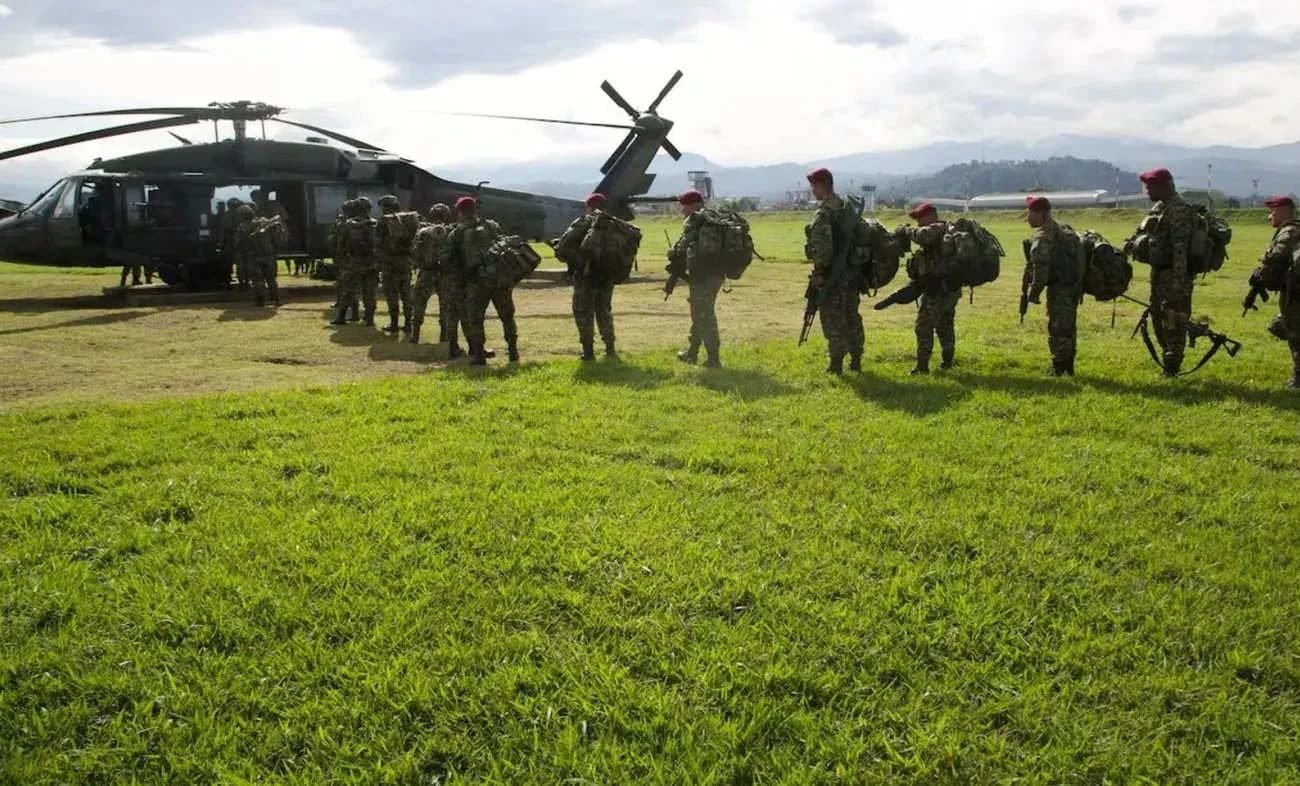
A La Macarena attack killed three Colombian soldiers before dawn on Monday 21 September 2026. Six more troops were wounded in two explosives attacks in the central department of Meta, the army said.
The army blames a dissident faction of the former FARC guerrillas, the rebels who signed a peace deal in 2016.
The dead were professional soldiers Elkin Quinto Mosquera, Jesús Adrián Ramírez Carrillo and Óscar David Monterroza Suárez, according to El Espectador. They served in Rapid Deployment Battalion No. 35, part of the army’s Rapid Deployment Force No. 12.
Two attacks before dawn
The first blast came at about 3:20 a.m. Colombia time in La Unión, a rural village in La Macarena. An explosive device detonated as the unit moved through the area, Semana and Vanguardia reported.
Troops were also hit with rifle fire and homemade explosives launched from improvised ramps, Semana reported. The wounded waited for evacuation by air because the terrain is hard to reach.
A second attack struck troops in the village of Puerto Chorizo, in neighbouring Vistahermosa. Two soldiers from Rapid Deployment Battalion No. 31 were wounded by explosives and long-range fire, according to El Colombiano and Infobae.
Task Force Omega, the unit covering Meta, Caquéta and Guaviare, said a non-commissioned officer and three soldiers were wounded at La Macarena. With the two hurt at Vistahermosa, that makes six, El Colombiano reported.
Some outlets, including El Tiempo and Infobae, reported five wounded.
Who the army blames
The army’s preliminary assessment blames the La Macarena attack on the Ever Castro structure. It belongs to the Jorge Suárez Briceño Bloc of the dissident faction led by Alexander Díaz Mendoza, known as Calarcá.
That faction calls itself the Estado Mayor de Bloques y Frentes, or General Staff of Blocs and Fronts. The army has not said who carried out the Vistahermosa attack, Infobae reported.
The army said it would report the case to the competent authorities. It wants to identify those responsible and establish whether international humanitarian law was broken, Pulzo reported.
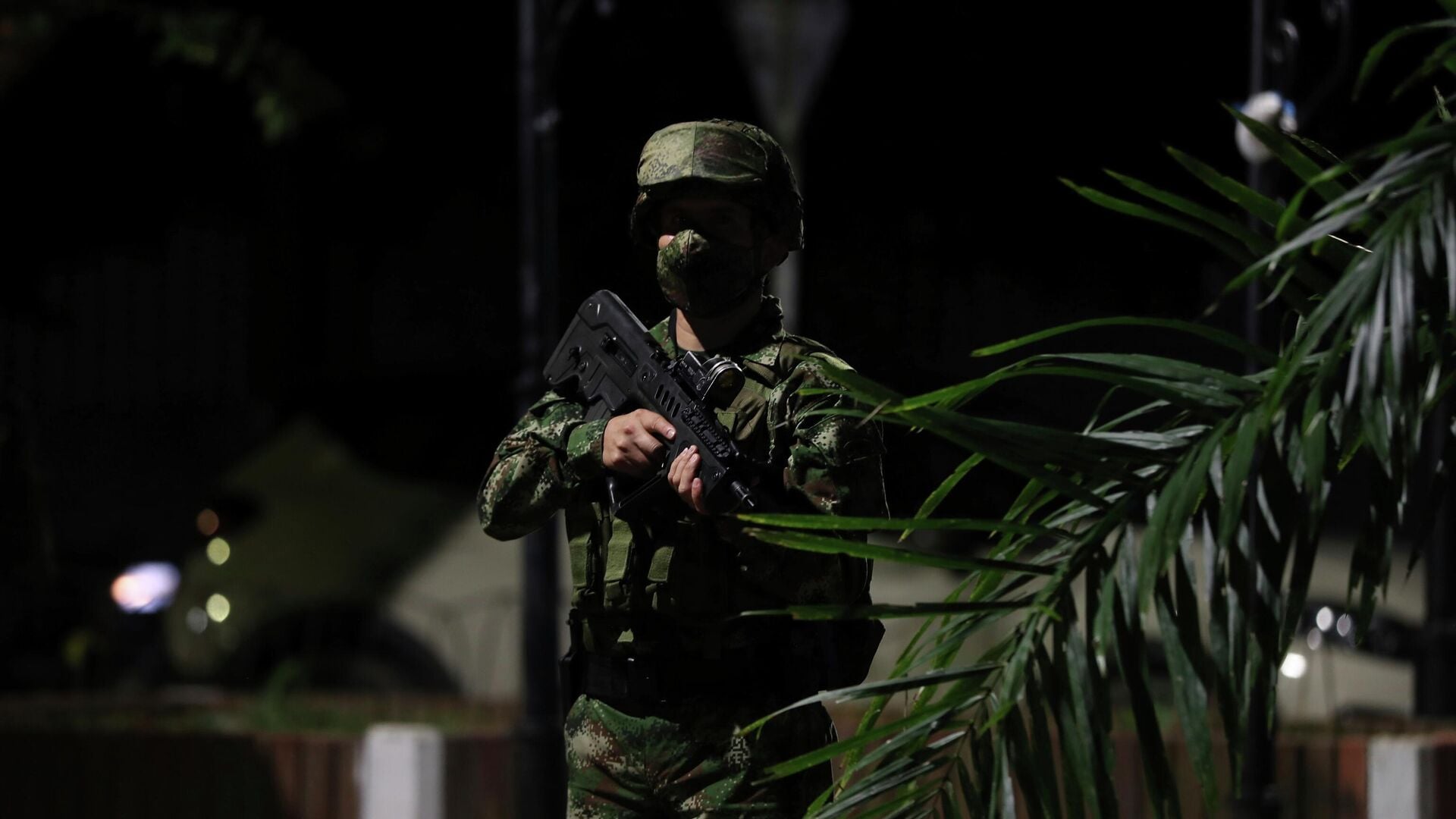
A town that has resisted the army before
La Macarena sits at the foot of the Serranía de la Macarena, a remote mountain range south of Bogotá. The Ever Castro structure has been a target there for months.
Troops captured Anderson Castro Repiso, alias Mono Huevo, in the same municipality at 2 a.m. Colombia time on 23 June 2026. Infobae described him as a commander of the structure’s armed wing.
At least 600 residents surrounded the soldiers to stop him being taken away, Infobae reported. The authorities accused him of extorting traders and ranchers and of coercing civilians.
Investigators also linked him to planning explosive attacks and to the faction’s use of drones against troops and civilians.
The president and the army respond
President Abelardo de la Espriella took a hard line after the deaths. “La sangre de nuestros soldados asesinados no quedará impune,” he said, meaning the blood of the murdered soldiers will not go unpunished.
He also said Colombia was in mourning and promised more intense operations, according to Infobae.
General José Bertulfo Soto Sánchez took command of the army in August. On X, he said he had ordered operations in Meta maintained and strengthened after three soldiers were killed and six more hurt.
A separate blow to the same faction
Two days earlier the army had announced a blow against another Calarcá unit, far to the northwest. On Saturday 19 September 2026 it reported an operation in Gómez Plata, in Antioquia department.
Troops rescued four hostages and killed two members of Structure 36, a Calarcá-aligned front. One was Stiven Martínez Rodríguez, alias Huevo, who ran a security unit tied to a commander known as La Mona.
Infobae reported he was 20 years old. Photographs and videos he posted on social media, showing weapons and his circle, helped investigators narrow their search, Euronews and Infobae reported.
An ambulance driver comes home
In the Catatumbo region on the Venezuelan border, a hostage ordeal ended the same Monday. Jeisson Adrián Bonilla Ramírez, an ambulance driver for the ESE Regional Norte hospital, was freed after 11 days.
Armed men from the National Liberation Army, or ELN, stopped his ambulance on 10 September 2026. It was on the road from Tibú to La Gabarra, heading to evacuate three youths hurt by a landmine, La FM reported.
The four other health workers on board were let go at once. His family told El Colombiano he was taken to Cúcuta, but could not say whether he was rescued or released.
On 13 September 2026 the ELN released a video recorded in captivity and used it to justify seizing him, El Tiempo reported. In it, speaking under pressure according to La FM, he said FARC dissidents of Front 33 had forced him to carry packages.
The Ombudsman’s Office, the state human rights watchdog, urged armed groups to respect medical missions. It also asked for stronger security measures in Catatumbo, El Colombiano reported.
More: Colombia coverage, every day from The Rio Times.
Frequently Asked Questions
What happened in La Macarena?
Before dawn on Monday 21 September 2026, explosives killed three professional soldiers in the rural village of La Unión, in La Macarena, Meta. Four more troops were wounded there, the army said. A second attack in nearby Vistahermosa wounded two soldiers, bringing the total wounded to six.
Who is blamed for the attacks in Meta?
The army’s preliminary assessment blames the La Macarena attack on the Ever Castro structure. It is part of the Jorge Suárez Briceño Bloc of the FARC dissident faction led by alias Calarcá. The army has not said who carried out the Vistahermosa attack.
Who is Calarcá?
Calarcá is the alias of Alexander Díaz Mendoza. He leads the Estado Mayor de Bloques y Frentes, a dissident group formed by FARC fighters who rejected the 2016 peace deal. Units loyal to him operate in Meta and Antioquia, among other regions.
Is alias Huevo the same man captured in June?
No. Alias Mono Huevo, Anderson Castro Repiso, was captured in La Macarena on 23 June 2026. Alias Huevo, Stiven Martínez Rodríguez, was killed in an operation in Gómez Plata, Antioquia, announced by the army on 19 September 2026.
Sources: El Espectador on the victims, units and army commander, El Tiempo on the two attacks in Meta, El Tiempo on the ELN video, Semana on the timing of the La Macarena attack, El Colombiano on the villages and battalions, Infobae on the president’s response, Infobae on the June capture in La Macarena, Infobae on the capture date, Infobae on the Antioquia operation, Euronews on the social-media trail, El Colombiano on the freed ambulance driver, La FM on the ambulance mission
This article was produced by The Rio Times’ automated newsroom system. How we use AI · Report an error
Read More from The Rio Times