
KENYA · ENERGY
Key Facts
- —The country Kenya is East Africa’s largest economy, and it makes most of its electricity from geothermal steam, hydropower and wind.
- —What happened KenGen’s board named Engineer Ronoh Kibet Charles chief executive on Saturday 24 October 2026, to start 1 February 2027, The Star reported.
- —The company KenGen, the Kenya Electricity Generating Company, is Kenya’s largest power producer, listed in Nairobi since 2006 and about 70% state-owned.
- —The numbers KenGen supplied 57.2% of Kenya’s electricity in the year to 30 June 2026 and earned Sh10.35 billion (about US$79.7 million) after tax.
- —The handover Peter Njenga, the current chief executive, retires, and Kibet, now head of commercial services, takes over after a transition period.
- —What it means for you KenGen new CEO investors are watching a steady succession at a utility whose profit is flat and whose dividend was cut.
- —Still open The board has not published Kibet’s contract length or a new strategy, and shares have not yet traded since the announcement.
KenGen new CEO investors are looking at a planned handover, not a shock, at the company that produces more than half of Kenya’s electricity. The board announced on Saturday 24 October 2026 that Engineer Ronoh Kibet Charles will lead KenGen from 1 February 2027, succeeding Peter Njenga, who retires.
KenGen is listed on the Nairobi Securities Exchange (NSE), and the Kenyan government owns about 70% of its shares. This guide explains what the company does and what the change could mean for shareholders and the region, following the news report on the appointment.
What KenGen Does for Kenya’s Power Supply
KenGen makes electricity and sells it to Kenya Power, the national utility that buys power in bulk. Capital FM reported on 7 September 2026 that KenGen supplied 8,975 gigawatt-hours (GWh) in the year to June 2026, or 57.2% of supply.
The regulator, the Energy and Petroleum Regulatory Authority (EPRA), reported a similar split for July to December 2025, according to The Kenya Times. KenGen accounted for 57.49% of the energy Kenya Power bought, down from 59.94% a year earlier.
Geothermal and Hydro: KenGen’s Two Engines
KenGen’s results release of 31 October 2025 put its installed capacity at 1,786 megawatts (MW), with hydropower at 826 MW and geothermal at 754 MW. Wind adds 25.5 MW, and thermal plant makes up the rest of the fleet.
Geothermal power comes from steam drawn from hot rock beneath the Rift Valley at Olkaria, near Lake Naivasha, and it runs day and night. Hydropower comes from dams on the Tana River, including Masinga, Kamburu, Gitaru, Kindaruma and Kiambere.
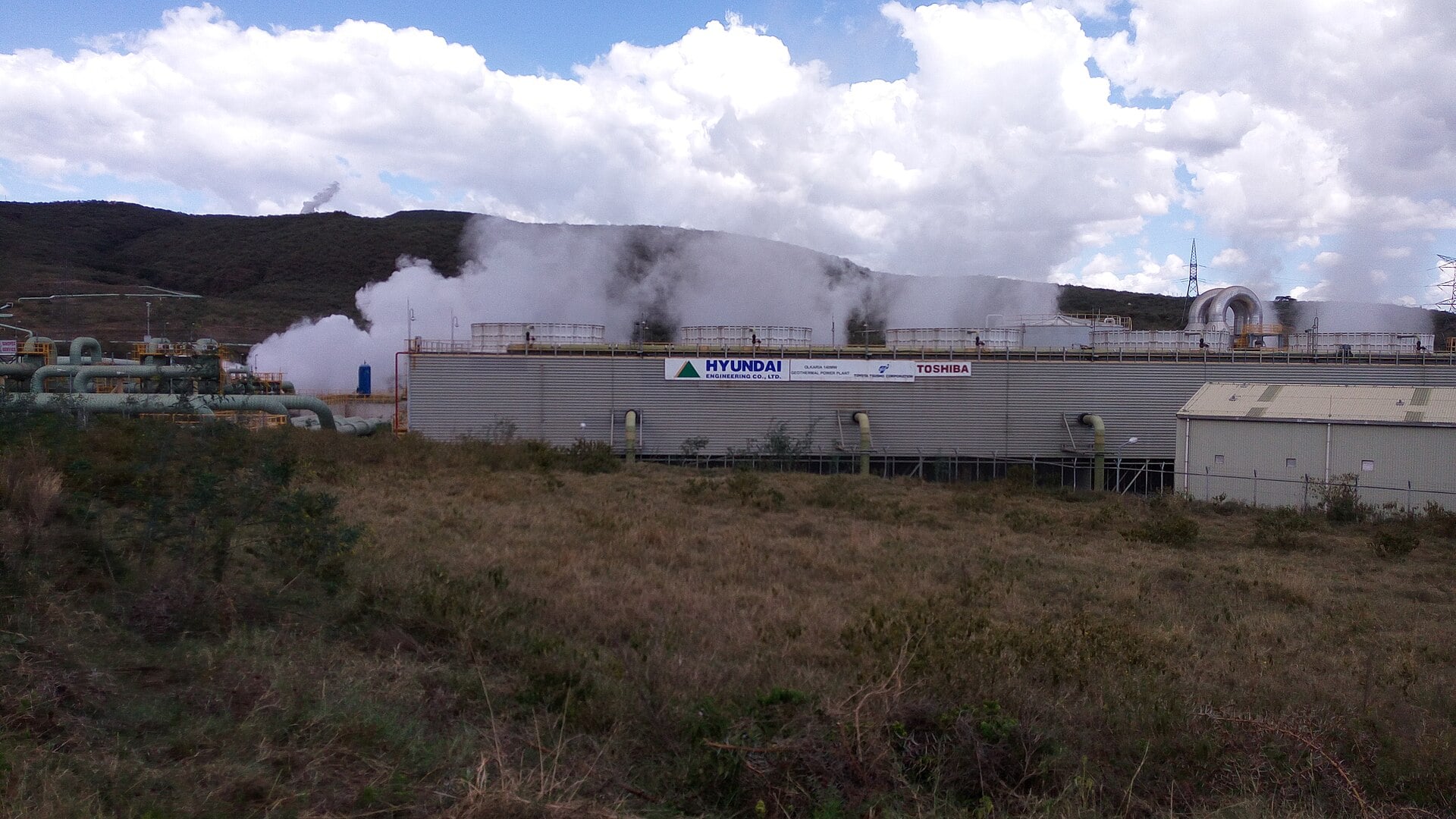
Who Owns KenGen and How Its Shares Trade
KenGen began in 1954 as the Kenya Power Company, and its website says the government sold 30% of its stake in a 2006 public offering. That sale listed it on the NSE, and the government kept about 70% of the shares, as KenGen restated in March 2025.
KenGen proposed a dividend of Sh0.75 (about US$0.006, at 129.85 shillings to the dollar on 24 October 2026) a share, down from Sh0.90 (about US$0.007). Shareholders vote on the dividend at the annual meeting on 29 October, The Standard reported.
Who Is Ronoh Kibet and What Changes on 1 February 2027
Kibet is KenGen’s general manager for commercial services, in charge of energy markets, investments, new business, partnerships, marketing and sustainability. KenGen says he has more than 17 years of experience in geothermal development and project delivery, and he helped advance the Olkaria Green Energy Park.
He holds engineering and project management degrees from the Jomo Kenyatta University of Agriculture and Technology and completed leadership training at Harvard Business School. Citizen Digital reported that Njenga, who was named in August 2023 after leading infrastructure projects at Kenya Power, will retire.
What KenGen New CEO Investors Should Watch
Profit after tax was Sh10.35 billion (about US$79.7 million) in the year to June 2026, against Sh10.48 billion (about US$80.7 million) a year earlier. The Standard said lower finance income, down from Sh4.1 billion (about US$31.6 million) to Sh2.9 billion (about US$22.3 million), was a main factor.
Borrowings fell by Sh12.2 billion (about US$94 million) to Sh97.1 billion (about US$748 million). With demand at a record 2,549 MW on 15 July 2026, KenGen new CEO investors want Kibet to grow output and keep paying.
What the Change Means for Regional Energy
KenGen sells geothermal know-how abroad, with work in Tanzania, Eswatini and Bhutan, and the board credited Njenga with growing that business. The board also credited Kibet with expanding international consultancy services, so the business passes to a man who helped build it.
Kenya also buys power across its borders, with Ethiopia supplying 9.88% of Kenya Power’s purchases and Uganda 2.11% in July to December 2025. Those Ethiopian imports compete with KenGen for grid share, so the new chief inherits a market where KenGen’s slice slipped from 59.94% to 57.49%.
What It Means for US Readers
KenGen shares trade on the NSE in Kenyan shillings, so US holders carry currency risk as well as company risk. The government holds about 70% of the shares, so state decisions on dividends and appointments weigh heavily on minority holders.
KenGen buys plant, turbines and drilling services, so its leadership matters to suppliers and lenders that work with it. KenGen aims to add about 5,540 MW of renewable capacity by 2034, more than three times its current 1,786 MW fleet.
What Is Not Known
KenGen has not said how long Kibet’s contract runs, what he will be paid or whether he will change strategy. Shares have not traded since the news broke on a Saturday, so the market’s verdict waits for the NSE to reopen on Monday 26 October.
The dividend vote on 29 October will take place under Njenga, and the handover timetable before 1 February is not public. KenGen new CEO investors must wait for the board to give Njenga’s exact retirement date.
More: Kenya news in English, every day from The Rio Times.
Frequently Asked Questions
Who is KenGen’s new chief executive?
Engineer Ronoh Kibet Charles, currently KenGen’s general manager for commercial services, was named managing director and chief executive. For KenGen new CEO investors the key date is 1 February 2027, when he takes over from Peter Njenga.
How much of Kenya’s electricity does KenGen produce?
KenGen supplied 57.2% of the electricity delivered to Kenya’s grid in the year to 30 June 2026, The Standard reported. EPRA data for July to December 2025 put the share at 57.49%.
Who owns KenGen?
The Kenyan government owns about 70% of KenGen, according to the company’s own dividend announcement of March 2025. The rest is held by investors who bought shares on the Nairobi Securities Exchange.
What should KenGen new CEO investors watch first?
KenGen new CEO investors should watch the 29 October annual meeting, the first NSE trading after the announcement and any strategy update from Kibet. Profit of Sh10.35 billion (about US$79.7 million) and a dividend of Sh0.75 (about US$0.006) are the current benchmarks.
Why does geothermal matter for Kenya?
Geothermal steam gives KenGen power around the clock, unlike hydropower, which depends on rain. KenGen’s geothermal fleet was 754 MW in its October 2025 results release.
Sources: KenGen (kengen.co.ke): results release and company pages, 31 October 2025; The Star: KenGen appoints Ronoh Kibet as new CEO, 24 October 2026; The Standard: KenGen Board appoints Ronoh Kibet as new CEO, 24 October 2026; Citizen Digital: KenGen appoints Ronoh Kibet to succeed Peter Njenga, 24 October 2026; The Standard: KenGen cuts dividend by 16pc, 7 September 2026; Capital FM: KenGen profit slips on lower finance income, 7 September 2026; The Kenya Times: EPRA producer shares, 24 March 2026; KenGen (kengen.co.ke): March 2025 dividend release, 12 March 2025; KenGen (kengen.co.ke): who we are, 24 October 2026.
This article was produced by The Rio Times’ automated newsroom system. How we use AI · Report an error · Editorial responsibility: Matthias Camenzind, Editor-in-Chief