KENYA · FOREIGN PLAYERS
Key Facts
- —The country Kenya is an East African republic on the Indian Ocean, home to the UN’s African headquarters, led by President William Ruto, with elections due in August 2027.
- —The lenders In June 2026 the World Bank’s IDA held 29.9% of Kenya’s foreign public debt, Eurobond investors 23.9%, China 10.9% and the IMF 7.8%.
- —The investors Foreign direct investment hit a record US$3.2 billion in 2025, UNCTAD figures show. A court voided the state’s Safaricom sale to Vodacom in September 2026; appeals are pending.
- —The diaspora Kenyans abroad sent home US$5.04 billion in 2025, 54% of it from the United States, central bank data show.
- —Security US forces use Manda Bay near Somalia, Britain keeps an army training unit near Nanyuki, and Nairobi hosts the UN’s headquarters in Africa.
- —What it means for you American taxpayers, garment importers and tech firms all have money riding on Kenya, including a US$1.6 billion health deal.
- —Still open A new IMF programme, the Safaricom appeal and the 2027 election could shift who holds sway in Kenya.
Kenya’s foreign partners, from the World Bank to US troops and Kenyans abroad, shape a country Washington treats as a key ally. This guide maps who lends, invests, trains soldiers, gives aid and sends money home, as of October 2026.
It also sets out what each of them wants in return.

Who Brings Money Into Kenya
Kenya’s public debt stood at KSh13.01 trillion (about US$100.5 billion) in June 2026, or 68.5% of GDP, the National Treasury says. Foreign lenders held KSh5.68 trillion (about US$43.9 billion) of it.
This guide converts at KSh129.50 to the US dollar, the Treasury’s own end-June 2026 rate. The shilling traded close to that level in October 2026.
Foreign direct investment, money that builds or buys businesses, hit a record US$3.2 billion in 2025, up 37.7% on 2024. The figures come from UNCTAD, the UN trade agency, as reported by Business Daily, a Nairobi paper.
Kenyans living abroad sent home even more: US$5.04 billion in 2025, according to the Central Bank of Kenya (CBK). That makes the diaspora a bigger source of dollars than all foreign direct investment.
President William Ruto’s government deals with Washington, Beijing, European capitals and the Gulf at the same time. Under the constitution, his term runs to the general election due in August 2027.
For the diplomatic side of this story, see Kenya Geopolitics Explained. For the domestic players, see who runs Kenya’s economy and the Kenya news page.
The Lenders: World Bank, Bondholders, China and the IMF
The Treasury’s June 2026 public debt bulletin lists who holds Kenya’s foreign debt. The figures are provisional and include loans the state guarantees.
Multilateral lenders such as the World Bank held 54.6% of the total, commercial creditors 27.1% and individual governments 17.1%.
China and the Railway Debt
Kenya’s debt to China is shrinking. Kenya owed Beijing about a fifth less in June 2026 than in 2021, The Star, a Nairobi daily, reported.
The best-known project China financed is the Standard Gauge Railway, which links the port of Mombasa with Nairobi. In July 2025, the Export-Import Bank of China agreed to convert three railway loans from US dollars into yuan.
Yuan debt made up 11.7% of Kenya’s foreign debt by currency in June 2026, the Treasury says.
The Missing IMF Programme
In March 2025, the IMF said the final review of Kenya’s loan programme would not go ahead. Kenya had formally asked for a new programme, the IMF added.
The old programme, worth about US$3.6 billion, had run since April 2021, Capital FM reported. Talks on a successor have been slowed by governance and corruption concerns, People Daily reported in October 2026.
CBK governor Kamau Thugge said on 8 October 2026 that the 2026/27 financing plan left out IMF money. A deal would still matter to the Treasury because IMF loans are cheap, he said.
- International Development Association (IDA), the World Bank’s arm for poorer countries: KSh1.70 trillion (about US$13.1 billion), or 29.9%.
- International sovereign bonds, known as Eurobonds and sold to investors abroad: KSh1.36 trillion (about US$10.5 billion), or 23.9%.
- China: KSh616.9 billion (about US$4.8 billion), or 10.9%.
- African Development Bank group: KSh566.6 billion (about US$4.4 billion), or 10.0%.
- International Monetary Fund (IMF): KSh442.6 billion (about US$3.4 billion), or 7.8%.
- Japan: KSh137.9 billion (about US$1.06 billion), counting loans the state guarantees.
- France KSh101.0 billion (about US$780 million), Germany KSh54.1 billion (about US$418 million), United States KSh8.1 billion (about US$62 million).
Foreign Companies and Investors
Investors put money into Kenya’s digital economy and renewable energy in 2025, Business Daily reported. The Star named geothermal power, data centres, fintech and factories serving the region.
Vodacom and Safaricom
Safaricom runs M-Pesa, the phone-based money service used across Kenya. On 30 June 2026, Britain’s Vodafone said its African subsidiary, Vodacom Group, had raised its Safaricom stake to 55%.
Vodacom paid the Kenyan government KSh204 billion (about US$1.58 billion) for 15%, and Vodafone KSh68 billion (about US$525 million) for 5%. Vodafone said the deal gave its group control of “one of Africa’s most successful telecoms and financial services businesses.”
In September 2026, three High Court judges declared the government’s sale null and void and ordered the shares returned, Citizen Digital reported. The Treasury and Vodacom both said they would appeal, according to Capital FM.
Microsoft and G42
In May 2024, Microsoft and G42, an artificial-intelligence company from the United Arab Emirates, announced an initial US$1 billion plan for Kenya. Its centre was a data centre at Olkaria, run on geothermal power.
By May 2026 the plan had hit Kenya’s power limits, Ruto said, according to Data Center Dynamics. “To switch on that one data center, we would need to shut off power for half the country,” he said.
Gulf Oil on Credit
Since 2023, Kenya has bought fuel through a state-to-state deal with Aramco Trading Fujairah, ADNOC Global Trading and ENOC. ENOC is the Emirates National Oil Company, and the suppliers give Kenya 180 days to pay.
NTV Kenya reported in December 2024 that the deal had helped shield the shilling. In the year to June 2026, more than a quarter of its cargoes loaded in India and Europe instead.
Gulf suppliers moved loading points after the US and Israeli war with Iran disrupted the region, Business Daily reported in September 2026.
Adani and the Limits of Openness
Openness has limits. In November 2024, Ruto ordered the cancellation of a planned airport expansion and a signed power-line contract involving India’s Adani Group.
He cited information from “our investigative agencies and partner nations,” the Daily Nation reported.
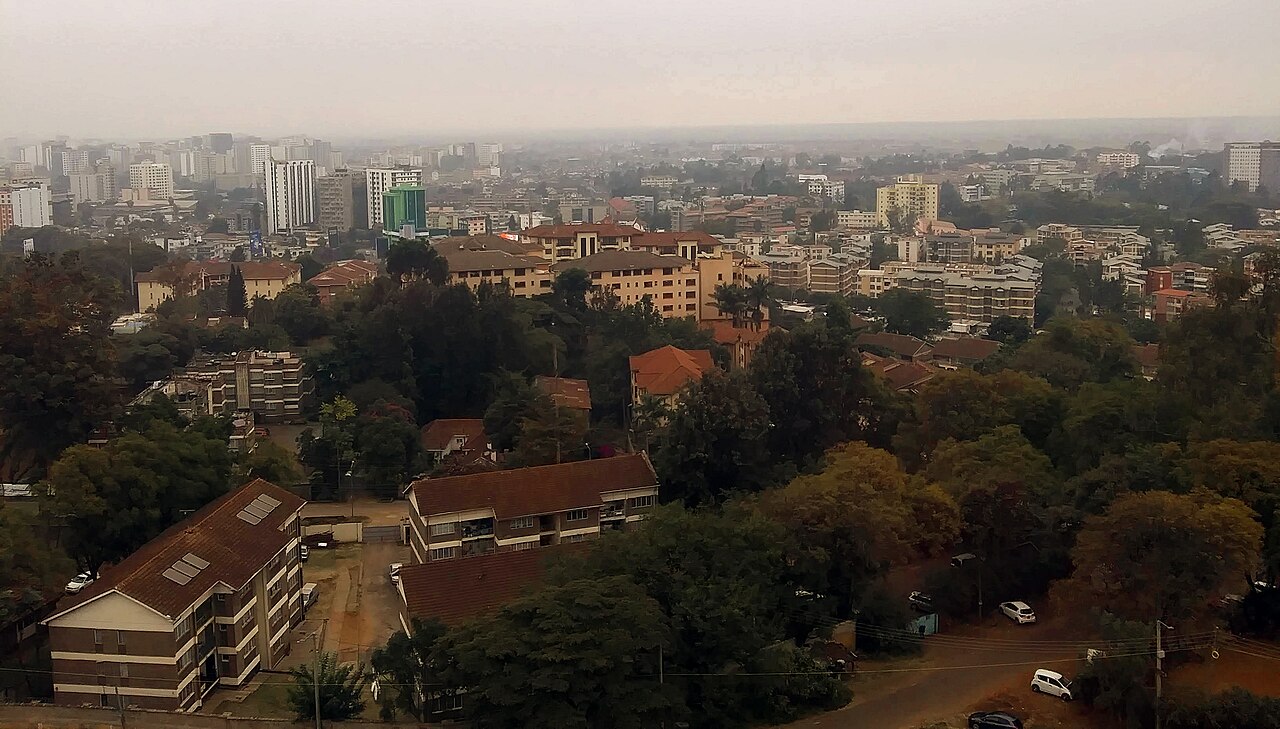
The United States: Security Partner, Market and Donor
On 24 June 2024, President Joe Biden made Kenya a major non-NATO ally, a US status for close military partners. For Washington, the main draw is Kenya’s border with Somalia.
US forces operate from Manda Bay, an airfield on the Kenyan coast near the Somali border, and from nearby Camp Simba. Fighters from al-Shabaab, the Somali militant group, overran the Manda Bay airfield in 2020, killing a US soldier and two contractors.
Work on a 10,000-foot runway expansion there began on 29 January 2026. Stars and Stripes, the US military newspaper, said the State Department paid the US$71 million cost.
Trade is the second strand. President Donald Trump signed a law extending AGOA, the US duty-free scheme for African goods, to 31 December 2028, People Daily reported.
US goods imports from Kenya totalled US$862.2 million in 2025, the US Census Bureau says. Clothing makes up most of the AGOA trade, and accredited firms employed 82,026 people in 2025, Kenya’s statistics bureau says.
Health is the third. On 4 December 2025, Kenya signed the first health deal under the America First Global Health Strategy, the State Department says.
Secretary of State Marco Rubio said the US would invest US$1.6 billion in health over five years. Kenya also led the UN-backed police mission against Haiti’s gangs from June 2024.
The last Kenyan contingent came home on 28 April 2026, People Daily reported. The mission handed over to a UN-mandated Gang Suppression Force, Dawan Africa reported in September 2026.
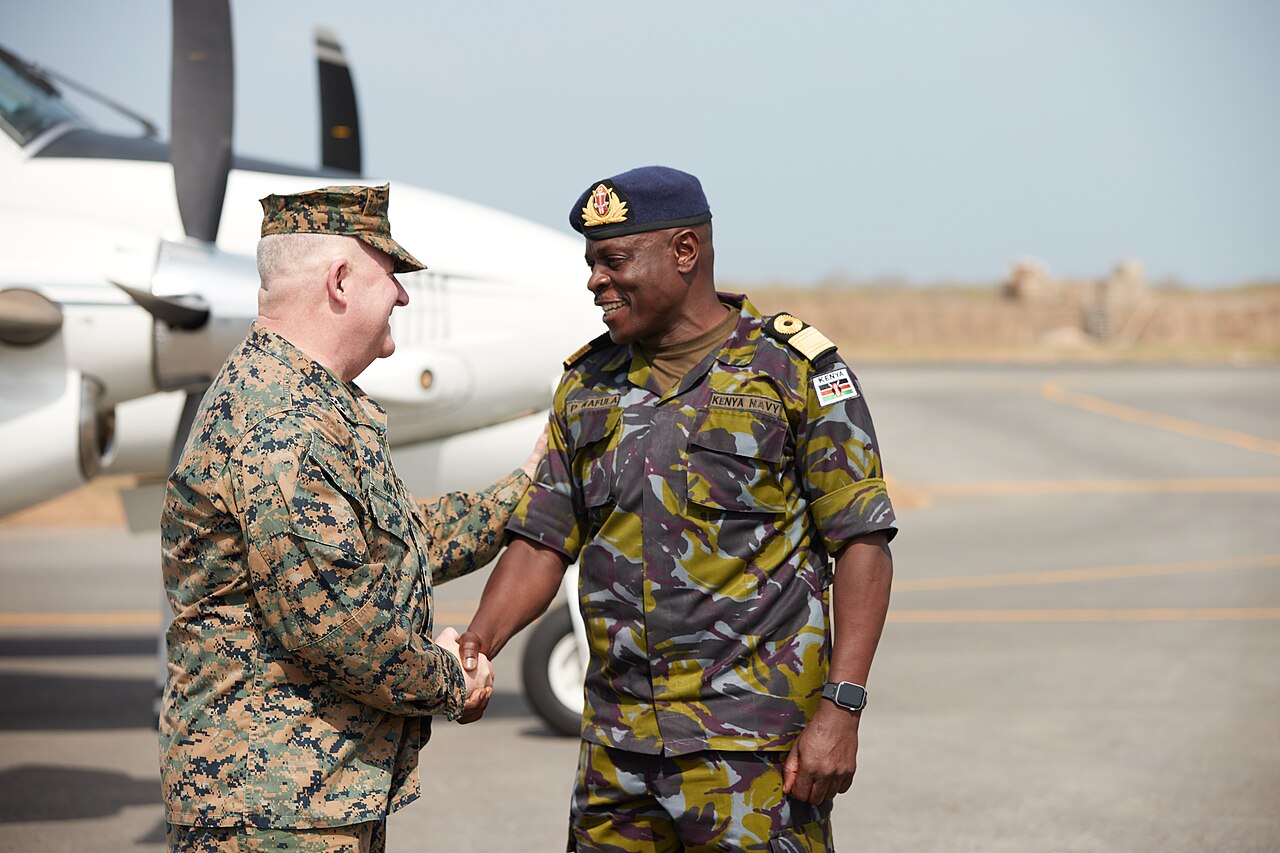
Britain, Europe and Japan
Britain runs the British Army Training Unit Kenya (BATUK) in the Laikipia region around the town of Nanyuki. Kenya was expecting about 1,500 British soldiers for an exercise in September 2026.
In July 2026, that exercise, Haraka Storm, was moved out of Kenya after attempts to secure training licences failed. The dispute turned on legal jurisdiction over British personnel and their immunity, Citizen Digital reported.
European governments are smaller lenders. In June 2026, Kenya owed France KSh101.0 billion (about US$780 million) and Germany KSh54.1 billion (about US$418 million).
It also owed KSh27.5 billion (about US$212 million) to the European Investment Bank, the EU’s lending arm. Japan held KSh137.9 billion (about US$1.06 billion), including loans the state guarantees.
JICA, Japan’s aid agency, lists its Kenya priorities as economic infrastructure, industry, farming, universal health coverage, the environment and regional stability.
Aid, NGOs and the UN in Nairobi
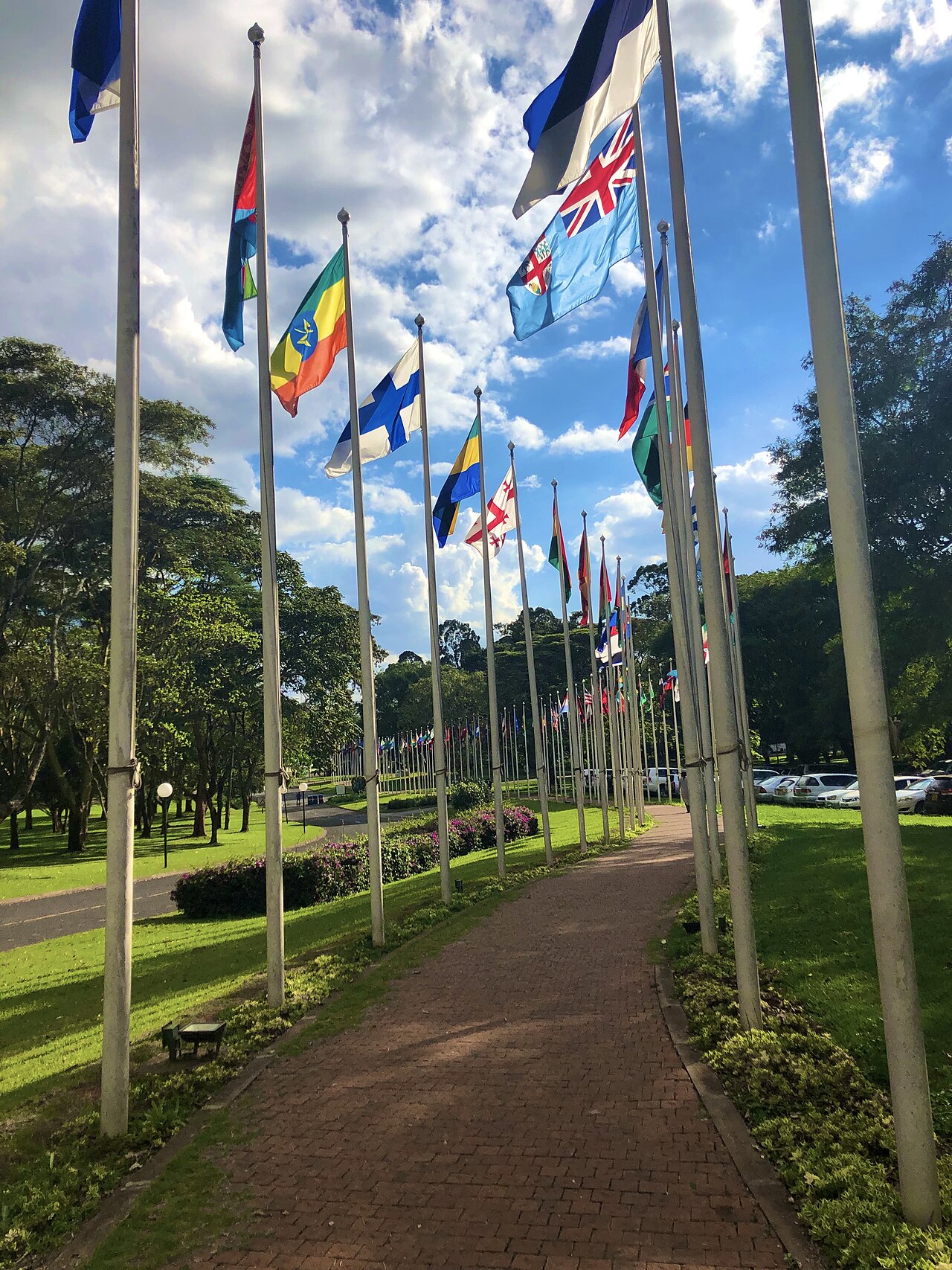
Nairobi is the seat of the United Nations Office at Nairobi, which describes itself as the UN headquarters in Africa. It is home to UNEP, the UN Environment Programme, and to the headquarters of UN-Habitat, the agency for cities.
Charities and NGOs answer to the Public Benefit Organisations Regulatory Authority, under a law that took effect on 14 May 2024. In May 2026, the government moved existing NGOs onto the new framework automatically, People Daily reported.
Washington is changing how it gives. At the December 2025 signing, Rubio said the US was “not going to spend billions of dollars funding the NGO industrial complex.”
He said the new money should help Kenya’s own health system rather than outside groups. For aid groups that relied on US grants, the shift means a smaller share of US health money.
The Diaspora: Kenyans Abroad Send More Than Investors
Remittances reached US$5.04 billion in 2025, up from US$4.95 billion in 2024, according to the CBK’s monthly data. North America accounted for 58% of the 2025 total.
The United States alone sent US$2.73 billion, or 54%, the central bank’s country breakdown shows. That ties a large part of Kenya’s foreign income to Kenyans working in America.
The flow from the US is slowing. From January to August 2026, transfers from the United States fell 12.4% from a year earlier, to US$1.59 billion.
Total remittances held almost flat at US$3.33 billion. Europe sent 16.5% more and the United Arab Emirates 53% more, while transfers from Saudi Arabia roughly halved.
Since 1 January 2026, the US has charged a 1% federal tax on remittances paid in cash, money orders or cashier’s checks. Transfers from bank accounts or US-issued cards are exempt, according to Treasury draft rules.
For the latest monthly figures, see the Kenya remittances report.
What It Means for US Readers
American money reaches Kenya through many doors: AGOA garment imports, tech firms, military spending at Manda Bay and the health deal. Kenya’s foreign policy keeps all of those doors open at once.
For investors, the Safaricom appeal is the case to watch. It will show whether a sale signed with the Kenyan state survives the country’s courts.
For Kenyan families in the US, the 1% tax applies to cash-funded transfers only. Transfers from bank accounts and US-issued cards stay tax-free.
For Washington, Kenya is a test of the shift from aid to state-to-state deals and trade. Background on the country is in Kenya Explained.
What Is Not Known
Nobody knows whether Kenya and the IMF will agree on a new programme before the August 2027 election. The Court of Appeal’s ruling on the Safaricom sale is still to come, as is a decision on the money already paid.
It is unclear whether, and at what size, the Microsoft and G42 data centre at Olkaria will go ahead. The CBK data do not show why transfers from the US fell in 2026.
Nor is it clear when large British exercises will return to Laikipia. That depends on talks over troop immunity and jurisdiction.
Frequently Asked Questions
Who is Kenya’s biggest foreign lender?
The World Bank’s International Development Association, which held KSh1.70 trillion (about US$13.1 billion), or 29.9% of Kenya’s foreign public debt, in June 2026. Eurobond investors came second and China third, according to the National Treasury.
How much does Kenya owe China?
KSh616.9 billion (about US$4.8 billion) at the end of June 2026, or 10.9% of Kenya’s foreign public debt. The best-known project it financed is the Standard Gauge Railway from Mombasa to Nairobi.
Does the US have troops in Kenya?
Yes. US forces operate from Manda Bay and Camp Simba on the coast near Somalia, where a US$71 million runway expansion began in January 2026. Kenya has been a major non-NATO ally of the United States since June 2024.
How much money do Kenyans abroad send home?
US$5.04 billion in 2025, according to the Central Bank of Kenya, of which US$2.73 billion came from the United States. Transfers from the US fell 12.4% in January to August 2026.
Who controls Safaricom?
Vodacom, part of Britain’s Vodafone group, raised its stake to 55% in June 2026. In September 2026 Kenya’s High Court voided the government’s 15% sale, and both the Treasury and Vodacom said they would appeal.
Does Kenya have an IMF programme in 2026?
No. Its last IMF programme, worth about US$3.6 billion, ended in 2025 after its final review was called off, and talks on a new one had not produced a deal by October 2026.
Which foreign organisations are based in Nairobi?
The United Nations Office at Nairobi, the UN headquarters in Africa, is home to UNEP and to UN-Habitat’s headquarters. UNON says it is expanding its conference facilities to give the UN a greater presence in the Global South.
Sources: National Treasury, Provisional June 2026 Public Debt Bulletin, 2026-07; Central Bank of Kenya, Diaspora Remittances (monthly data and remittances by source), 2026-09; IMF, Press Release No. 25/66, IMF Staff Concludes Visit to Kenya, 2025-03-17; US Census Bureau, Trade in Goods with Kenya, 2026-10; Federal Register, Designation of Kenya as a Major Non-NATO Ally, 2024-06-24; US State Department, Rubio and Ruto at the signing of a Health Framework of Cooperation, 2025-12-04; Federal Register, Excise Tax on Remittance Transfers (proposed rules), 2026-04-13; Vodafone, Vodafone completes Safaricom transaction, 2026-06-30; Microsoft and G42, US$1 billion digital ecosystem initiative for Kenya, 2024-05-22; United Nations Office at Nairobi, 2026-10; Constitution of Kenya 2010, Article 101 (Parliament of Kenya), 2010-08-27; JICA, Kenya office, 2026-09; Business Daily, Kenya’s foreign investment inflows hit a record, 2026-07-08; Business Daily, India, Europe hubs supply 25pc of Kenya’s G-to-G fuel, 2026-09-29; The Star, Kenya-China debt figures, 2026-08-27; People Daily, CBK governor on IMF loan, 2026-10-09; People Daily, AGOA extension to 2028, 2026-09-04; Citizen Digital, High Court voids Safaricom share sale, 2026-09-15; Capital FM, Government to appeal Safaricom ruling, 2026-09-16; Citizen Digital, Why Kenya and the UK failed to reach a deal on BATUK training, 2026-07-26; Stars and Stripes, Manda Bay runway upgrade, 2026-01-30; Daily Nation, Ruto cancels Adani deals, 2024-11-22; Capital FM, Kenya to resume IMF funding talks, 2026-01-29.
Editorial responsibility: Matthias Camenzind, Editor-in-Chief · Editorial standards · Report an error
Rotate for Best Experience
This report is optimized for landscape viewing. Rotate your phone for the full experience.
You've reached your free article limit
Subscribe to The Rio Times for unlimited access to our reporting from across Africa.