
CABO VERDE · ELECTION
Local reports say drums greeted Joana Rosa as she arrived in Porto Novo, the port town on Santo Antão island, on the late afternoon of Sunday 8 November 2026. The former Cabo Verdean Justice Minister is one of six candidates for president of Cabo Verde, and she asked voters for support in the election on Sunday 15 November.
For US readers, the tour shows where the challenger campaigns and what bettors expect from a stable African democracy. José Maria Neves, who won the 2021 election, is the clear favourite, and our election guide for US visitors explains the wider race.
Key Facts
- Vote Six candidates seek a five-year term as head of state on Sunday 15 November 2026.
- Challenger Joana Rosa, a former Justice Minister, visited Santo Antão on Sunday 8 November, local reports say.
- Motto She says her presidency would follow the motto “Sentir, Servir e Proteger” (Feel, Serve and Protect).
- Island Santo Antão has about 37,000 residents, roughly 7.5% of Cabo Verde’s population.
- Prediction markets Polymarket, a betting market, gives Neves 94.8% and Rosa 4.9% (9 November, 5:58 a.m. Eastern Time).
Cabo Verde, also spelled Cape Verde, is an island nation whose emigrants include many people in the United States.
A Late-Afternoon Welcome on Santo Antão
Rosa came to Porto Novo to present her proposals and ask for votes, and residents welcomed her with batucada, a style of rhythmic drumming. She told them that Santo Antão has potential that deserves to be developed.
Santo Antão is the westernmost island of the Barlavento group, the northern islands of the archipelago. The 2021 census by INE, the national statistics institute, counted about 37,000 residents there, around 7.5% of the country’s 491,233.
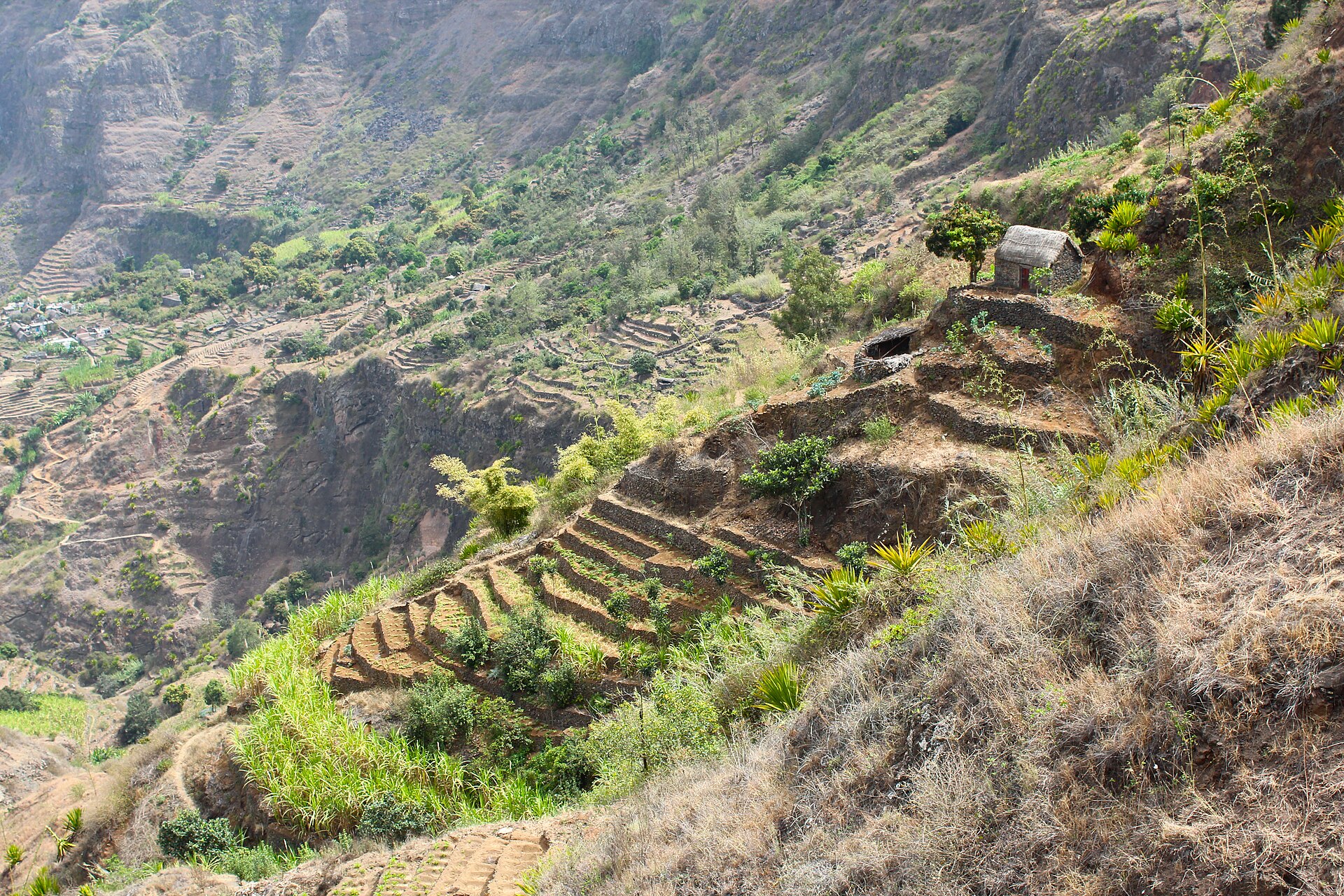
The island is known for steep valleys, terraced farming and hiking. A ferry links Porto Novo with the island of São Vicente.
The Challenger and Her Message
Rosa confirmed her candidacy on 24 June 2026, saying the country needs a moderating, conciliatory head of state. She calls the role a “balancer of the system”, an arbiter of democracy who stays close to Cabo Verdeans at home and in the diaspora, the communities abroad.
She served as Justice Minister for five years, until the opposition party PAICV (African Party for the Independence of Cabo Verde) returned to government in 2026 after two terms of her own party, the MpD, the Movement for Democracy. The MpD’s national leadership announced its support for her in late August 2026.
Rosa presents her candidacy as an open platform, while accepting the MpD’s backing. Neves, by contrast, is a former prime minister from the PAICV, the party now in government; see our guide to who holds power in Cabo Verde.
She says a president should listen to citizens and be present all year, not only at election time. She would represent all Cabo Verdeans, whatever their island or social condition.
Rosa names the rising cost of living, including fuel, food and transport prices, as a main concern. She also lists housing, health, social inclusion, and training and opportunities for young people, plus protection of vulnerable families and the elderly.
Six Candidates, One Round or Two
Six candidates compete: José Maria Neves, Antero Tavares, Casimiro de Pina, Gilson Alves, Loisito Tavares de Sousa and Joana Rosa. The winner serves as head of state for five years.
A candidate needs an absolute majority of valid votes to win outright, as our explainer on the electoral system shows. If nobody reaches it, the two leaders go to a runoff, and what to watch on 15 November lists the signals to follow.
What Prediction Markets Say
Polymarket, a crypto-based prediction market, priced its “Cape Verde Presidential Election Winner” market at 94.8% for Neves and 4.9% for Rosa on 9 November 2026 at 5:58 a.m. Eastern Time. The other outcomes on the page each stood below 1%, and US$42,028 had been traded.
These prices are bets, not polls, and a search of Kalshi, the US exchange regulated by the CFTC (the federal derivatives regulator), found no market on this race at the time of writing. The market also lists names that are not on the final ballot.
Why we show this: prediction markets turn real-money bets into a live probability that moves within minutes of the news, which is why investors, campaigns and newsrooms in the United States now follow them closely. We show them next to polls and official results, never instead of them.
What It Means for You
For readers following from the United States, the vote tests whether a stable African democracy gives its 2021 winner another term or turns to a challenger. Markets lean strongly towards Neves, so a Rosa win would be a surprise.
Fuel, food and transport prices, themes Rosa stresses, matter to families and travellers alike. Cabo Verde relies on visitors and on money sent home by emigrants.
What Is Not Known
No independent opinion poll is cited here, so the market view is a bet and not a measurement. Costings of Rosa’s proposals are not given, and we have no detail of her Santo Antão programme beyond the themes above.
Turnout is unknown, as is how the diaspora will vote. We also state no runoff date.
The Santo Antão visit rests on one local report, and we did not find a second. Her stated presidential motto comes from the same report.
Frequently Asked Questions
When is the Cabo Verde presidential vote?
Cabo Verde votes on Sunday 15 November 2026. Six candidates seek the five-year presidency, including José Maria Neves, the 2021 winner, and Joana Rosa.
Who is Joana Rosa?
She served as Justice Minister for five years, until the government changed in 2026. The MpD, the Movement for Democracy, backs her campaign.
What do prediction markets say about the race?
Polymarket gave José Maria Neves 94.8% and Rosa 4.9% on 9 November 2026 at 5:58 a.m. Eastern Time. These prices are bets, not polls.
Sources: statements of candidate Joana Rosa on arrival at Porto Novo on 8 November 2026 and her candidacy announcement of 24 June 2026; MpD announcement of 29 August 2026; 2021 census of the national statistics institute (INE); Polymarket market page (read 9 November 2026). Hub: Cabo Verde.
This article was produced by The Rio Times’ automated AI newsroom. Editorial responsibility: Matthias Camenzind, Publisher and Editor-in-Chief. The Rio Times also runs Ask Rio Times, which answers from 100,000+ of our own articles, the daily Latin America Power Map, and prediction-market odds on elections and markets.. How we use AI · Report an error