Cabo Verde Party Wins by One Seat in Record Low Vote
Politics · Cabo Verde
—The stakes. A razor-thin PAICV victory ends a decade of MpD rule and tests Africa’s most stable democracy.
This story is part of our coverage of the Cape Verde presidential election 2026. Date, candidates, rules and what the vote means for visitors are in our election guide.
—The date. Legislative elections were held on 17 May 2026, with the prime minister named on 3 June 2026.
—The winner. PAICV secured 37 of 72 seats, the exact absolute majority, and nominated Francisco Carvalho as prime minister.
—The tourism engine. Tourist arrivals reached a record 1.25 million by end-2025, driving consumption and employment.
—The debt burden. Public debt remains above 100 percent of GDP, constraining fiscal space for the new government.
Cabo Verde’s spring legislative election delivered the narrowest victory in the country’s electoral history, returning the PAICV to power with a single-seat majority. The result hands Prime Minister Francisco Carvalho, sworn in on 19 June 2026, a mandate while record tourism and heavy public debt define the economic agenda.
The One-Seat Majority
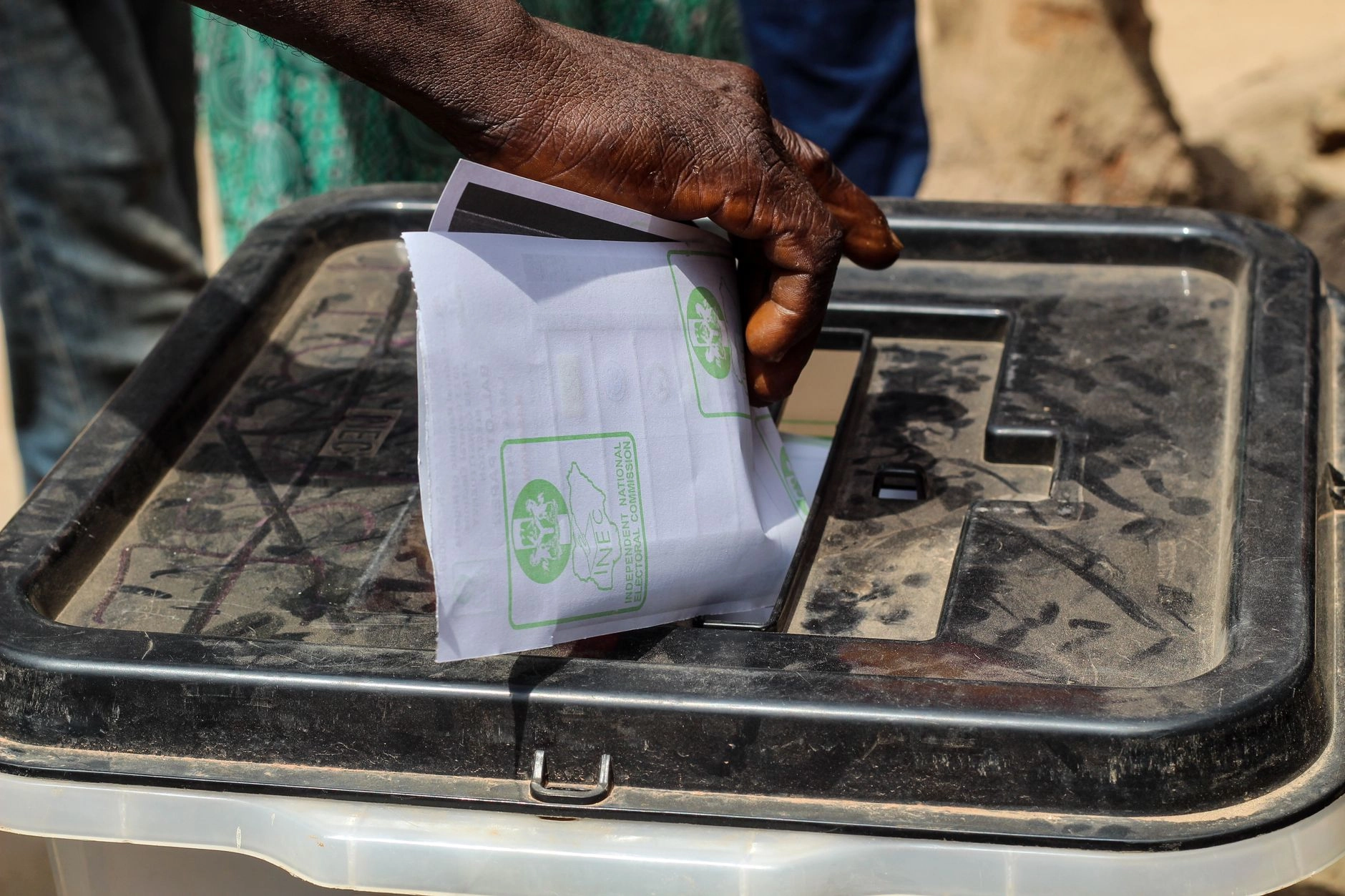
The PAICV won 37 deputies in the 72-seat National Assembly, exactly the threshold for an absolute majority.
The party received 90,660 votes, or 48.04 percent of the national total.
This represented a gain of seven seats compared with the previous election and returned the party to government after about a decade in opposition.
The MpD followed with 84,458 votes and 33 seats, a loss of five seats and of its majority.
A Historic Abstention Record
Turnout reached just 46.46 percent, leaving 53.54 percent of registered voters absent.
That abstention rate is described as a record in Cabo Verde’s electoral history.
The low participation contributed to a sharp setback for UCID, which won only two seats.
Francisco Carvalho and the PAICV Return
President José Maria Neves announced the nomination of Francisco Carvalho as prime minister on 3 June 2026.
Carvalho’s nomination follows the PAICV’s absolute majority in the National Assembly.
His victory marks the PAICV’s return to government after ten years in opposition.
The peaceful handover from MpD to PAICV reinforces Cabo Verde’s reputation for democratic alternation.
Tourism Reaches 1.25 Million Arrivals
The National Statistics Institute counted about 1.18 million hotel guests in 2024 and a record 1,248,052 in 2025.
The National Statistics Institute separately reported 981,354 foreign visitors in 2024, the highest figure in that series.
That foreign-visitor number was an 11.8 percent increase from 2023.
Tourism supported 5.3 percent growth in private consumption and record tourism-related employment.
The Two Arrival Numbers Explained
The apparent gap between 981,000 and 1.17 million reflects different measurement categories.
Both series come from the statistics institute: the lower one counts visitors in 2024, the higher one guests in hotel establishments, of whom 95.5 percent were non-residents.
Both series show strong growth, but foreign visitors alone do not capture the full tourism economy.
Investors should treat total arrivals as the broader indicator of sector activity.
Public Debt Above 100 Percent of GDP
IMF documents list public debt above 100 percent of GDP for Cabo Verde.
That debt burden constrains fiscal space for infrastructure and social spending.
Tourism revenues and remittances provide foreign exchange but have not eliminated the debt overhang.
The new government will face pressure to balance debt reduction with growth priorities.
Remittances as a Stabiliser
Cabo Verde relies heavily on remittances from its large diaspora.
These inflows support household consumption and help offset trade deficits.
Remittances, alongside tourism, underpin the escudo’s peg to the euro.
The currency peg gives investors exchange-rate stability but limits monetary flexibility.
Blue Economy and Renewable Energy
The government has promoted a blue-economy agenda around fisheries, ports, and ocean-based services.
Renewable energy investment aims to reduce dependence on imported diesel and fuel oil.
Wind and solar projects have expanded across several islands in recent years.
These sectors are central to long-term plans for energy security and export diversification.
Why Democratic Stability Holds
Cabo Verde has regular multiparty legislative elections and no history of coups.
The 2026 transition from MpD to PAICV was peaceful and followed constitutional rules.
President Neves, himself a former PAICV prime minister, respected parliamentary arithmetic in naming Carvalho.
This institutional durability supports investor confidence despite narrow electoral margins.
Final Election Numbers Add Useful Detail
The National Elections Commission confirmed the final results on 29 May 2026, as reported by Xinhua. The PAICV won 90,660 votes, which gave it 37 of the 72 seats in the National Assembly. The MpD took 33 seats with 84,458 votes. The UCID won 2 seats with 9,812 votes, while two smaller parties, the PTS and PP, received 3,268 and 529 votes but no seats. These numbers show a close race by vote share, even though the seat count gave the PAICV a working majority.
Registered voters numbered 416,096. The official final turnout was 46.5 percent. That means 53.5 percent of registered voters did not cast a ballot, which works out to about 222,800 abstentions. The seat difference between the two largest parties was only four, yet the gap in votes was just over 6,000. This helps explain why the election was seen as the return of the PAICV but not a landslide.
The final confirmation came 12 days after the vote on 17 May 2026. After the results were published in the Official Gazette, the president could begin consultations with parties. Under the normal constitutional sequence, the winning party would then be invited to form a government. The available sources do not yet provide the new government’s programme or full cabinet. Still, the final figures give a clearer picture of how narrow the PAICV’s mandate is.
Debt Service Pressure Limits Fiscal Room
The World Bank’s 14 July 2026 economic update offers a sharper view of Cabo Verde’s debt burden. Public debt fell to 100.7 percent of GDP in 2025. That is still above the 100 percent level, which means the country owes more than the value of everything it produces in a year. A separate World Bank estimate puts the figure at 99.5 percent of GDP when certain guarantees are excluded, showing that small changes in what is counted can move the headline number.
The more striking detail is the cost of servicing that debt. Debt payments absorbed 34.2 percent of government revenues. When obligations of state-owned enterprises are included, that share rises to 46.3 percent. In simple terms, nearly half of government revenue could be needed just to pay debts before spending on health, education, roads, or social programmes. This is a very tight position for any new administration.
The new PAICV government will face a difficult choice. It can try to cut spending, raise taxes, or seek better borrowing terms. But the tourism boom that helped growth in 2025 may not be enough to reduce the debt quickly. The next sections of the article, such as those on tourism and remittances, show where money comes from. This section shows how much of that money is already committed to creditors before any new policy can be made.
The Investment Outlook
Record tourism, remittances, and political stability create a positive backdrop for hospitality and real estate.
High public debt and low voter turnout add risk to long-term fiscal planning.
Foreign investors should monitor the escudo peg and tourism seasonality.
The new PAICV government will need to reassure creditors while delivering on social expectations.
The Big Picture
Latest developments
- Nigeria Oil Firm Eyes 100,000 Barrels a Day With Qatari Islamic Financing — 29 September 2026
- Nigeria Court Orders Regulator to Keep Licensing Fuel Importers — 29 September 2026
- Ghana’s Accra Airport Picks Up Two More Passenger Service Honours — 29 September 2026
- Senegal opens Dakar airport train, cutting the trip to 55 minutes — 29 September 2026
This article was produced by The Rio Times’ automated newsroom system. How we use AI · Report an error · Editorial responsibility: Matthias Camenzind, Editor-in-Chief