Hungary EU Relations Thaw Under Magyar in 2026

HUNGARY · ANALYSIS
Key Facts
- —What is happening Hungary’s new Tisza government under Prime Minister Péter Magyar is rebuilding ties with Brussels after years of confrontation under Viktor Orbán.
- —Why it matters A more cooperative Hungary reduces friction in EU decision-making on Ukraine, sanctions and security, which directly affects US strategic interests in Europe.
- —The numbers The European Commission unlocked €16.4 billion (about US$18.4 billion at US$1.12 per euro) in May 2026, with billions still frozen.
- —Who is who Péter Magyar leads the Tisza government; Ursula von der Leyen heads the European Commission; António Costa presides over the European Council.
- —What to watch Whether the European Commission converts conditional eligibility into actual payments, and whether Hungary supports future Ukraine financing when costs become concrete.
- —What it means for you US investors and companies with European exposure should watch Hungary as a test case for whether EU rule-of-law conditionality can actually change member-state behaviour.
Hungary’s EU relations are shifting from confrontation to conditional cooperation under Prime Minister Péter Magyar, with €16.4 billion (about US$18.4 billion) in frozen funds partially released as of October 2026. For US readers, this matters because a more cooperative Budapest reduces friction in transatlantic coordination on Ukraine, sanctions and European security.
Hungary spent the past decade as the European Union’s most persistent internal dissenter under Viktor Orbán. This analysis explains what has changed under the new Tisza government, what remains unresolved, and why the thaw matters for investors and policymakers. The broader background is covered in The Rio Times’ Europe Intelligence Brief.
A Political Thaw, Not a Completed Settlement
The October 2026 picture is a political thaw, not a finished agreement. Prime Minister Péter Magyar’s Tisza government has moved Hungary closer to the EU mainstream on institutional reform, Ukraine and Russia.
But Brussels has not confirmed that all frozen funds will be released. Nor has Budapest abandoned its objections to rapid Ukrainian EU membership or its hard-line migration policy.
Péter Magyar became Hungary’s prime minister on May 9, 2026, after the Tisza party won the April 12, 2026 parliamentary election in a landslide. His government replaced Viktor Orbán’s long-running strategy of confrontation with Brussels with a pragmatic effort to restore cooperation, attract EU money and rebuild Hungary’s credibility among member states.
The clearest signal of the reset is symbolic and diplomatic. European Commission President Ursula von der Leyen and European Council President António Costa travelled to Budapest on 23 October 2026 for the 70th anniversary of Hungary’s 1956 uprising.
Von der Leyen was expected to appear with Magyar at the commemoration. The visit should not be read as proof that every dispute has been resolved.
EU officials reportedly made clear that the trip did not carry a promise to release additional funds.

EU Funds: Partial Release, Continuing Conditions
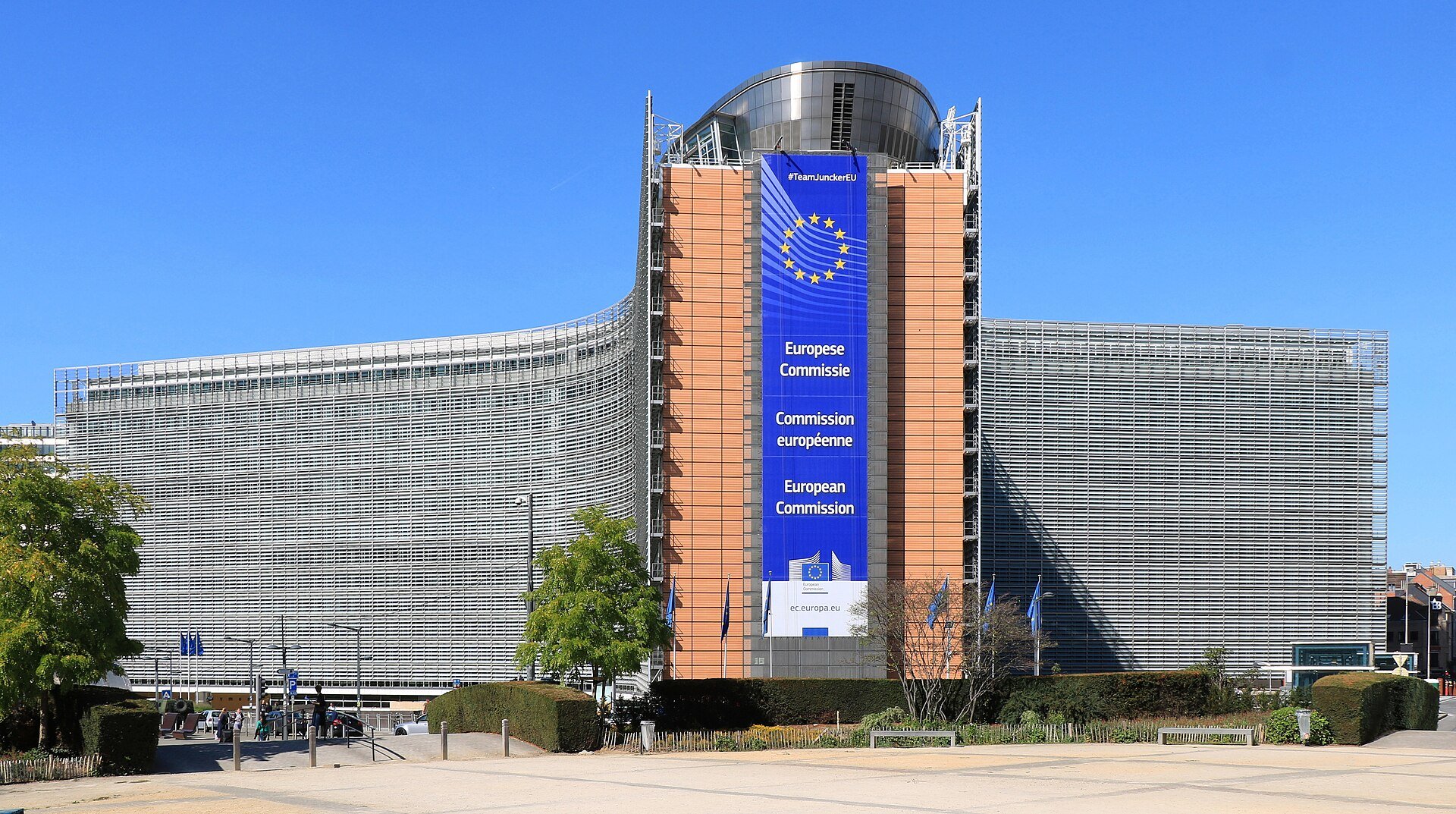
The Commission announced that €16.4 billion (about US$18.4 billion) would be unlocked. The funds had been withheld during the Orbán period because of concerns over corruption, public procurement, judicial independence and broader rule-of-law standards.
Magyar’s government reportedly supported the thaw by strengthening judicial-independence safeguards.
These steps addressed the core rule-of-law concerns that had justified the original freeze.
The release is best understood as conditional and staged rather than an unconditional transfer of all previously withheld money.
The discrepancy between the broader €16.4 billion (about US$18.4 billion) political figure and the more limited cash actually released is significant. It indicates that “unlocked,” “eligible,” “committed” and “paid” should not be treated as interchangeable terms.
Magyar is also seeking the remaining frozen funds. That claim remains a negotiating position, not a confirmed EU commitment.
What Is Confirmed and What Is Not
The EU has announced a significant partial thaw connected to Magyar’s reforms, commonly reported as €16.4 billion (about US$18.4 billion). Rule-of-law and anti-corruption conditions remain central to the release process.
What is not confirmed is whether Hungary will receive every euro previously withheld. All conditions have not been permanently satisfied.
For investors and foreign residents, the practical implication is that EU transfers may improve Hungary’s fiscal and investment outlook, but disbursements remain politically and legally conditional.
A thaw reduces one major source of sovereign and policy risk. It does not eliminate it.
Ukraine Policy: Cooperation Without Unconditional Support
Magyar has made a marked departure from Orbán’s most obstructive Ukraine policies. His government has expressed solidarity with Ukraine against Russia’s invasion and identified Russia as a national-security threat.
Budapest has dropped objections to additional chapters, or “clusters,” in Ukraine’s EU accession negotiations. Magyar held his first bilateral meeting with Ukrainian President Volodymyr Zelenskyy in Brussels on 16 October 2026.
The two governments agreed to rebuild political and economic relations. After Hungary withdrew its objections, the EU opened two additional accession clusters, bringing the total to four of six.
Budapest also linked its cooperation to Ukraine’s legislation expanding the educational and cultural rights of Hungarian-speaking minorities. The change is therefore substantial but qualified.
Magyar supports Ukraine’s European perspective and normalised relations with Kyiv, yet he opposes accelerated membership and insists that accession remain merit-based. He has also argued that a country at war should not automatically enter the EU.
That means Hungary is no longer the same kind of veto player it was under Orbán, but it is not an unconditional Kyiv ally. The likely pattern is conditional cooperation: support for selected accession steps and diplomatic engagement in exchange for guarantees on minority rights, while resisting fast-track membership and possibly some forms of long-term financial burden-sharing.
Russia and Energy: Strategic Reorientation, Not a Complete Rupture
Magyar’s government has clearly repositioned Hungary politically by treating Russia as a security threat and expressing support for Ukraine. This improves alignment with the EU’s security narrative and removes one of the sharpest sources of conflict between Budapest and Brussels.
The available reporting does not establish that Hungary has fully abandoned Russian energy, cancelled existing energy contracts or accepted every EU proposal to reduce Russian energy dependence. Consequently, it would be inaccurate to describe the October 2026 shift as a complete energy break with Moscow.
The distinction matters for investors. A government can change its security and diplomatic language faster than it can replace pipelines, contracts, infrastructure and industrial supply chains.
Hungary’s Russia policy has therefore changed most clearly at the political level. The extent of the operational energy transition remains unconfirmed in the cited material.
US-EU Ties and the Transatlantic Dimension
A more cooperative Hungary makes EU coordination with Washington easier on Ukraine, sanctions and European security. Under Orbán, Budapest’s opposition to aid for Kyiv, resistance to some EU sanctions and close relationship with Russian President Vladimir Putin complicated both EU decision-making and transatlantic messaging.
Magyar’s solidarity with Ukraine and his government’s designation of Russia as a security threat reduce that friction. They also make Hungary more compatible with a US-EU position that treats Russia as the central security challenge in Europe.
However, the reset does not mean automatic alignment with every US or EU policy. Magyar still rejects accelerated Ukrainian EU accession and retains a minority-rights condition.
He has reportedly resisted proposals requiring Hungary and other Central European states to pay interest on a new Ukraine loan. Hungary maintains a restrictive migration policy and operates return and voluntary-departure procedures.
The likely result is better transatlantic coordination, but not full policy convergence.
Why the 1956 Anniversary Matters
The 70th anniversary of the 1956 uprising provides political symbolism. Hungary’s revolt against Soviet domination is being used to frame the new government’s Russia policy and its return toward European institutions.
Von der Leyen’s and Costa’s presence signals that Brussels is willing to recognise Hungary’s institutional change. Magyar’s participation allows him to present EU rapprochement as a restoration of national sovereignty within Europe rather than a concession to Brussels.
But symbolism cannot substitute for implementation. The unresolved questions are practical: whether judicial and anti-corruption reforms survive domestic political pressure, and whether the Commission converts conditional eligibility into actual payments.
Other open questions include whether energy dependence on Russia declines in measurable terms, and whether disagreements over migration, minority rights and Ukrainian accession return to the veto agenda.
What It Means for You
For US investors and companies with European exposure, Hungary is a test case for whether EU rule-of-law conditionality can actually change member-state behaviour. The partial release of €16.4 billion (about US$18.4 billion) shows that Brussels is willing to reward reform, but the continuing freeze on billions more shows that conditions still bind.
For expatriates and businesses operating in Hungary, the thaw lowers political isolation and may improve access to EU-backed investment. It also reduces the risk that Hungary becomes a persistent outlier in EU decision-making on issues that affect the single market.
For Latin American readers, the Hungary case offers a useful comparison with countries that have clashed with regional institutions over rule-of-law and governance standards. The EU’s approach of conditional fund release, rather than outright expulsion or permanent exclusion, is a model that other multilateral bodies may study.
What Is Not Known
It is not known whether Hungary will receive every euro previously withheld.
It is also not known whether all rule-of-law conditions have been permanently satisfied. The extent of Hungary’s operational energy transition away from Russia remains unconfirmed.
Finally, it is not known how Hungary will respond when future Ukraine financing requires concrete financial contributions. The political thaw has not yet been tested by the hardest questions of burden-sharing.
What to Watch
The next milestones are not yet dated in official calendars, but several developments will signal whether the thaw deepens or stalls. Watch for European Commission decisions on converting conditional eligibility into actual payments, and for any formal response to Hungary’s request for an additional €2 billion (about US$2.2 billion).
Watch also for Hungary’s position on the next Ukraine financing package, and for any measurable decline in Russian energy dependence. The migration policy and minority-rights conditions will test whether Budapest can maintain cooperation without reverting to veto tactics.
The 23 October 2026 commemoration is a symbolic starting point. The real test will come when the EU asks Hungary to pay for the policies it now claims to support.
Frequently Asked Questions
Who is Hungary’s prime minister in 2026?
Péter Magyar became Hungary’s prime minister on May 9, 2026, after the Tisza party won the April 12, 2026 parliamentary election in a landslide. He replaced Viktor Orbán, who had led Hungary for more than a decade.
How much EU money has Hungary received?
The European Commission unlocked €16.4 billion (about US$18.4 billion) in May 2026, with billions still frozen. The release is conditional on rule-of-law and anti-corruption reforms.
Has Hungary changed its position on Ukraine?
Yes, but with conditions. Magyar’s government has expressed solidarity with Ukraine, identified Russia as a security threat, and dropped objections to additional EU accession clusters, but it still opposes accelerated membership.
Has Hungary broken with Russia on energy?
No. Hungary has repositioned politically by treating Russia as a security threat, but the available reporting does not confirm a complete break with Russian energy or cancellation of existing contracts.
What does Hungary’s thaw mean for US interests?
A more cooperative Hungary reduces friction in EU decision-making on Ukraine, sanctions and security, making transatlantic coordination easier. But Hungary remains a conditional partner, not a fully aligned ally.
Why did EU leaders visit Budapest on 23 October 2026?
European Commission President Ursula von der Leyen and European Council President António Costa attended the 70th anniversary of Hungary’s 1956 uprising. The visit symbolised recognition of Hungary’s institutional change but did not promise new fund releases.
What reforms did Hungary make to unlock EU funds?
Hungary strengthened judicial-independence safeguards. These steps addressed rule-of-law concerns that had justified the original freeze.
Sources: riotimesonline.com, euronews.com, winnipegfreepress.com, aa.com.tr, usnews.com, euronews.com. Retrieved 23 October 2026.
This article was produced by The Rio Times’ automated newsroom system. How we use AI · Report an error · Editorial responsibility: Matthias Camenzind, Editor-in-Chief
LatAm Markets: Live Signals → — real-time movers, turnover leaders and FX across Latin America.