Why Germany’s Top Party in the Polls Is Kept Out of Power

EUROPE’S POLITICAL CRISIS · GERMANY
Germany’s nationalist AfD now leads the national polls, yet every major party refuses to govern with it, and some want it banned.
The Alternative for Germany (AfD), a hard-line anti-immigration party, has led most national polls in Germany this autumn, with 27% to 30% in surveys published on 20 October. Yet the other major parties keep it out of every government under a pledge Germans call the Brandmauer, or firewall.
For Americans this matters because Germany is Europe’s largest economy and a pillar of NATO, and because senior US officials have openly taken the AfD’s side. This explainer sets out what is documented, what each side argues and what is still unknown.
Key Facts
- —The party The AfD came second in the February 2025 election with 20.8% and 152 seats.
- —The polls It leads most national polls, at 27% to 30% on 20 October.
- —The firewall It came first in two state elections in September but governs nowhere.
- —The courts A court stopped the spy agency, for now, from calling it confirmed extremist.
- —The ban debate The Social Democrats want a ban prepared; Chancellor Friedrich Merz calls it a very high hurdle.
- —Prediction markets Polymarket gives a 64% chance that Germany has no new chancellor before 2028 (21 October, 10:05 a.m. ET).
In Plain English
- AfD Alternative for Germany, founded in 2013, now a nationalist party focused on migration; co-led by Alice Weidel and Tino Chrupalla.
- Brandmauer (firewall) The other parties’ pledge never to govern with the AfD or rely on its votes.
- BfV The Federal Office for the Protection of the Constitution, Germany’s domestic intelligence agency.
- Suspected versus confirmed The agency’s two levels for watching a group; “confirmed extremist” allows more surveillance.
- CDU/CSU and SPD Merz’s Christian Democrats and their Social Democrat partners, who govern together in Berlin.
- Bundesrat The chamber of Germany’s 16 states, one of three bodies that can ask for a party ban.
The Short Answer
The AfD is kept out of power because every other major party has promised not to govern with it, and because no party can rule Germany alone. That promise is a political choice by the parties, not a rule set by any law or court.
The other parties say the AfD is a danger to democracy, and the domestic intelligence agency has treated it as a suspected extremist group for years. The AfD and its American admirers say the firewall shuts out millions of voters and that the state is using its spies against the opposition.
How Big the AfD Has Grown
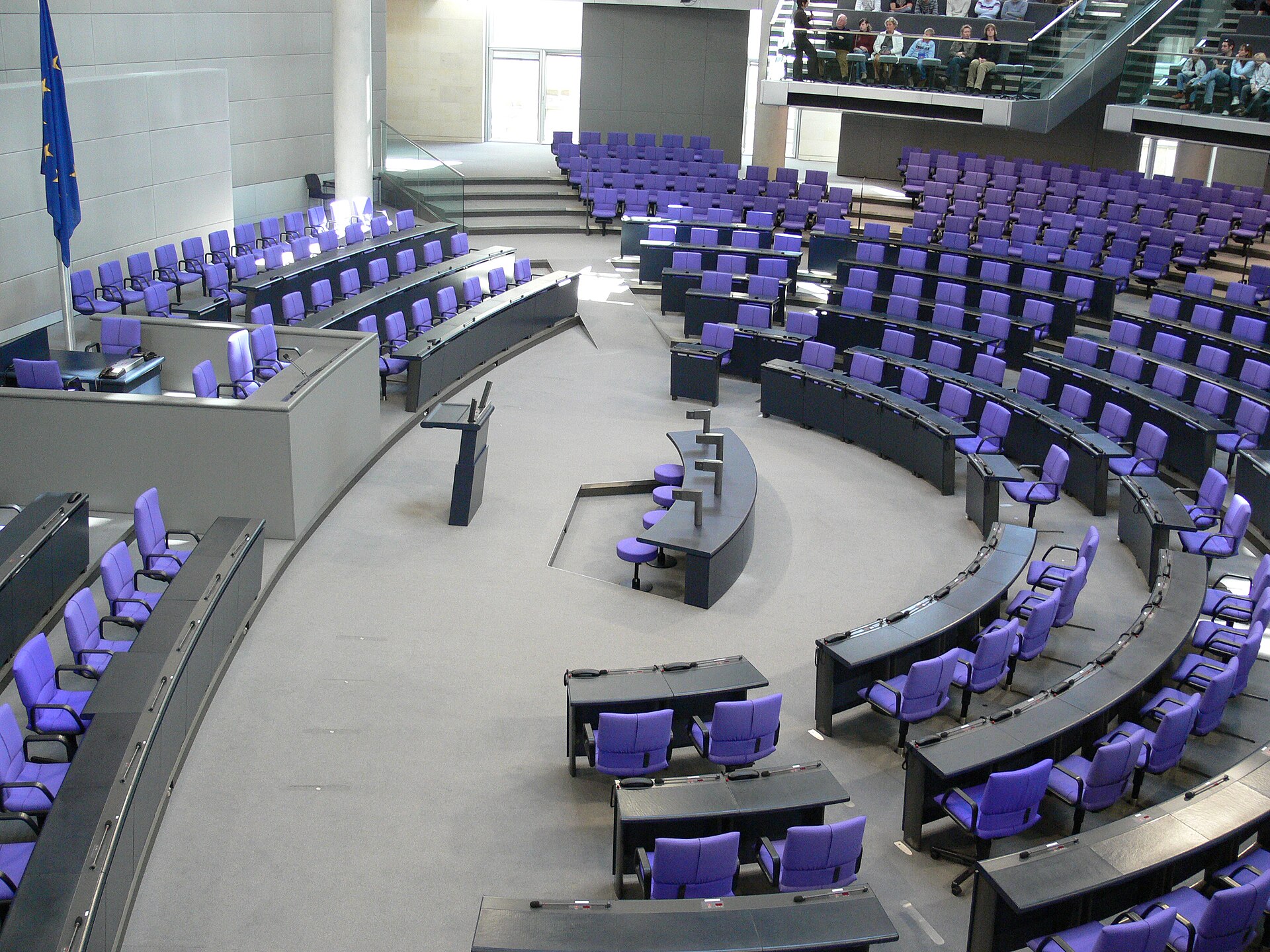
The AfD came second in the federal election of 23 February 2025 with 20.8% of the party vote and 152 of the Bundestag’s 630 seats, behind Merz’s Christian Democrats. Within weeks it overtook them in some polls, starting with an Ipsos survey published on 9 April 2025 that put it on 25% against 24%.
Today the lead is wider. INSA put the AfD on 30% and the Christian Democrats on 18% on 20 October, while Forsa had 27% against 20% the same day.
September’s State Elections
- Saxony-Anhalt, 6 September AfD first with 43.8%, far ahead of the Christian Democrats; no majority of its own.
- Mecklenburg-Western Pomerania, 20 September AfD first with 38.2%, ahead of the Social Democrats on 35.5%.
- Berlin, 20 September The Left first with 25.7%; the AfD third with 16.3% (preliminary result).
The AfD has not entered government in either state where it came first, because the other parties refuse to make it a coalition partner. The strain is showing all the same: on 6 October Saxony-Anhalt’s parliament elected an AfD member, Tobias Rausch, as its president with 48 votes, although the AfD holds only 39 seats.
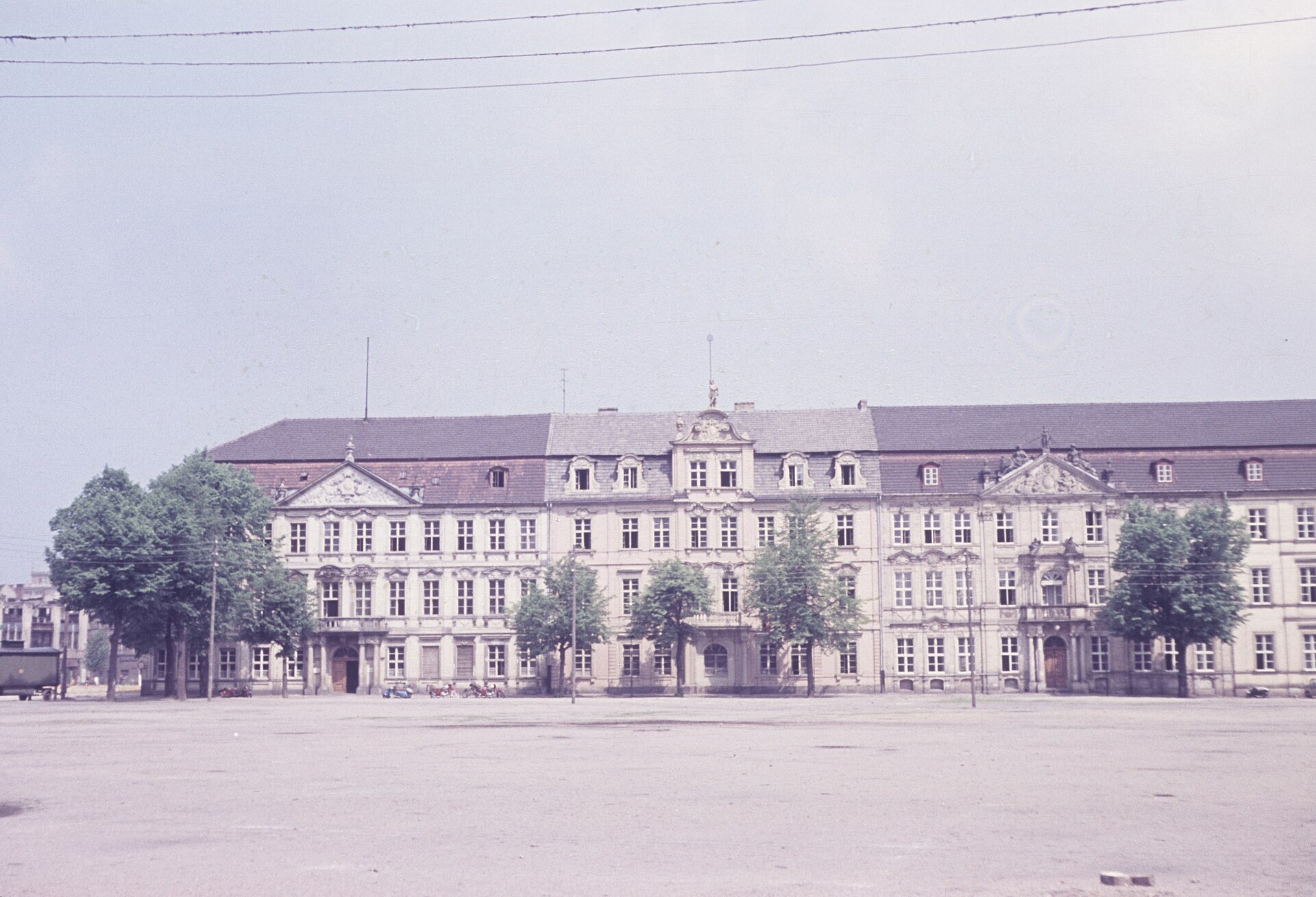
The ballot was secret; the small BSW party had announced its five votes for him, which leaves about four unexplained. Rausch said afterwards that “the times of political firewalls should belong to the past”.
What the Firewall Is
The firewall is a promise by the Christian Democrats, Social Democrats, Greens and the Left not to form coalitions with the AfD or pass laws with its votes. Merz, who leads the Christian Democrats, has called the AfD his party’s “main opponent”.
“This party has declared that it wants to destroy the CDU; it wants a different country.”Chancellor Friedrich Merz at a party retreat, 20 October 2025 (translated from German)
Because no party wins a majority on its own in Germany, the firewall forces the centre-right into coalitions with the centre-left. Merz’s government of Christian Democrats and Social Democrats is one such alliance, and only 10% of Germans told ARD’s DeutschlandTrend poll, published on 1 October, that they were satisfied with it.
Its start was shaky too. On 6 May 2025 Merz failed in the Bundestag’s first round of voting for chancellor, a first in the Federal Republic’s history, before winning a second round that day.
The Spy Agency and the Courts
On 2 May 2025 the domestic intelligence agency upgraded the AfD from a suspected to a confirmed right-wing extremist party. It argued that the party’s idea of the German people, based on ethnic descent, is incompatible with the constitution’s free democratic order.
The AfD sued, and the agency agreed not to use the new label until a court had ruled. AfD co-leaders Alice Weidel and Tino Chrupalla called the decision “a severe blow against German democracy”.
On 26 February 2026 the administrative court in Cologne ruled, in a fast-track decision, that the agency may not treat the AfD as confirmed extremist until the main case is decided. The court found anti-constitutional efforts inside the party, but not yet a “dominant basic tendency” that marks the party as a whole.
The federal Interior Ministry said on 2 March that an appeal against the fast-track ruling was “not planned”, and the main case is still pending. A separate ruling has become final: the AfD remains a suspected extremist case, after Germany’s top administrative court rejected its complaints in July 2025.
Should Germany Ban the AfD?
Under Germany’s Basic Law, only the Federal Constitutional Court can ban a party, and only on an application from the Bundestag, the Bundesrat or the federal government. The last attempt, against the small neo-Nazi NPD, failed in January 2017 because the court saw no sign the party could achieve its aims.
Who Says What About a Ban
- Social Democrats, 29 June 2025 Their party congress votes unanimously to prepare a ban.
- Merz, 15 May 2025 “I have always been very sceptical of ban proceedings against political parties.”
- Interior Minister Alexander Dobrindt, 26 February 2026 “The AfD must be governed away, not banned away.”
- North Rhine-Westphalia’s premier Hendrik Wüst, September 2026 Asks for an open-ended expert review of the AfD that should not lead automatically to a ban case.
- Baden-Württemberg’s premier Cem Özdemir, 30 September 2026 Says a ban application makes sense only if the 35 Bundesrat votes it needs are in sight.
Merz restated his doubts after the Saxony-Anhalt vote, calling a ban “a very high hurdle” on 9 September 2026. He added that he did not believe a ban would solve the problem the party’s voters see in Germany.
The Argument: Voters Shut Out
The AfD’s case is that the firewall, the spy agency’s label and the ban talk are tools to keep a party now first in the polls away from power. After the Cologne ruling, Weidel called it “a great victory not only for the AfD, but also for democracy and the rule of law”.
Washington has echoed that case. JD Vance said in Munich in February 2025 that “there is no room for firewalls”, and in May 2025 Secretary of State Marco Rubio called the agency’s decision “tyranny in disguise”.
Critics also point to procedure: in the newly elected parliament the AfD and the Left together held more than a third of the seats, enough to block a constitutional change. So on 18 March 2025 the outgoing Bundestag loosened the “debt brake” on borrowing, freeing most defence spending and creating a €500 billion (about US$560 billion) infrastructure fund.
Supporters of the reform reply that the old parliament kept its full powers until the new one met. Critics answer that the established parties changed the constitution in a parliament that voters had just replaced.
The Case for the Firewall
Germany’s government answers that the firewall is a democratic choice by parties, not a legal ban, and that the courts are independent. When Rubio intervened, the Foreign Office replied the same day: “This is democracy”, adding that independent courts would have the final say.
The record shows the courts have also ruled against the government. The Cologne court stopped the extremist label, while in March 2025 the Constitutional Court rejected emergency challenges to the debt-brake vote from several parties’ lawmakers.
Defenders also note that Germans are less unhappy than their neighbours. In a Pew Research Center survey this spring, 60% of Germans said they were satisfied with how their democracy works, against 30% in France and 32% in Spain.
The Economy Behind the Anger
Germany’s economy shrank 1.0% in 2023, stagnated in 2024 and grew 0.2% in 2025, according to Eurostat. In June the Bundesbank forecast growth of 0.5% for 2026, blaming an energy-price shock.
Germany’s public debt is modest by European standards, at 62.8% of GDP in 2025 against an EU average of 81.5%. That is why the debate is less about money than about who gets to govern.
What Prediction Markets Say
On Polymarket, an online prediction market, traders give a 64% chance that Germany has no new chancellor before 2028, with Hendrik Wüst at 13.5% and Alice Weidel at 7.8% as Merz’s successor. About US$124,000 has been traded on that question, as of 21 October at 10:05 a.m. ET.
Why we show this: prediction markets turn real-money bets into a live probability that moves within minutes of the news, which is why investors, campaigns and newsrooms in the United States now follow them closely. We show them next to polls and official results, never instead of them.
What It Means for Americans
Germany is Europe’s largest economy and a key NATO ally on Ukraine. A government that includes or depends on the AfD would change Berlin’s stance on migration, the EU and Russia.
The issue has also become part of American politics, since the Trump administration’s top officials have openly criticised the firewall. How Berlin handles the AfD is therefore also a test of its relations with Washington.
What Is Not Known
Nobody knows when the Cologne court will decide the main case, or whether any of the three bodies will file a ban application. It is also unclear whether the firewall will hold in Saxony-Anhalt, where the AfD has 39 of 83 seats.
The wider story is in our explainer on why Europe’s politics are breaking, which compares Germany with France, Spain, Romania and Britain. We will update this page as the courts and the states decide.
Frequently Asked Questions
Why is the AfD not in government?
Every other major German party has pledged not to govern with it, a policy called the firewall. Because no party wins a majority alone, the AfD has no coalition partners even where it comes first.
Is the AfD banned in Germany?
No, it is not. Only the Federal Constitutional Court can ban a party, on an application from parliament, the states or the government, and no such application has been filed.
Is the AfD classified as extremist?
The intelligence agency treats it as a suspected extremist case, a status the courts have upheld. Its 2025 upgrade to confirmed extremist is on hold after a Cologne court ruling in February 2026.
How popular is the AfD?
It won 20.8% in the February 2025 election and polled 27% to 30% on 20 October 2026, ahead of Chancellor Merz’s Christian Democrats in most surveys. In September it came first in state elections in Saxony-Anhalt and Mecklenburg-Western Pomerania.
What did the US say about the AfD?
Vice President JD Vance said in February 2025 there was no room for firewalls. Secretary of State Marco Rubio called the extremist label tyranny in disguise, and Germany replied that this is democracy.
Sources: Federal Returning Officer, 2025 election; wahlrecht.de poll tables (overview, Ipsos, INSA, 20 October 2026); Mecklenburg-Western Pomerania returning officer; Südostschweiz on Saxony-Anhalt; Federal Agency for Civic Education on Berlin; ZDFheute on Rausch (6 October 2026), Merz (20 October 2025), the chancellor vote (6 May 2025), the SPD congress, Rubio and the Foreign Office and the Constitutional Court (March 2025); ARD-DeutschlandTrend; Cologne Administrative Court (26 February 2026); beck-aktuell (3 March 2026); Tagesspiegel (July 2025); LTO (26 February 2026); Berliner Zeitung (2 May 2025); Basic Law, Article 21 and Constitutional Court Act, section 43; Federal Constitutional Court on the NPD (17 January 2017); evangelisch.de (15 May 2025); Stuttgarter Zeitung (9 September 2026); leinetal24/dpa on Wüst and Özdemir; t-online (18 March 2025); Vance speech transcript; NBC News (2 May 2025); Pew Research Center (10 June 2026); Eurostat (21 October 2026); Bundesbank (June 2026); Polymarket public data and EODHD exchange rates (21 October 2026).
More: Why Europe’s politics are breaking, our guide to the crisis from France and Spain to Germany, Romania and Britain.
Editorial responsibility: Matthias Camenzind, Editor-in-Chief · Editorial standards · Report an error