Guyana Deportee Deal With US: Ex-President Ramotar Wants It Published
Guyana · Migration
Key Facts
- —What happened Former president Donald Ramotar said on 20 September 2026 that Guyana’s third-country deportee agreement with the United States should be published.
- —The money A US official told Kaieteur News that Washington provided US$7,740,215 for the programme, run by the UN migration agency.
- —Who has come so far Six people, four Cubans and two Afghans, landed on 4 September 2026. The government says none has a criminal record.
- —What Georgetown says President Irfaan Ali says Guyana vets every case and can refuse anyone Washington proposes.
- —The catch The deal’s text is unpublished, the US$7.7 million figure comes from an unnamed US official, and no cost breakdown is public.
- —The bigger picture Forbidden Stories counts at least 25,447 people sent by the US to third countries through 31 August 2026.
Guyana’s government says it keeps a veto over every person the United States sends. Its critics, among them a former head of state, want to read the agreement.
A former president wants the Guyana deportee deal published, the pact under which Guyana takes people expelled by the United States. Donald Ramotar made the call on the SOURCES talk show on Sunday 20 September 2026, News Source Guyana reported.
His demand follows the first price tag attached to the arrangement. A US official told Kaieteur News, a Georgetown daily, that Washington had provided US$7,740,215 for it.
Guyana is a country of about 800,000 people on South America’s northern coast, now growing fast on offshore energy revenue. Opposition parties, a rights group and Ramotar himself have criticised its hosting of other nations’ deportees.
What Ramotar said
Ramotar led Guyana from 2011 to 2015 for the People’s Progressive Party/Civic, the party that governs today. He called the arrangement an attempt to “re-colonize” Latin American and Caribbean countries.
He said he was sure the deal was “forced on all the countries” that accepted it, not only on Guyana. “Despite what Governments might say,” he added.
He had already criticised the programme in a letter earlier in September, Kaieteur News reported.
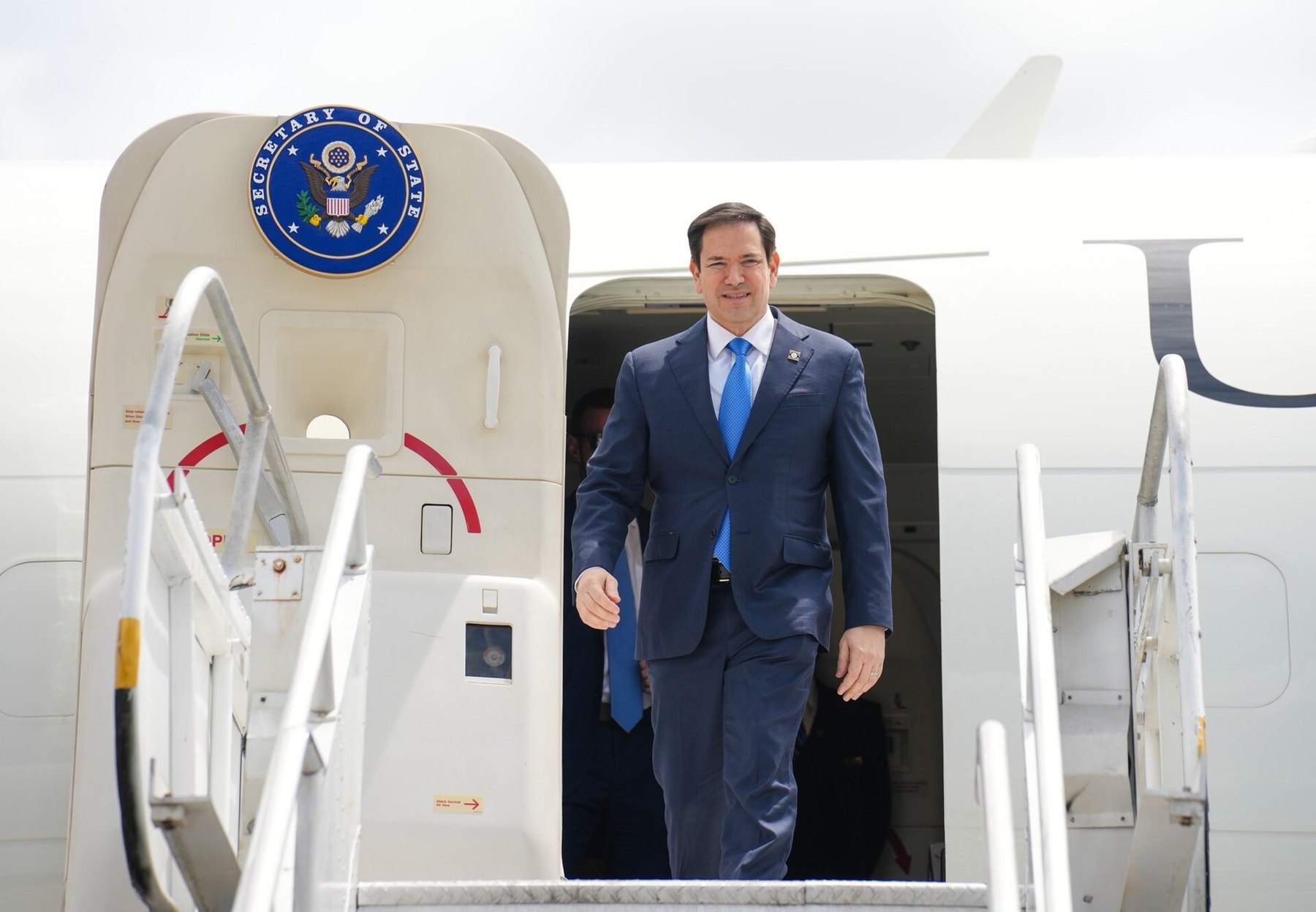
He also rejected the official argument that Guyana might gain skilled people. He pointed instead to Marco Rubio, the US secretary of state.
“Rubio is telling us the types of skills he is sending,” Ramotar said, listing “pedophiles, rapists, child molesters”. Rubio has said Washington wants to send “some of the most despicable human beings” abroad, as quoted by Kaieteur News.
Ramotar said Guyana should refuse anyone Washington rejects, “except if they are Guyanese nationals”. Robert Persaud, the foreign ministry’s top civil servant, has said all six people sent so far had no criminal histories.
The US$7.7 million
Kaieteur News reported the figure on 18 September 2026, citing a US official. The State Department money covers financial and technical support over two years.
It is handled directly by the International Organization for Migration, the United Nations agency that runs the scheme on the ground. The agency offers counselling on returning home.
Those who choose to return receive temporary accommodation, food, clothing and household items. No member of the government has published a detailed breakdown of costs, the newspaper reported.
A government statement on 5 September 2026 said Guyana would not bear the programme’s cost. The United States would bear the full cost of relocation, it said.
The sum puts the Guyana deportee deal in line with other small-state agreements. Palau agreed in December 2025 to take up to 75 people for US$7.5 million, according to Forbidden Stories, a Paris-based journalism nonprofit.
What the government says it signed
President Irfaan Ali told a news conference on Monday 14 September 2026 that Guyana’s participation depends on US financial and technical support. “It must be a joint effort,” he said.
Ali said only third-country nationals, citizens of neither Guyana nor the US, qualify. They need expedited or final removal orders and US medical clearance. Unaccompanied children, Guyanese nationals, pending US asylum seekers and people with known violent records are excluded.
“The government of Guyana retains complete discretion to approve or deny individuals proposed for removal,” Ali said. The United States must supply criminal and health histories, and Guyana then runs its own checks.
Official statements on 5 September 2026 described a temporary one-year framework, not permanent resettlement. A source told the outlet Demerara Waves that up to 12 people could arrive each month.
Six people have come so far, four Cubans and two Afghans, who landed on Friday 4 September 2026. Persaud said Washington had made no further requests.
Who else wants the text
The Guyana Human Rights Association says the arrangement may breach Article 141(1) of the constitution, which bans inhuman or degrading treatment. It argues that protection covers every person in Guyana, not only citizens.
Amanza Walton, an MP who leads the opposition Forward Guyana Movement, said the government negotiated for months without telling parliament. She noted that Guyana has no national asylum law and has not joined the 1951 Refugee Convention.
Christopher Ram, a chartered accountant and frequent government critic, asked what Guyana gains. He wondered whether it was “goodwill, strategic credit or insurance against Venezuela”, which claims about two-thirds of Guyana’s territory.
No court has ruled on the rights group’s constitutional argument. No release of the agreement’s text has been reported.
A much bigger American programme
Guyana’s share is small next to the global numbers. Forbidden Stories counts at least 25,447 people the United States sent to third countries through 31 August 2026.
About 20,000 of them went to Mexico, The Tico Times reported from the investigation. At least 35 countries have agreed to take such deportees, and at least 28 have received some.
The investigation, published on 21 September 2026 with partners including The Washington Post and The Guardian, examined a State Department office. Internal documents showed its Office of Remigration planned to spend at least US$410 million on the deals.
Of that sum, about US$81 million was meant for governments and more than US$178 million for the International Organization for Migration. The rest was largely earmarked for the UN refugee agency.
As with most of the money Forbidden Stories tracked, Guyana’s funds go through the migration agency rather than directly to the government.
More: Guyana coverage, every day from The Rio Times.
Frequently Asked Questions
What is the Guyana deportee deal?
It is a migration cooperation framework between Guyana and the United States, announced on 5 September 2026. Guyana temporarily hosts people the United States is removing who are citizens of other countries. They wait in Guyana while their immigration status is resolved, then return home or move elsewhere. The International Organization for Migration runs the programme on the ground.
How much is the United States paying?
A US official told Kaieteur News that the State Department provided US$7,740,215 for financial and technical support over two years. The money is handled by the International Organization for Migration, not paid as a lump sum to the government. The Guyanese government says it bears none of the cost.
Who has been sent to Guyana so far?
Six people, four Cubans and two Afghans, arrived on 4 September 2026. Robert Persaud, the foreign ministry’s top civil servant, said background checks showed none had a criminal history. He said Washington had made no further requests for transfers.
Why do critics want the agreement published?
Opposition politicians, the Guyana Human Rights Association and former president Donald Ramotar say the public and parliament have not seen the terms. They question the legal basis, the costs and Guyana’s capacity to manage the arrivals. The government says it keeps full discretion to reject anyone proposed.
Sources: News Source Guyana on Ramotar’s call, Kaieteur News on the US$7.7 million, Kaieteur News on President Ali’s news conference, Demerara Waves on the joint statement, Forbidden Stories on the Office of Remigration, Forbidden Stories deportation map, The Tico Times on the investigation
This article was produced by The Rio Times’ automated newsroom system. How we use AI · Report an error
Read More from The Rio Times