Guinea-Bissau’s Ousted President Embaló Vows to Return and Run in December
Key Facts
- The country. Guinea-Bissau is a small Portuguese-speaking state on West Africa’s Atlantic coast. It has about 2.2 million people and an economy of about US$2.5 billion (World Bank, 2025), under a tenth of Vermont’s.
- Why it matters. The country has had five coups since independence from Portugal in 1974. It is a known transit hub for cocaine bound for Europe, so its stability matters well beyond Bissau.
- Why now. The army ousted President Umaro Sissoco Embaló on 26 November 2025, days after a vote. The junta has set presidential and legislative elections for Sunday 6 December 2026.
- What happened. Embaló told AFP on 28 September that he will run for president. He has named Sunday 4 October as his return date, and a source confirmed it to Reuters.
- Who is involved. Embaló; junta leader General Horta N’Tam, barred from running; and the PAIGC opposition party, whose leader was ordered back to jail.
- What it means for you. Bissau was tense on 29 September after reports of army unrest. Expect heavy security around 4 October and through the campaign. Travellers and businesses should plan for disruption until December.
- Still open. A new constitution requires five years’ continuous residence for presidential candidates. It is unclear whether that rule will block Embaló, who has lived abroad since the coup.
The president deposed in last November’s coup says he will come home and run again. His return tests whether the military’s promised vote will be open.
Guinea-Bissau’s ousted president, Umaro Sissoco Embaló, says he will stand in the Guinea-Bissau election on 6 December 2026. He has said he will fly home on Sunday 4 October, Portugal’s Lusa news agency reported.
Guinea-Bissau is a small, poor West African country that has lived under military rule since November 2025. Soldiers seized power then, one day before provisional election results were due, and Embaló left the country.
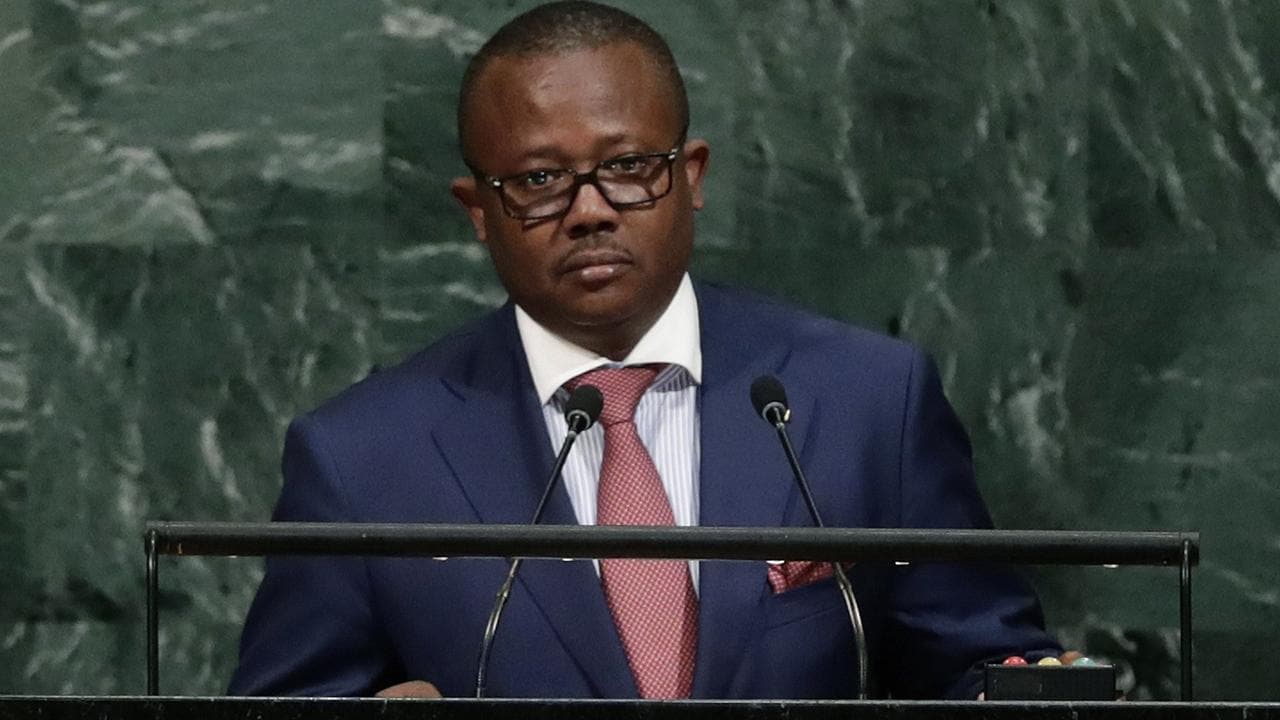
What Embaló says he will do
Embaló told the French news agency AFP on Monday 28 September that he “will be a candidate in the presidential election”. In a post on his official page, he named 4 October as his return date and asked for a peaceful welcome.
A day later, a source familiar with the matter confirmed the 4 October date to Reuters. Activists have posted on social media that they are preparing for a Sunday return, according to AFP.
A source close to Embaló told Reuters that his campaign organisation is not yet finalised. The same source said the military-led government had assured him he is “welcome” to return.
A government spokesperson did not respond to a Reuters request for comment. The authorities have not confirmed the return date or said how they will handle it.
Unrest reports in the presidential guard
On Tuesday 29 September the authorities urged calm after reports of unrest in the presidential guard, AFP reported. Social media accounts said some soldiers had been disarmed.
Interior ministry spokesman Agostinho Tonecas Djata called the troop movements “routine reassignments”. He said there was “no alarming situation that should create panic in Bissau”.
Portuguese outlet e-global, citing army sources, said a special unit Embaló had set up as an “anti-coup” force was broken up. Regular army troops took over the transition leader’s security.
A coup that swallowed an election
Guinea-Bissau voted for a president and parliament on 23 November 2025. On 26 November, one day before provisional results were due, the army seized power and suspended the electoral process.
The officers installed General Horta N’Tam, also written Horta Inta-A, as transitional president. AFP describes him as a close associate of Embaló.
The military said it acted after discovering a plot to destabilise the country involving drug lords. Many observers suspected Embaló of orchestrating the coup to halt a vote he appeared to be losing, AFP reported.
Embaló has been abroad since the coup, first in Senegal and then in the Republic of Congo, according to Reuters. Reuters could not establish where he is now.
The road to 6 December
The junta has scheduled the Guinea-Bissau election, combining presidential and legislative votes, for 6 December 2026 to restore civilian rule. Under the transitional charter, Horta N’Tam himself is barred from running.
Asked about Embaló last week, the general told a radio journalist that every Guinean “is free to return” if they have nothing to be ashamed of. He added that even those who insult him on social media can return.
Political analyst Malam Cissé told AFP that “legally, nothing stands in the way” of Embaló’s return. He noted that Embaló never signed any document renouncing power.
The residence rule in the new constitution
Voters approved a new constitution in a referendum on 30 August 2026, with about 70% voting yes. It expands the president’s powers, shrinks parliament and changes the electoral rules.
Among other provisions, it requires presidential candidates to have lived continuously in the country for the preceding five years. Reuters reported that it was unclear how that rule might affect Embaló’s candidacy.
The junta says the new text will stabilise institutions before the December vote. The opposition urged voters to boycott the referendum, and critics say the charter weakens checks on the presidency.
An opposition under pressure
The main opposition party is the PAIGC, the African Party for the Independence of Guinea and Cape Verde. It led the fight against Portuguese rule. Its leader, former prime minister Domingos Simões Pereira, was detained after the coup and freed early this year.
On 13 July 2026 a military court ordered Pereira back to jail, Reuters reported. Later that month he was allowed to travel abroad for medical treatment.
On 23 September police and National Guard units occupied the PAIGC headquarters near the presidential palace, according to Benin Web TV. The move followed a military order for parties within 500 metres of state buildings to relocate.
The order also affects Madem G15, another major party. Pereira has contested the occupation on legal grounds. He called Embaló’s candidacy “shocking”, Lusa reported.
What this means for expats and investors
Guinea-Bissau’s economy depends heavily on cashew nut exports and on donor support. A contested return or disputed candidate list could unsettle both, and slow already slow project decisions.
Anyone travelling to Bissau around 4 October should expect checkpoints and a visible security presence. Business travellers should keep plans flexible until the candidate list for the Guinea-Bissau election is settled.
What Is Not Known
It is not known where Embaló will fly from, or whether the authorities will let him land, campaign and register. Nor is it clear how the five-year residence rule will be applied to him.
The results of the November 2025 vote were never published. No official candidate list for the Guinea-Bissau election exists yet.
Frequently Asked Questions
Who is Umaro Sissoco Embaló?
He was Guinea-Bissau’s president from 2020 until the army ousted him on 26 November 2025. He has lived abroad since and says he will run in the December election.
When is the Guinea-Bissau election?
The junta has set combined presidential and legislative elections for Sunday 6 December 2026. Transition leader General Horta N’Tam is barred from running under the transitional charter.
Can Embaló actually run?
It is unclear. The new constitution requires presidential candidates to have lived in the country continuously for five years, and Embaló has been abroad since the coup.
Is it safe to travel to Guinea-Bissau now?
The country is calm but tense ahead of the vote. Visitors should follow their government’s travel advice and expect a heavy security presence around 4 October.
Sources
Reuters — Ousted Guinea-Bissau leader to run in December election, source says (29 September 2026) · Africanews/AFP — Exiled Guinea-Bissau President Embalo signals return amid political tension (29 September 2026) · Benin Web TV — Security forces occupy PAIGC headquarters ahead of elections (29 September 2026) · Reuters via US News — Guinea-Bissau military court orders opposition leader back to jail (13 July 2026) · Lusa — Ex-PR Sissoco Embaló anuncia regresso para 04 de outubro (28 September 2026) · Lusa — Simões Pereira considera “chocante” candidatura de Sissoco Embaló (29 September 2026) · AFP via New Vision — G.Bissau urges calm after reports of unrest among troops (30 September 2026) · e-global — Estado-maior dá golpe à força antigolpe de Sissoco Embaló (30 September 2026) · World Bank — Guinea-Bissau data (population, GDP 2025)
This article was produced by The Rio Times’ automated newsroom system. How we use AI · Report an error
Read More from The Rio Times