Soybean Fund Slips 1.26% as Wheat Gains 0.36% | Grains, Nov 2
Key Facts
- Soybeans lead the retreat: the soybean-tracking fund SOYB fell 1.26% on Monday, 2 November 2026, and sits 8.3% below its 12-month high of 28.14, set on 10 September.
- Corn and wheat edged up: the corn fund CORN gained +0.12% and the wheat fund WEAT gained 0.36%, small bounces after steep falls.
- Wheat has suffered most: WEAT is 20.4% below its 12-month high of 28.00 from 28 August, and fell 11.20% over the last 20 sessions.
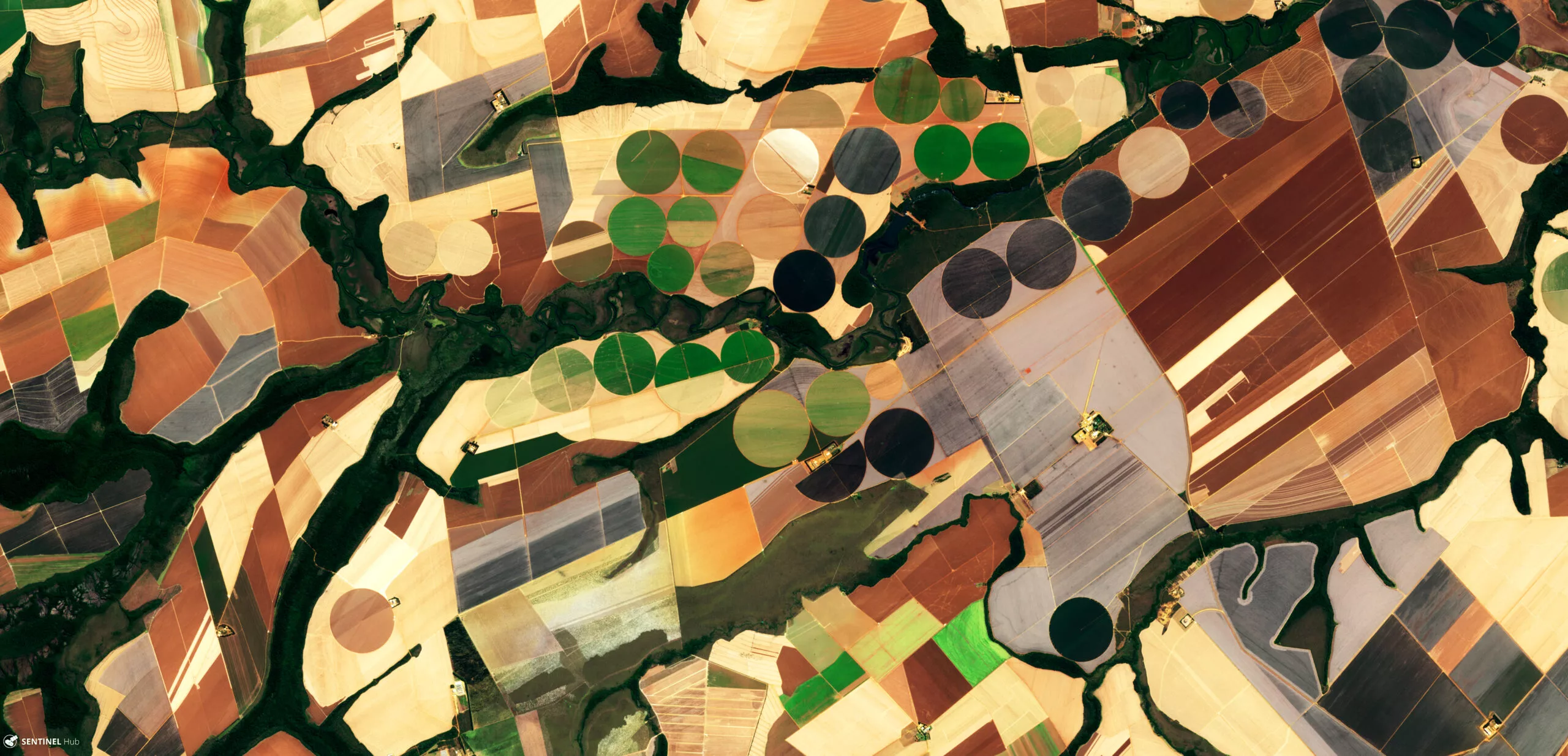
- Brazil is planting a record: the national crop agency Conab forecasts 181.64 million tonnes of soybeans for 2026/27.
- China is buying Brazilian: it has pre-bought 9.04 million tonnes of the new crop, all of it Brazilian, while tariffs on US beans keep Brazilian supply attractive.
- History leans towards a bounce: after 50 earlier falls this large in soybeans, the fund was higher 20 sessions later in 31 cases.
Today’s Focus
Soybeans slipped on Monday, 2 November 2026, as the world’s two biggest growers, Brazil and the United States, pile up supply while China, the biggest buyer, shops carefully. The soybean fund SOYB closed at US$25.81, down 1.26%.
Corn and wheat held steadier. The corn fund CORN ended at US$17.36 and the wheat fund WEAT at US$22.28, both barely higher after weeks of selling.
These funds track grain prices rather than the grain itself. Their message is clear: the market is pricing a big South American harvest, and China is not rushing to take it.
What matters today. Cheap, plentiful grain is good news for food importers, but it squeezes farm incomes from Mato Grosso, Brazil’s main farm state, to the Argentine pampas.
01 The session in one read
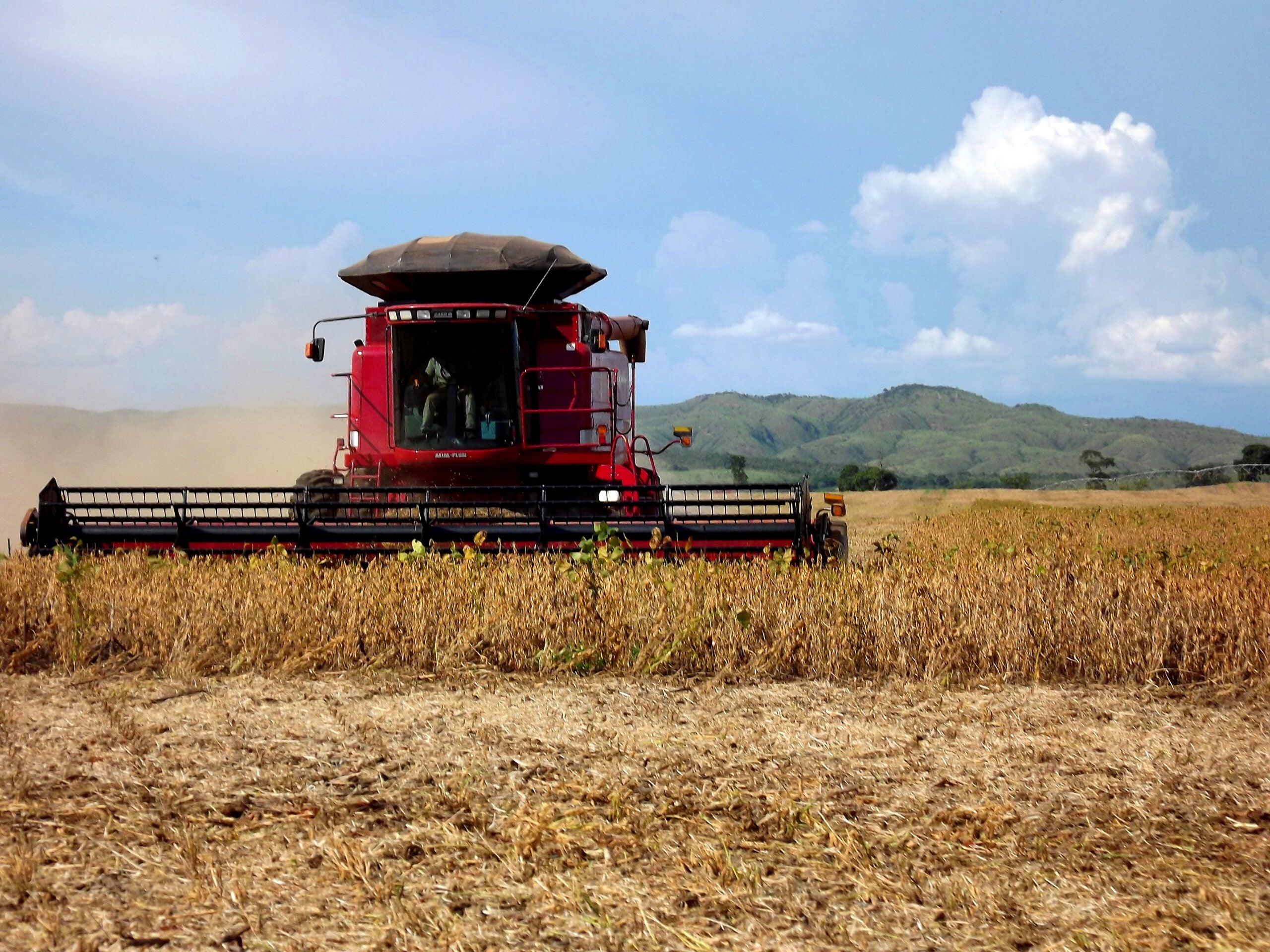
Think of the soybean market as a warehouse filling faster than the customers arrive. On Monday, 2 November 2026, the soybean fund SOYB fell 1.26% to US$25.81.
Corn and wheat did not follow. The corn fund CORN rose +0.12% and the wheat fund WEAT rose 0.36%, which kept the day from becoming a broad grain rout.
The pressure comes from abundant Brazilian supply and slow Chinese buying, not from a shock in the wider market. Corn and wheat bounced even as soybeans fell, which points to tired selling rather than fresh fear. The variable to watch is how much of Brazil’s new crop China books in the coming weeks.
02 The board
Soybeans were the only one of the three to fall, and the fall comes after four weeks of weakness. The fund is down 5.53% over 20 sessions and 2.46% over five.
Corn closed at US$17.36 and wheat at US$22.28. Both are small gains, but each is a bounce inside a larger decline rather than a turn.
| Asset | Level | Change |
|---|---|---|
| Soybeans (SOYB) | US$25.81 | -1.26% |
| Corn (CORN) | US$17.36 | +0.12% |
| Wheat (WEAT) | US$22.28 | +0.36% |
Source: RT close, 2026-11-02. Where a commodity has no spot feed, an exchange-traded tracker or leading producer is shown as a labelled proxy.
Live Market IntelligenceThe live market board
Rio Times · Live Market Intelligence
Latin America — Cross-Market Board
| Instrument | Last | Change | YoY | Prev. | High | Low | Volume |
|---|---|---|---|---|---|---|---|
| IBOV | 167,921.80 | -0.75% | +19.56% | 169,186.42 | 178,526 | 175,157 | — |
| IPSA | 10,374.91 | +1.18% | — | 10,254.15 | 10,722 | 10,633 | — |
| IPC MEX | 69,779.20 | -0.01% | +12.74% | 69,787.41 | 70,008 | 69,383 | 49,372,306 |
| MERVAL | 2,848,945 | — | +12.65% | 2,859,051 | — | — | — |
| COLCAP | 2,490.92 | +0.04% | — | — | — | — | — |
| USD/BRL | 5.34 | -1.32% | -0.84% | 5.42 | 5.42 | 5.30 | — |
| EUR/BRL | 5.95 | +7.53% | -4.87% | 5.54 | 6.04 | 5.92 | — |
| USD/MXN | 18.69 | +0.62% | +1.45% | 18.57 | 18.69 | 18.54 | — |
| USD/CLP | 983.47 | -0.57% | +5.64% | 989.13 | 991.87 | 979.07 | — |
| USD/COP | 3,149 | +3.06% | -18.02% | 3,056 | 3,173 | 3,111 | — |
| USD/PEN | 3.45 | +0.17% | +3.85% | 3.44 | 3.45 | 3.44 | — |
| USD/ARS | 1,537 | -0.28% | +3.77% | 1,541 | 1,541 | 1,537 | — |
| USD/UYU | 40.21 | +3.57% | +2.29% | 38.83 | 40.21 | 40.08 | — |
| USD/PYG | 5,803 | +3.78% | -16.54% | 5,592 | 5,803 | 5,735 | — |
| USD/BOB | 11.97 | +4.93% | +77.92% | 11.41 | 11.97 | 11.82 | — |
| USD/DOP | 60.54 | +1.83% | -4.34% | 59.45 | 61.14 | 59.85 | — |
| USD/CRC | 451.24 | +2.13% | -7.80% | 441.83 | 451.40 | 450.04 | — |
| USD/GTQ | 7.64 | +3.23% | +2.18% | 7.40 | 7.64 | 7.64 | — |
03 Why it moved
First, supply. Conab, Brazil’s national crop agency, forecasts a 2026/27 soybean harvest of 181.64 million tonnes and expects exports of 117.98 million tonnes. Markets sell the crop before it is cut. Confidence: high.
Second, China. It took 70 million of the roughly 100 million tonnes Brazil shipped between January and September, yet it has pre-bought only 9.04 million tonnes of the new crop. Buyers cite large stocks and poor crushing margins, meaning thin profits from turning beans into meal and oil. Confidence: medium to high.
Third, the wider mood. The dollar fund UUP slipped 0.14% and the 10-year Treasury yield slipped to 4.89%, which normally helps commodities, so those drivers do not explain the fall. Fear rose, with the VIX up 8.91% to 21.15, the S&P 500 lost 0.51% and the oil fund USO fell 7.08%. Weaker oil can reduce demand for soybean oil as a biofuel input, a reading we hold with medium-to-low confidence.
Wheat has no clear fresh driver in our reporting. Its three-day bounce looks like bargain-hunting after a slide, and analysts have been calling grains heavily oversold, meaning sold too far too fast. Confidence: low.
04 The trend behind it
This is a continuation, not a new phase. Soybeans are 8.3% below the 28.14 high of 10 September but 18.9% above the 21.71 low of 13 January, while the fund is still up 3.0% over 60 sessions.
Corn is the heavier faller: 14.4% below its 12-month high of 20.29 from 1 September, and down 8.15% over 20 sessions. Wheat is 20.4% below its 28.00 peak of 28 August.
Our own history offers a hint, not a forecast. After 50 earlier soybean falls of this size, the fund was higher 20 sessions later in 31 cases (62%), with a median gain of 1.2% and a worst loss of 7.8%. Corn rebounded in 23 of 39 cases (59%), but wheat did so in only 9 of 22 (41%), with a worst loss of 23.9%.
05 What it means for Latin America
Brazil is both winner and loser. A record harvest and exports of 117.98 million tonnes bring volume, but lower prices trim what each tonne earns, and farmers’ reais income also depends on the exchange rate. We found no reliable real or peso figures for the session, so we draw no currency conclusion.
China is tilting towards South America. Tariffs on US soybeans make Brazilian and Argentine beans cheaper for private Chinese buyers, and all 9.04 million tonnes pre-bought so far are Brazilian. Argentina competes for the same orders, though we found no fresh Argentine harvest figures.
For importers in Mexico, Peru and Chile, cheaper feed grain eases costs for poultry and pork. For travellers and savers the effect is indirect, but food inflation in the region has one less push upward.
06 The names to watch
The three funds are the cleanest read: SOYB for soybeans, CORN for corn and WEAT for wheat. They are proxies, so they follow grain futures, not the farm-gate price.
Watch Conab, which updates Brazil’s crop estimate through the season, and the US Department of Agriculture, which expects Chinese imports to keep growing in 2026/27. China’s own agriculture ministry projected 95.5 million tonnes in May, so the gap between those forecasts is the real debate.
07 What would end it
For soybeans, the 21.71 January low is the floor and 28.14 the ceiling, with the US$25.81 close in between. For corn, support is the 16.47 low of 29 June and resistance is 20.29. For wheat, 28.00 is the high to beat.
Planting delays in Brazil would tighten supply and could lift prices. Large Chinese purchases of the new crop would do the same.
Does the slide stop? History says a bounce is more likely than not for soybeans and corn, less so for wheat. Without Chinese buying, any rebound is likely to be modest.
08 What to watch
- China purchases: Any large booking of Brazil’s new crop beyond the 9.04 million tonnes already bought would signal demand is returning.
- Brazil planting: Delays would cut supply expectations; steady progress supports the record-crop forecast.
- Support levels: Soybeans at 21.71, corn at 16.47: a break below either would show the selling is deepening.
- Oil and the dollar: Oil fell 7.08% and the dollar fund UUP closed at US$28.96; a rebound in either would change the backdrop for grains.
Frequently Asked Questions
Why did soybeans fall on Monday?
Mainly because Brazil is heading for a record crop and China is buying cautiously, with the soybean fund SOYB down 1.26%.
Why does Brazil matter so much?
It supplied about 100 million tonnes of soybeans in the first nine months of 2026, 70 million of them to China.
Are these funds the grain price?
No. SOYB, CORN and WEAT are exchange-traded funds that track grain markets, so their prices differ from the grain itself.
Will prices rebound?
Past falls this size were followed by gains 20 sessions later in 62% of soybean cases, but history is not a forecast.
Market data: The Rio Times
This article was produced by The Rio Times’ automated newsroom system. How we use AI · Report an error · Editorial responsibility: Matthias Camenzind, Editor-in-Chief
LatAm Markets: Live Signals → — real-time movers, turnover leaders and FX across Latin America.