
GHANA · NUCLEAR ENERGY
Key Facts
- The country Ghana is a West African gold and cocoa exporter led by President John Dramani Mahama.
- Why now Mahama disclosed the talks at the Russia-Africa Summit in Moscow on Thursday 29 October 2026.
- What happened Ghana has opened talks with Rosatom, Russia’s state nuclear corporation, on its first nuclear power station.
- What it means for you US goods trade with Ghana was about US$2.5 billion in 2025; watch whether talks reach a contract.
- Still open No capacity, site, cost, financing or timetable for a plant has been announced.
In Plain English
Rosatom is Russia’s state nuclear energy corporation, the company Mahama named in Moscow. The International Atomic Energy Agency (IAEA) is the UN’s atomic energy agency, which reviews how countries prepare for nuclear power.
The Nuclear Regulatory Authority (NRA) is Ghana’s independent regulator of civilian nuclear and radioactive materials. The African Continental Free Trade Area (AfCFTA) is a continent-wide trade pact whose secretariat is based in Accra.
Ghana has opened talks with Russia’s state nuclear corporation, Rosatom, on building its first nuclear power station, President John Dramani Mahama told the Third Russia-Africa Summit in Moscow on Thursday 29 October 2026. “We have initiated discussions with Rosatom on the establishment of Ghana’s first nuclear power station,” he told the gathering.
No capacity, site, cost, financing or timetable was announced, so the statement describes talks and not a contract. For US readers it matters because the United States and Ghana traded about US$2.5 billion in goods in 2025, and because US law has barred imports of Russian-produced low-enriched uranium, a nuclear fuel input, under a statute signed on 13 May 2024.
Mahama spoke on the second and final day of a summit that opened on Wednesday 28 October 2026 under the chairmanship of Russian President Vladimir Putin. His office says he urged partners to end dependence on aid and raw-material exports and to favour investment models that deliver “equitable, long-term returns”.
What Mahama Said in Moscow
Mahama called the lack of adequate electric power a major obstacle to Africa’s progress and said Russia has a comparative advantage in renewable and nuclear energy. He added that Ghana is pursuing a diversified energy mix, including renewables, while laying the foundations for the peaceful use of nuclear energy.
He invited Russian businesses to partner with Ghanaian firms in agro-processing, fertiliser, pharmaceuticals, energy, transport and the digital economy. He pointed to openings in cocoa, cashew, horticulture and mineral processing, and to Ghana’s role as host of the AfCFTA secretariat.
On payments, he called for “appropriate mechanisms for making legitimate trade settlements that include the use of our local currencies and other digital payment systems,” giving central banks, commercial banks and fintech firms a key role. The Presidency’s written summary of his roundtable remarks on Thursday 29 October 2026 makes the same proposal for local currencies and integrated digital payment systems.
Mahama reaffirmed Ghana’s non-alignment, telling the summit: “We seek friendship with all countries and partnerships that advance our development priorities.” He also thanked Russia for its support during the struggle against colonialism and apartheid.
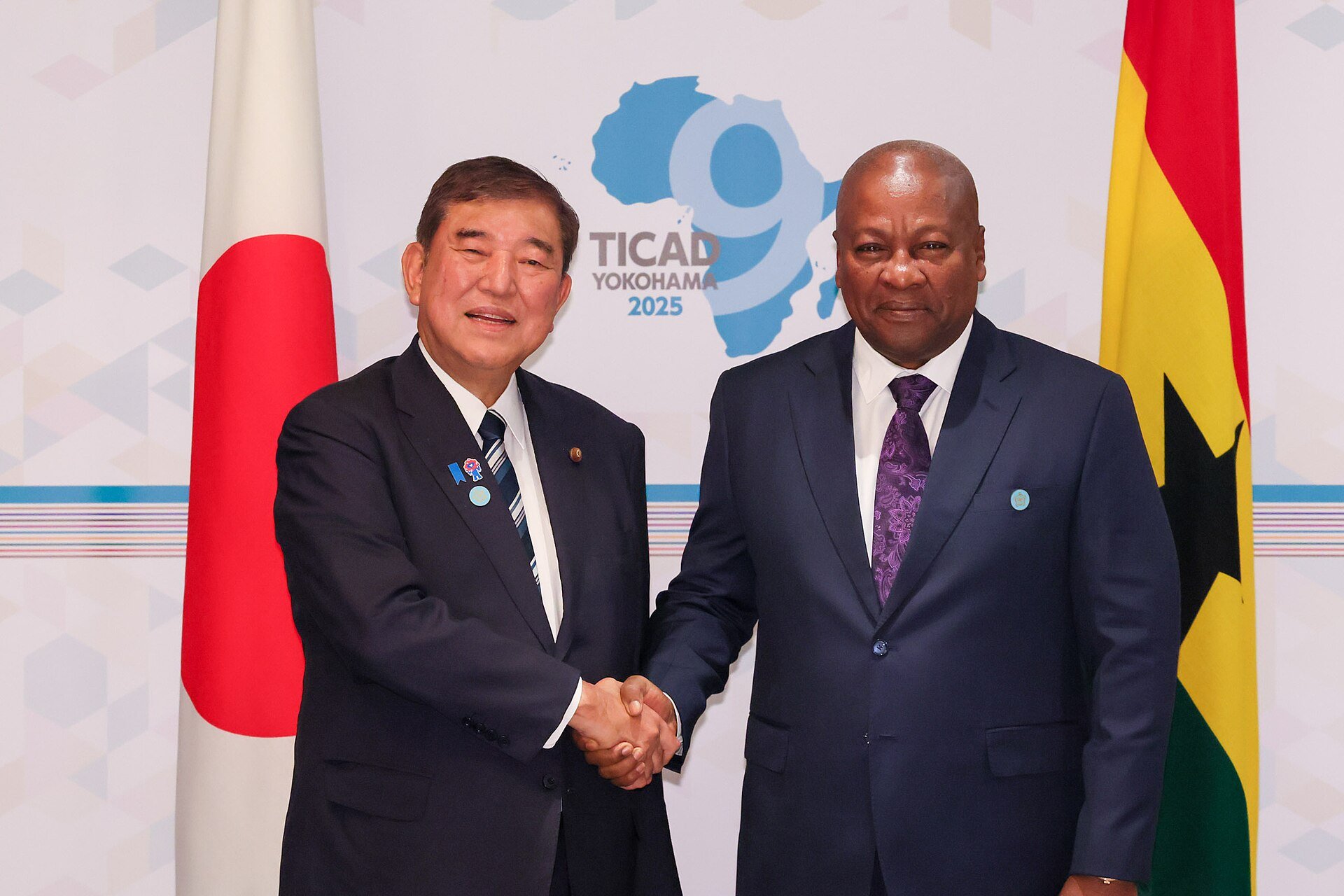
Where Ghana’s Nuclear Plan Stands
Ghana has no nuclear power plant today, and its research reactor at Kwabenya near Accra is a 30-kilowatt Chinese-built unit commissioned in 1995. The Ghana Atomic Energy Commission’s scientists describe it as a neutron source for research and training, not a power station.
The IAEA reviewed Ghana’s preparations from 21 to 24 October 2019 and found that Ghana had completed 8 of 12 recommendations and 6 of 8 suggestions from a 2017 review. It also recorded that Ghana had started discussions with vendors and other potential partners, without naming any.
Ghana’s Nuclear Regulatory Authority says it regulates the civilian use of nuclear and radioactive materials and, in the near future, commercial nuclear power plants. The Energy Ministry, led by Minister John Abdulai Jinapor, carried no statement on the Rosatom talks on its website on Friday 30 October 2026.
Why It Matters
The US Census Bureau counts US goods exports to Ghana at US$1.28 billion in 2025 and imports at US$1.22 billion, for two-way goods trade of about US$2.5 billion. The guide to Ghana and the United States sets out the wider relationship.
The law signed on 13 May 2024 bars imports into the United States of unirradiated low-enriched uranium produced in Russia, subject to Energy Department waivers and annual import caps through 2027. It governs what enters the United States, not what Ghana buys, but it marks Russian nuclear fuel as a sensitive subject for US policy.
Mahama’s office says he takes over the chairmanship of the African Union next year, so his choice of partners will be watched beyond Ghana. It describes the Moscow trip as part of a strategy to diversify trade relationships, attract strategic investment and advance the AfCFTA agenda.
What It Means for You
US investors and exporters active in Ghana’s energy, mining and farm sectors (see Ghana news and analysis) should read the statement as the start of a procurement discussion, not a signed project. No capacity, cost or schedule has been given, and the NRA would regulate any plant, a step that has not been announced.
Mahama framed the Moscow talks inside a stated policy of non-alignment, and the US trade relationship described above continues alongside it. US readers who follow African energy policy should watch for any statement from the Energy Ministry that names a partner, a site or a budget.
What Is Not Known
Neither Mahama nor the Presidency has published a capacity, site, price, financing or timetable for a Russian-built plant. The Presidency’s written summary of his Moscow remarks on Thursday 29 October 2026 does not mention the nuclear talks.
It is not known whether Ghana will also seek offers from other vendors, since the IAEA recorded vendor discussions in 2019 without naming any. The speech gave no figure for the electricity a plant would supply.
Frequently Asked Questions
Is Ghana building a nuclear power plant with Russia?
No contract has been announced. President Mahama said on Thursday 29 October 2026 only that Ghana has begun discussions with Rosatom, and no site, cost or timetable was given.
Does Ghana have nuclear power now?
No, Ghana has no nuclear power plant. Its research reactor at Kwabenya near Accra is a 30-kilowatt Chinese-built unit commissioned in 1995 for research and training.
Why does Russian nuclear fuel matter to US readers?
A US law signed on 13 May 2024 bars imports of unirradiated low-enriched uranium produced in Russia, subject to waivers and caps. It governs US imports, not Ghana’s purchases.
When did the Russia-Africa Summit take place?
The Third Russia-Africa Summit opened in Moscow on Wednesday 28 October 2026 and ran into Thursday 29 October. Mahama spoke on the final day.
Sources: Presidency of Ghana, press release on the Russia-Africa Summit roundtable, 29 October 2026; Presidency of Ghana, press release, 26 October 2026; International Atomic Energy Agency, review of Ghana’s nuclear infrastructure, October 2019; Ghana Atomic Energy Commission, paper on the 30 kW research reactor, IAEA conference publication; Nuclear Regulatory Authority, Ghana, mandate, accessed 30 October 2026; Ministry of Energy and Green Transition, Ghana, accessed 30 October 2026; US Congress, Prohibiting Russian Uranium Imports Act, Public Law 118-62, 13 May 2024; US Census Bureau, trade in goods with Ghana, annual 2025 and January to August 2026.
This article was produced by The Rio Times’ automated newsroom system. How we use AI · Report an error · Editorial responsibility: Matthias Camenzind, Editor-in-Chief