Evo Morales Says the Paz Government Is Agonizing. He Is Speaking From Under Two Arrest Warrants.
BOLIVIA · POLITICS
Key Facts
- —The word Agoniza, used on his weekly Sunday radio programme on 13 September.
- —The claim That the government lacks popular backing and direction.
- —The government Rodrigo Paz took office on 8 November 2025, ending nearly twenty years of MAS rule.
- —The arithmetic His party holds 65 of the seats counted here, the largest bloc without a working majority.
- —His status Two arrest warrants, from Santa Cruz and from Tarija. He denies both cases.
- —The catch Bolivian outlets quote one word. No verbatim full sentence is available.
The assembly he is describing is fragmented rather than hostile. The distinction is doing work in his favour.
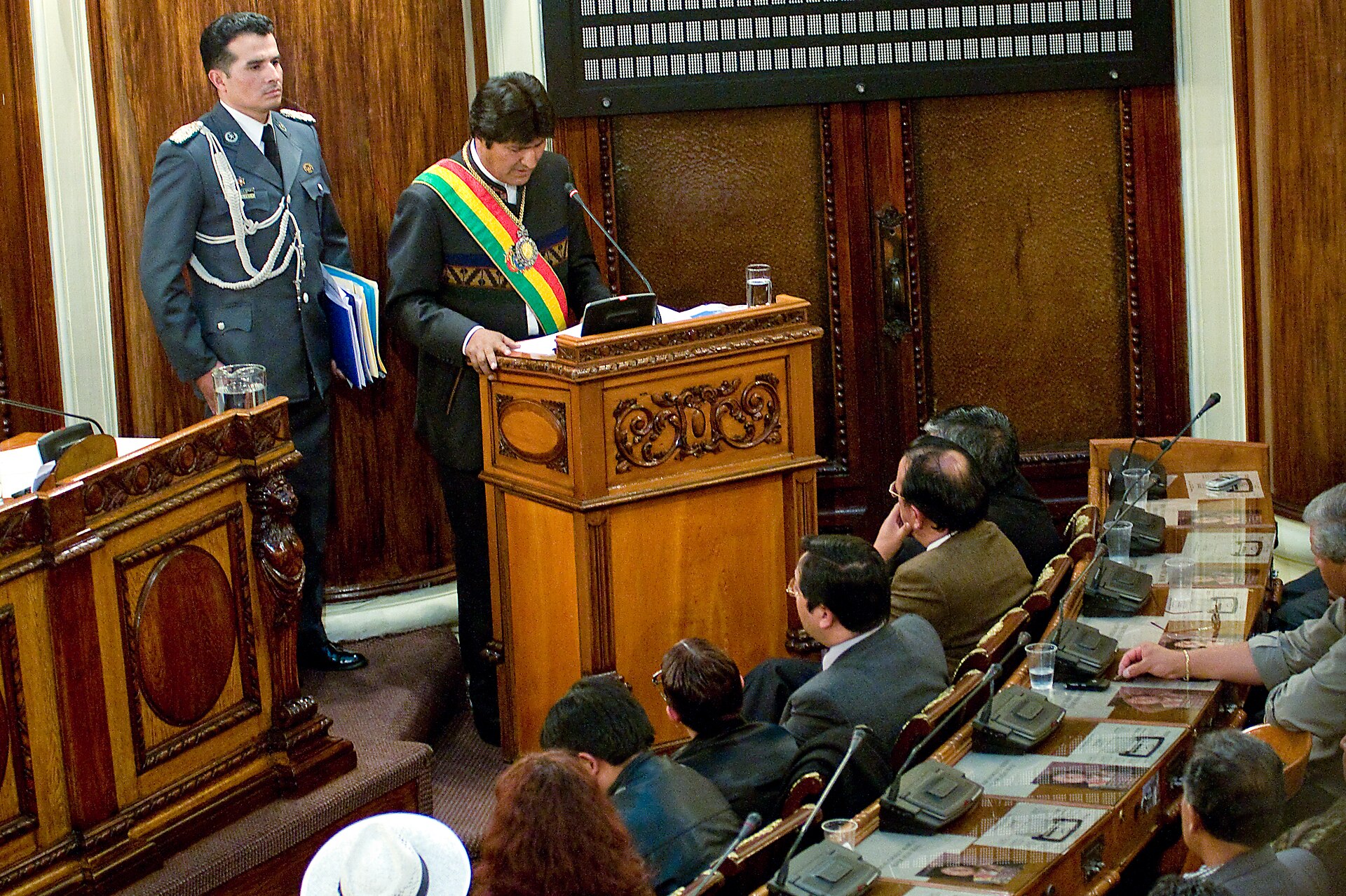
Evo Morales said on Sunday, 13 September 2026, that Bolivia’s government is agonizing. He was speaking on his weekly radio programme.
Four Bolivian outlets carry the remark, so it is not a single-source claim. Every one of them quotes the same single word.
What He Said
The word is agoniza. It appears in each report embedded in reported speech rather than as a full sentence.
The surrounding claim is that the Rodrigo Paz government lacks popular backing and direction. That is the outlets’ paraphrase of his argument.
Because no verbatim sentence is available, only the word is quoted here. Constructing a fuller quotation around it would be inventing one.
He made several other claims in the same broadcast. He said that when a right-wing government wobbles, the regional organisation arrives to save it.
He described the agreement with the International Monetary Fund as imposition and blackmail. He warned that removing fuel subsidies could push more than half the population into poverty by year end.
He also attacked cabinet cohesion, saying ministers act separately and worry more about losing their posts. And he said a policing arrangement humiliated the police, leaving them without authority.
The Government He Is Describing
Rodrigo Paz took office on 8 November 2025 with Edmand Lara as vice-president. Their arrival ended nearly twenty years of government by the movement Morales founded.
His party holds 49 seats in the lower chamber and 16 in the senate, a total of 65. That is the largest bloc.
Libre follows with 39 and 12, a total of 51. Unidad has 26 and 7, a total of 33.
Several smaller groupings hold the balance, including Morales’s former party. An assessment in El Deber describes an assembly of mobile majorities.
All three major blocs have fractured internally. Small parties hold leverage out of proportion to their size.
So the accurate description is fragmented rather than unsupported. Morales’s claim is about popular backing, which is a different proposition from parliamentary arithmetic, and the two should not be merged.
His Own Position
Evo Morales is a fugitive from Bolivian justice. This is not a detail that can sit at the bottom of the story.
A warrant issued in Santa Cruz in July 2026 relates to the 53-day road blockades of May and June. The charges include armed uprising against state security and sovereignty, and terrorism.
A second warrant from Tarija concerns alleged aggravated human trafficking. He failed to appear at a hearing and was declared in contempt.
A third proceeding runs in Argentina relating to his period of asylum there. He denies all of the cases and describes them as political persecution.
The president of Bolivia’s supreme court has said the warrants carry no expiry date. Morales’s location has not been confirmed by any source.
He was disqualified from standing electorally and founded a new party in response. That disqualification is the background to his continuing campaign against the government.
The Fuel Subsidy Question
His sharpest substantive point concerns fuel. Bolivia has subsidised petrol and diesel heavily for years, and the cost has become unmanageable as gas export revenue declined.
Removing the subsidy is the standard recommendation of every external assessment. It is also the single most politically explosive measure available to any Bolivian government.
Morales’s warning about poverty is a political claim and is presented as one. Whether it is accurate depends on what compensation accompanies the removal.
Previous Bolivian attempts to cut fuel subsidies have been reversed within days. That history is why the warning carries weight regardless of who is making it.
How to Weigh It
A former president under two arrest warrants attacking the government that succeeded him is an interested party. That does not make his claims false.
It does mean each one needs testing separately. The fragmented assembly is documented, the subsidy risk is real, and the word agonizing is his characterisation.
Readers encountering the remark elsewhere will often see it without his legal status attached. That omission changes how the quotation reads.
More: Bolivia news in English, every day from The Rio Times.
Frequently Asked Questions
What did Evo Morales say?
That the Rodrigo Paz government is agonizing, for lack of popular backing and direction. He used the Spanish word agoniza on his weekly radio programme on 13 September 2026.
Is the Bolivian government without support in parliament?
It is fragmented rather than unsupported. The governing party holds the largest bloc, 65 seats across both chambers, but no working majority, and all three major blocs have fractured internally.
What is Morales’s legal situation?
He faces two arrest warrants in Bolivia, from Santa Cruz over the May and June blockades and from Tarija over alleged aggravated human trafficking, plus a proceeding in Argentina. He denies all of them.
Who governs Bolivia?
Rodrigo Paz, inaugurated on 8 November 2025 with vice-president Edmand Lara, ending nearly two decades of government by the movement Morales founded.
Why does the fuel subsidy matter?
Bolivia subsidises petrol and diesel heavily, and the cost has grown unmanageable as gas export revenue fell. Every previous attempt to cut it has been reversed within days.
Sources: Erbol, La Razon, FmBolivia and El Nuevo Cambio of 13 September, El Deber of 13 August, RTVU Oruro and La Republica.
This article was produced by The Rio Times’ automated newsroom system. How we use AI · Report an error
Read More from The Rio Times