Europe Intelligence Brief — Saturday, October 24, 2026
Executive Summary
Europe Intelligence Brief for October 24: France deploys 70,000 police amid mass protests; Albania parliament clashes; EU seeks Ukraine role.
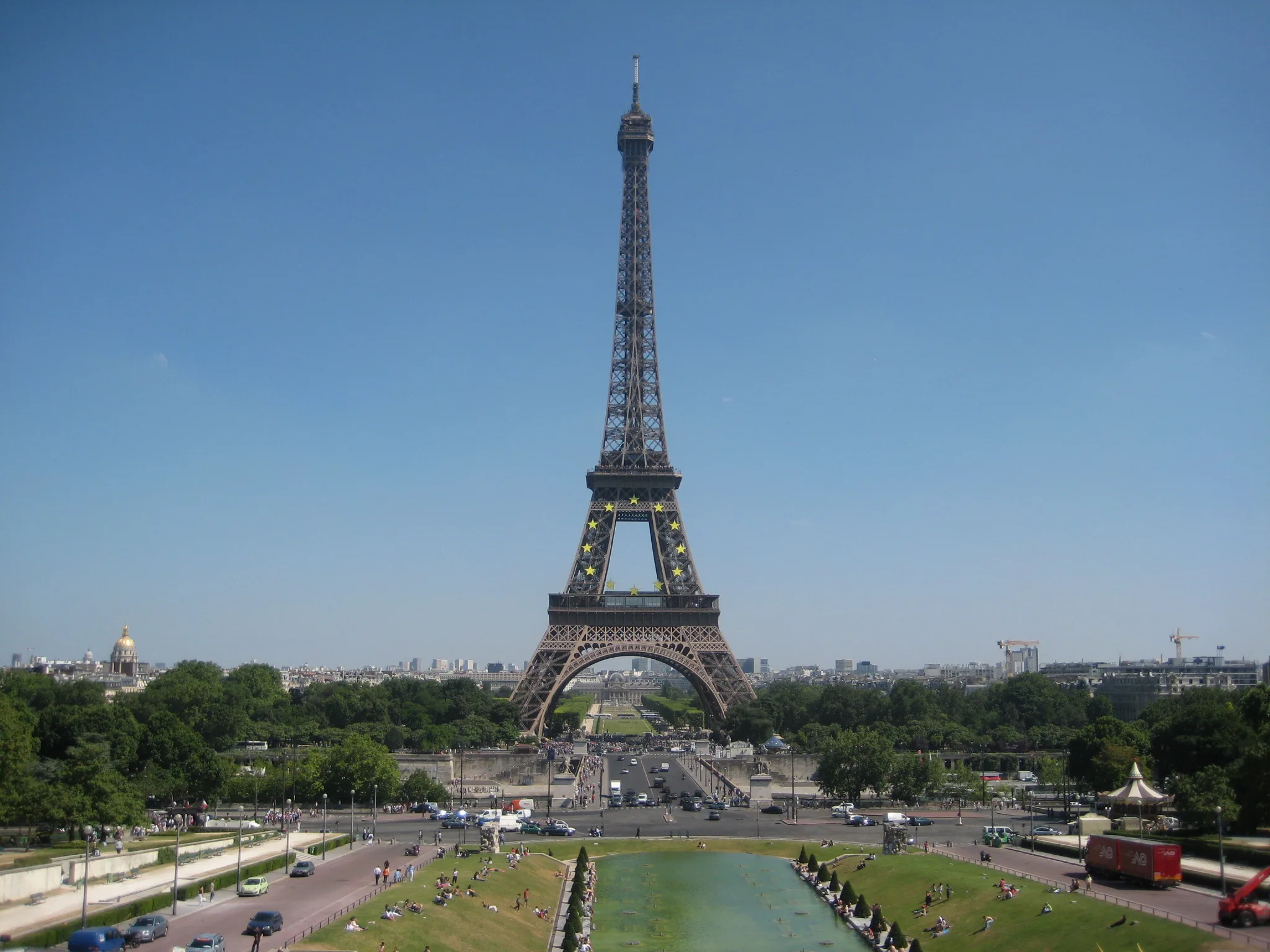
Europe wakes on Saturday to a mood of defensive institutions facing widening public anger, with France at the centre of a high-risk protest day that has already closed the Louvre and Musée d’Orsay. The deployment of roughly 70,000 police and gendarmes, reported by Le Monde on 24 October, signals a state bracing for disorder rather than expecting calm.
The register is one of security-first governance: curfews, museum closures and parliamentary confrontation are the day’s dominant language, while Brussels speaks of diplomatic relevance and Budapest of democratic memory. The through-line is a continent where purchasing-power frustration and youth mobilisation are colliding with governments that increasingly treat social discontent as a public-order emergency, even as leaders try to reclaim strategic influence abroad.
Key Facts
- France. Around 70,000 police and gendarmes were deployed for nationwide protests on 24 October.
- Mobilisations. The gilets jaunes announced more than 700 actions, including 500 demonstrations, on 24 October.
- Paris. The Louvre and Musée d’Orsay were closed and a night-time curfew remained in parts of the capital.
- Hungary. Péter Magyar honoured victims of the 1956 uprising on its 70th anniversary on 24 October.
- Albania. Clashes erupted in parliament after the opposition was blocked from debating student protests on 24 October.
France: Fear Wears A Uniform
The sheer scale of the security response reveals a government that has lost confidence in its ability to manage protest through ordinary policing and political argument. Prime Minister Sébastien Lecornu warned that the threat of violence remained high.
The breadth of the mobilisation, with high-school pupils, students, trade unions and the gilets jaunes converging, suggests that economic grievance has fused with generational anger into a broader legitimacy crisis. For a US reader, the French moment matters because it shows a core Western ally prioritising containment over negotiation just six months before a presidential election in which Marine Le Pen is reported as the leading candidate.
Hungary: Memory As A Political Shield
The 70th anniversary of the 1956 uprising has become a stage for Hungary’s leadership to wrap itself in anti-authoritarian memory while managing a complicated relationship with Brussels. Prime Minister Péter Magyar honoured the victims, and Ursula von der Leyen emphasised freedom and democracy, an encounter that reads as both commemoration and cautious institutional rapprochement.
The event reveals how democratic anniversaries are being used to project sovereignty and historical legitimacy at a moment when EU unity is under strain. For Washington, the symbolism matters because Hungary remains a pivotal voice on Ukraine, migration and the future shape of European decision-making.
Albania: Anger Moves Indoors
Clashes in the Albanian parliament after the opposition was prevented from debating student protests show that the generational unrest visible in France is also testing smaller European democracies. The confrontation suggests that institutions are struggling to absorb public anger without resorting to procedural blockage or physical confrontation.
The episode reveals a political class caught between youthful demands for accountability and an establishment reflex to control the agenda. For a US reader, it is a reminder that instability in the Western Balkans can flare quickly when economic frustration meets weak parliamentary trust.
Poland: Regulating The Giants
Poland’s deputy prime minister called for greater pressure on large technology companies, a signal that Warsaw wants to position itself as a rule-setter rather than a rule-taker in the digital economy. The intervention, reported by Euronews on 24 October, lacks detail on targets and measures, but its direction is clear.
The move reveals a government willing to use regulatory assertiveness as a tool of sovereignty and domestic political strength. For US policymakers, Poland’s stance matters because European tech regulation increasingly shapes the operating environment for American platforms.
EU: Searching For A Seat At The Table
Brussels is seeking to expand its role in Ukraine–Russia peace talks in order to influence US thinking. The ambition reflects anxiety that European security decisions are being made without European voices in the room.
The effort reveals an EU that fears strategic irrelevance even as it struggles with domestic fragmentation. For a US reader, the message is that Washington’s diplomatic choices are being watched closely by allies who want partnership, not spectatorship.
What This Means From Latin America
The French protest wave and the EU’s diplomatic anxiety both point to a Europe that is turning inward on security and legitimacy while trying to project outward influence. For Latin American governments, the EU’s push for a larger role in Ukraine–Russia diplomacy could signal a more assertive European foreign policy that may extend to trade, climate and multilateral institutions.
The unrest over purchasing power and youth expectations also resonates across Latin America, where similar pressures have repeatedly reshaped political landscapes. No specific trade or commodity impact is yet verifiable, but the direction of travel suggests a Europe more focused on internal stability and strategic autonomy, with uncertain consequences for transatlantic and Euro-Latin American cooperation.
What We Are Watching
- 26 October, 4:00 a.m. ET: Czech business and consumer confidence for October, forecast at 98 and 103.4 after 98.4 and 105.1. The readings will show whether Central European sentiment is holding up amid war-adjacent uncertainty and regional unrest.
- 27 October, 3:45 a.m. ET: France consumer confidence for October, forecast at 84 after 86. A decline would confirm that French households are feeling the strain of protest, purchasing-power pressure and political uncertainty.
- 27 October, 4:00 a.m. ET: Spain unemployment rate for Q3, forecast at 10.1% after 9.87%. A rise would add to social strain in a country already navigating youth mobilisation and political tensions.
- 28 October, 3:00 a.m. ET: Germany consumer confidence for November, forecast at -29.1 after -30.6. A further drop would signal that Europe’s largest economy is absorbing security and inflation anxieties.
- 5 November, 7:00 a.m. ET: Bank of England interest rate decision, previous 3.75%. The decision will reveal how British policymakers are balancing inflation against slowing growth and social pressure.
- 29 October, 9:15 a.m. ET: European Central Bank interest rate decision, forecast at 2.65% after 2.65%. The outcome will shape borrowing costs across the eurozone at a moment of political fragility.
Background: Europe Intelligence Dossier archive
Frequently Asked Questions
Why did France deploy 70,000 police on 24 October?
French authorities deployed around 70,000 police and gendarmes because of the high risk of violence during nationwide protests involving students, trade unions and the gilets jaunes. Prime Minister Sébastien Lecornu warned that the threat of violence remained high, and the Louvre and Musée d’Orsay were closed as a precaution.
What did the gilets jaunes plan for 24 October?
Reports said the gilets jaunes had announced more than 700 mobilisations, including 500 demonstrations and actions at roundabouts, petrol stations, railway stations, ports, bridges and toll points. The scale of the actions turned the day into a nationwide test of public order.
What happened in the Albanian parliament?
Clashes erupted in the Albanian parliament after the opposition was prevented from holding a debate concerning student protests. The confrontation reflects institutional strain as youth anger over economic and social conditions moves from the streets into politics.
What is the EU seeking in Ukraine–Russia diplomacy?
Reports said the EU was seeking to expand its role in Ukraine–Russia peace talks in order to influence US thinking. The move signals Brussels’ concern that European security decisions could be made without adequate European participation.
Keep reading: Europe Intelligence Dossier — 24 October 2026 | Archive
This article was produced by The Rio Times’ automated newsroom system. How we use AI · Report an error · Editorial responsibility: Matthias Camenzind, Editor-in-Chief
LatAm Markets: Live Signals → — real-time movers, turnover leaders and FX across Latin America.