Embraer’s Saber M200 Radar Takes On Small Drones in Brazil Test
Brazil · Defense
Key Facts
- —The test the Saber M200 radar was used in small-drone detection experiments at Exercise Sagitta Primus 2026.
- —The place the drill ran at the Campo de Instrução de Formosa in Goiás from 27 July to 5 August 2026.
- —The maker the radar was developed by Brazil’s army technology center with Embraer and its subsidiary Bradar.
- —The unit it worked alongside the 12º Grupo de Artilharia Antiaérea and remains under army evaluation.
- —The context Sagitta Primus, called Latin America’s largest air-defense drill, added a first counter-drone section.
A radar first designed to hunt fighter jets is learning to spot cheap quadcopters. As Brazil races to answer a threat that costs a few hundred dollars.
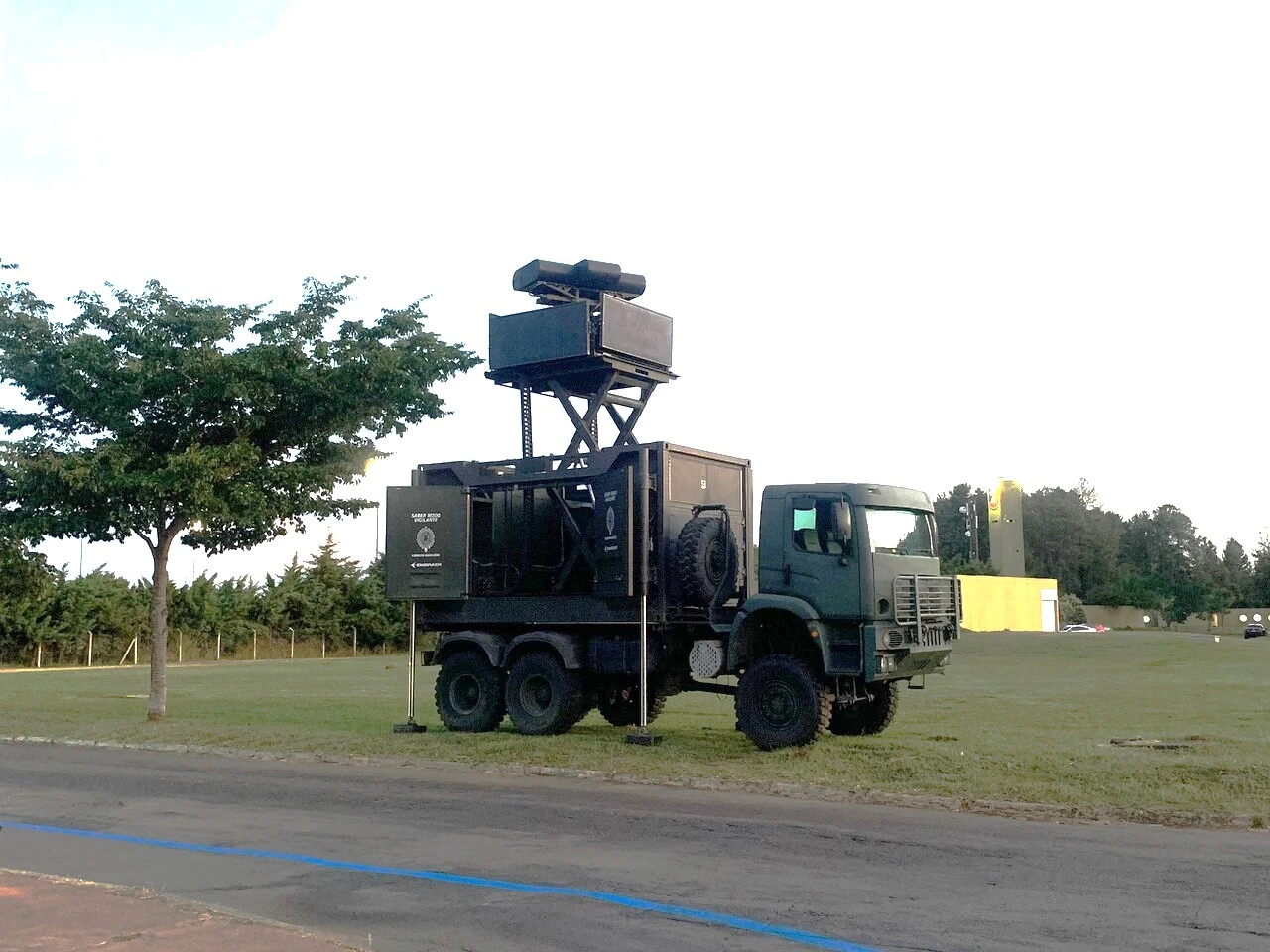
The Saber M200 radar, a Brazilian-built air-defense system, was tested against small drones during a major army exercise this month. Since the drill focused on countering cheap drones, it marked a new job for a radar first built to track jets.
What the Saber M200 Did at Formosa
The Saber M200 radar took part in engineering experiments aimed at spotting small drones. These trials ran during one of the army’s largest live-fire exercises in central Brazil.
The work happened at the Campo de Instrução de Formosa, a sprawling army training ground in Goiás. Soldiers used the radar to detect small drones flying overhead.
Because the drill leaned on tests rather than combat, the radar was still under evaluation. Even so, its role showed where Brazil’s air defense is heading.
A Radar Built in Brazil
The Saber M200 is a medium-range radar developed inside Brazil over many years. It watches the sky and sorts out what is flying through it.
The system uses a phased-array design, which sweeps a wide area without moving parts. As a result, it can track many targets at once.
It was built to spot aircraft, helicopters and drones alike. Since the design is homegrown, its rights are held by the Brazilian Army.
Live Company IntelligenceEmbraer SA ADR — the full investor dossier
Wall Street view
Valuation & profitability
Price & risk
$55.5652-wk high
$66.87
Revenue trend · 6y
Ownership
Dividend
From Gripen Jets to Small Drones
Earlier in 2026, the same radar faced a very different test. In May, crews tracked a fast Gripen fighter jet at Anápolis air base.
That trial ran during Exercise Escudo-Tínia and pushed the radar against a modern jet. However, drones pose the opposite kind of problem.
A jet is fast but large, while a drone is slow but tiny. Because small drones are hard to see, they test a radar in new ways.
Why Cheap Drones Changed Air Defense
Small drones have quietly reshaped modern conflict from Ukraine to the Middle East. A device costing a few hundred dollars can now threaten vehicles, buildings and troops.
That gap worries armies everywhere. For example, firing an expensive missile at a hobby drone rarely makes sense.
Brazil is not at war, yet it faces the same trend. Since criminal groups already fly drones to smuggle and scout, the army wants answers ready.
How a Radar Fits the Counter-Drone Puzzle
Stopping a drone starts with seeing it. Before a crew can jam or shoot a drone, a sensor has to find it first.
That is why a radar sits at the front of the chain. It hands off targets to jammers and guns once it spots them.
The Saber M200 plays this detecting role. Meanwhile, other tools handle the job of bringing the drone down.
What the Army Has, and Has Not, Confirmed
The army has confirmed that the Saber M200 joined drone-detection experiments at Formosa. Official reports, however, list no detection range for small drones.
Some coverage has floated a figure of around 8 kilometers for spotting small drones. Still, no official source ties that number to this radar.
For that reason, the safe reading is simple. The radar was tested against drones, though its exact reach against them stays undisclosed.
Who Ran the Test
The exercise was called Sagitta Primus 2026. Since it ran from 27 July to 5 August, crews had days at the Formosa ground.
More than 500 soldiers from 23 army organizations took part, while the air force lent support. The radar worked beside the 12º Grupo de Artilharia Antiaérea.
The wider drill was billed as Latin America’s largest air-defense exercise. In addition, it added a first section devoted to countering drones.
The Embraer and Army Partnership
The Saber M200 grew out of a long partnership. Brazil’s army technology center led the project, while Embraer provided industrial muscle.
Embraer’s defense arm, Bradar, worked on the radar during its development. As a result, the system blends military research with private industry.
Embraer has said it finished the design and signed an army contract for a unit. Since the rights stay with the army, Brazil controls the technology.
What Detection Range the Radar Offers
For air surveillance, the Saber M200 is described as reaching up to 200 kilometers. That figure covers large targets like aircraft, not tiny drones.
Against combat jets, reported reach falls to about 150 kilometers. Because smaller objects reflect less, a radar spots them at shorter distances.
A drone is far smaller than a jet, so its detection range is naturally shorter. Still, the exact figure for small drones remains undisclosed.
What Happens After the Evaluation
The Saber M200 is not yet a finished weapon fielded across the whole force. Instead, it is still moving through the army’s formal evaluation process.
The Army Evaluation Center, known as CAEx, is checking whether the radar meets its stated requirements. Officials have said that this stage should wrap up during 2026.
Once the review ends, the army can decide how widely to deploy the system. For that reason, each exercise adds data that shapes the final call.
Why This Matters for Brazil and the Region
Brazil is building its counter-drone playbook one careful step at a time. Each test, therefore, feeds fresh lessons into how the army will fight small aircraft.
A homegrown radar also carries real weight for the country’s defense industry. For instance, a slot at a flagship army drill can help sell Brazilian gear abroad.
The clear message is one of direction rather than a single headline weapon. Overall, Brazil is treating cheap drones as a threat worth serious money and planning.
More: Brazil news in English, every day from The Rio Times.
Frequently Asked Questions
What is the Saber M200 radar?
It is a Brazilian medium-range, phased-array air-defense radar that detects and tracks aircraft, helicopters and drones. It was developed by the army with Embraer.
Did the Saber M200 detect drones at 8 kilometers?
The radar took part in small-drone detection experiments at Formosa. However, no official source publishes an 8-kilometer range for it against drones.
Who makes the Saber M200?
It was co-developed by Brazil’s army technology center and Embraer, with its subsidiary Bradar. The army holds the intellectual property.
What was Exercise Sagitta Primus 2026?
It was a Brazilian Army air-defense drill at Formosa, Goiás, from 27 July to 5 August 2026. Coverage called it Latin America’s largest such exercise.
Connected Coverage
Sources: Tecnologia & Defesa; Embraer Defense & Security; Brazilian Army (CTEx, CAEx, Anti-Aircraft Defense Command); Agência Gov / Exército Brasileiro; Aeroin; DefesaNet.
This article was produced by The Rio Times’ automated newsroom system. How we use AI · Report an error
Read More from The Rio Times