Egypt Energy Explained, Gas, Power and Debt
Egypt depends on natural gas for most of its electricity, its own output has fallen short, and Israeli gas, a Chevron-operated field and a settled debt now shape what comes next.

EGYPT · ENERGY
Egypt makes most of its electricity from natural gas, and since August 2025 it has been lining up much more of that gas from Israel. The Israeli field behind the deal, Leviathan, is operated by the US company Chevron, which is why the story reaches American readers.
Egypt also operates the Suez Canal and the Suez-Mediterranean (SUMED) oil pipeline, according to the US Energy Information Administration (EIA, the US government’s statistics agency), so its energy health matters beyond its borders. This guide explains where the power comes from, why home-grown gas fell short, and who is paying for it now.
Key Facts
- Who Egyptian gas firms, the power grid, fertiliser makers and Chevron, operator of the Leviathan field.
- What Home-grown gas fell short, so Egypt imports more, including Israeli gas through 2040.
- Why it matters Gas makes most Egyptian electricity, and gas cuts now reach fertiliser plants.
- Next New home gas is due by end-2026, with a renewable target set for 2028.
- As of 27 November 2026, 20:30 GMT
Egypt depends on natural gas for most of its electricity, its own output has fallen short, and Israeli gas, a Chevron-operated field and a settled debt now shape what comes next.
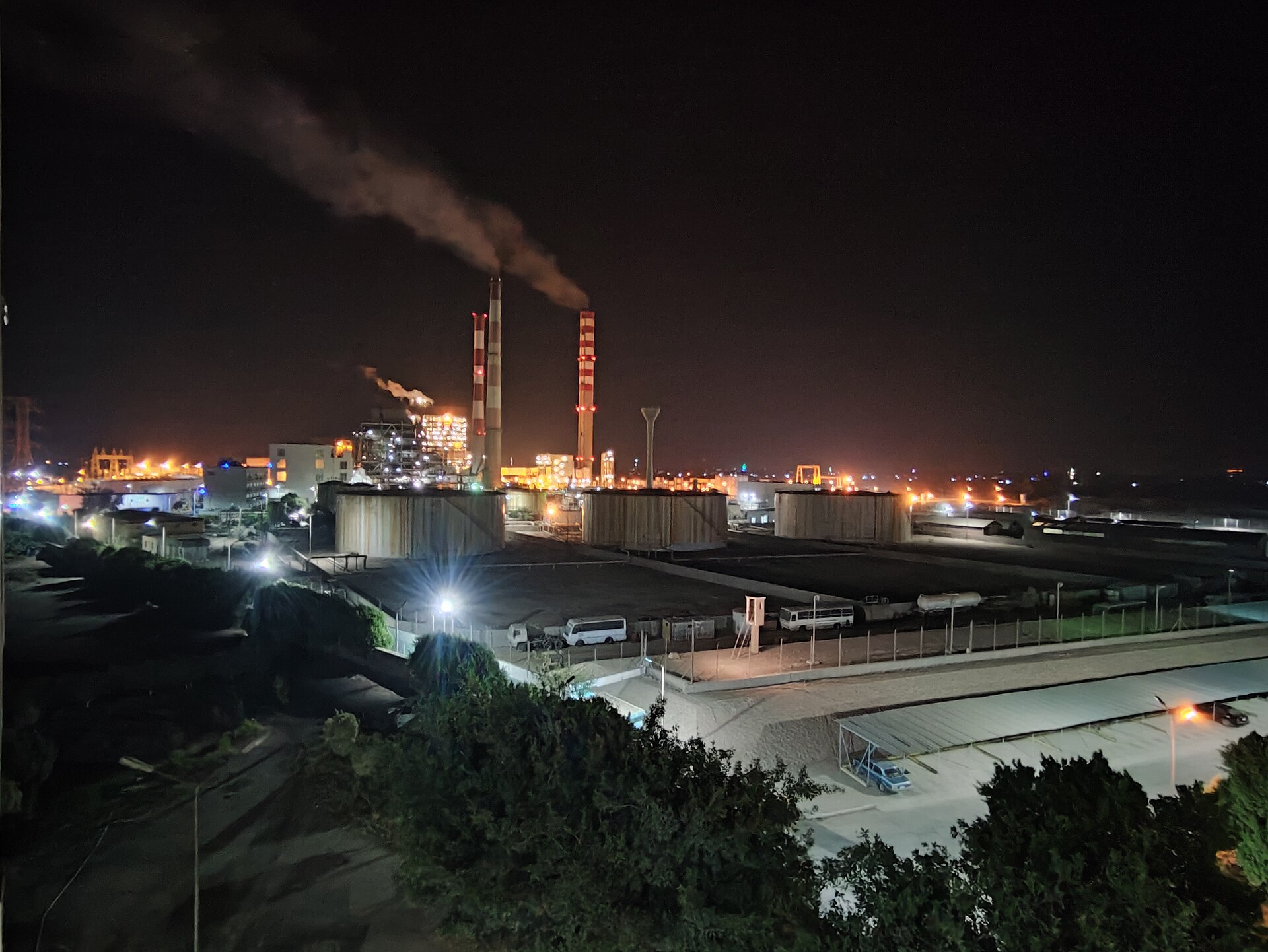
How Egypt Gets Its Power
In 2022, natural gas supplied 55% of Egypt’s primary energy, or 2.2 of 4.0 quadrillion Btu (a standard unit of energy), according to the EIA’s Egypt country analysis, last updated on 13 August 2024. Oil supplied a further 41% of primary energy that year.
For electricity the dependence is heavier still, because the EIA put gas at 81% of generation in 2022. That was 174.9 of 215.8 terawatt-hours, and one terawatt-hour is a billion kilowatt-hours.
The same EIA analysis shows hydropower at 6% and renewables and other sources at 5% of Egyptian generation in 2022, so when gas is short the grid has few other places to turn. For background on the country’s wider resources, read Egypt natural resources explained.
Egypt was still the second-largest natural gas producer in Africa in 2022, behind Algeria, the EIA said. It is also the only country in the Eastern Mediterranean with working LNG export capacity, meaning plants that cool gas into liquid (liquefied natural gas, or LNG) so that ships can carry it.
Why Egypt's Own Gas Fell Short
Zohr, Egypt’s largest offshore gas discovery, was found in 2015 and developed in 2017, the EIA wrote in its Today in Energy note (a short news brief) of 9 September 2025. Operational and technical issues at the field then lowered production.
Egypt turned to imports while demand rose over the past decade, the same EIA note said. The agency titled it a growing natural gas deficit, which is the gap between what Egypt burns and what it pumps.
The EIA’s August 2024 country analysis adds that Zohr never reached its peak output because of technical issues. It also said recent exploration had not led to significant new discoveries.
Imports expose a country to events far from its own coast. The EIA noted that the Israel-Gaza conflict led to a month-long shutdown of Israel’s Tamar gas field in October 2023, which cut Israeli gas imports to Egypt.
The Israeli Gas Deal
In August 2025 Egyptian firm Blue Ocean Energy, the buyer, struck a US$35 billion deal with partners in the Leviathan field offshore Israel, the EIA reported on 9 September 2025. Leviathan is operated by Chevron, so the supply is a project run by a US company.
Israel produces more gas than it uses and exports by pipeline to Jordan and Egypt, the EIA said. Israel has no LNG export capacity, which makes the pipeline route to Egypt the practical outlet.
Israel’s Prime Minister Benjamin Netanyahu said on Wednesday 17 December 2025, in a televised statement: “I have today approved the largest gas deal in Israel’s history.” He put the deal at 112 billion shekels (about US$34.67 billion), and the approval had been held up over outstanding issues.
The Leviathan partners, Chevron plus NewMed Energy and Ratio (both Israeli energy companies), signed the export agreement with Egypt’s Blue Ocean Energy in August 2025. NewMed said Leviathan, with reserves of some 600 billion cubic metres (bcm), will sell about 130 bcm of gas to Egypt through 2040 or until all contract values are fulfilled.
The Debt Egypt Paid to Oil Companies
Egypt’s Minister of Petroleum and Mineral Resources, Karim Badawi, announced in June 2026 that Egypt had fully settled its arrears to oil and gas investment partners. Arrears are bills that are overdue, and Badawi said they had been cut to zero.
Dues to those partners had reached about US$6.1 billion in June 2024, according to the minister’s announcement. Our earlier coverage of Egypt’s energy debt payment gives the background.
Badawi called it an unprecedented strategic milestone for the country. He said the arrears had directly affected investment, drilling, exploration, field development and domestic production.
He added that international partners were already accelerating drilling and exploration. By our reading, clearing the debt removes one reason for companies to hold back, but it does not by itself put more gas in the pipes.
Who Feels the Squeeze Now
Misr Fertilizers Production Company (Mopco, a listed urea and ammonia producer) told the Egyptian Exchange, Cairo’s stock market, in a filing dated 8 November 2026 that its gas intake was cut by 33%. A week earlier the cut had been 20%.
Egyptian Chemical Industries (Kima, a fertiliser maker) disclosed a 20% cut from 1 November after a directive from its gas supplier. Its main urea plant “continues to operate normally”, the company said, while it assesses the impact.
Neither curtailment has an end date, and as of early November the government had not said how far down the industrial queue rationing will extend. The first cuts are covered in Egypt cuts gas to fertilizer plants.
Urea is a nitrogen fertiliser, so a gas cut at these plants can ripple into farm costs. For a US reader, the practical point is that the grid’s heavy reliance on gas, shown in the EIA figures above, leaves the system little slack.
What Egypt Is Building Next
Egyptian Natural Gas Holding Company (EGAS, the state gas company) said at its general assembly on 16 September 2026, with Badawi present, that it plans to add about 330 million cubic feet per day (MMcf/d) to domestic output by the end of 2026. Of that, 250 MMcf/d is to come from the Zohr and West Mina gas fields in the Mediterranean.
The other 80 MMcf/d was due from the Meleiha area of the Western Desert by the end of September, EGAS said. By our calculation, 330 MMcf/d for a full year is about 120 billion cubic feet, roughly 3.4 bcm.
That is small next to the Israeli contract volume, which is 130 bcm over a life that runs through 2040. The two figures cover different time spans and are not directly comparable, but they show the new home gas is modest.
Renewables, Ships and Dated Checkpoints
On the power side, President Abdel Fattah El-Sisi reviewed the national renewable-energy strategy on 12 August 2026 at a meeting in New Alamein with Prime Minister Mostafa Madbouly and Electricity Minister Mahmoud Esmat. Egypt is targeting renewables at 45% of total electricity generation by 2028, against about 11% in 2022, made up of 6% hydropower and 5% renewables and other sources in the EIA figures.
Sisi called for partnerships built on locally made components, including battery storage, and urged localising renewable-energy industries to strengthen energy security. The wider money pressures are set out in our Egypt economy explainer.
Egypt chartered three additional floating storage regasification units (FSRUs, ships that turn liquefied gas back into gas) for Ain Sukhna on the Gulf of Suez and Damietta on the Mediterranean, which the EIA said were due to start by the end of the third quarter of 2025. The EIA also said in September 2025 that a fourth, the Höegh Gandria, is scheduled to replace the Höegh Galleon, the ship now serving Sumed near Ain Sukhna, in the fourth quarter of 2026.
The news so far rules in more imported gas and a slow rise in home output. The dated checkpoints are the end of 2026 for new gas, the fourth quarter for the fourth FSRU, and 2028 for the renewable target.
What We Cannot Yet Confirm
We could not open an official current figure for Egypt’s gas output or its LNG import bill. Without them, the size of the shortfall can be described only through the EIA’s findings on rising demand and lower Zohr production.
We also could not confirm whether the Leviathan expansion has reached a final investment decision in 2026. Nor can we say whether the 80 MMcf/d from the Meleiha fields has arrived, or whether the Höegh Gandria ship has reached its berth.
No one has said how long the fertiliser cuts will last. The renewable target is stated as a share of generation, so the Presidency statement gives the goal but not a demand forecast, and we cannot say whether it will be met.
More: Egypt news in English, every day from The Rio Times.
Frequently Asked Questions
Does Egypt export gas?
Egypt is the only country in the Eastern Mediterranean with working LNG export capacity, according to the EIA. It also imports gas as demand has outpaced home output, so it sits on both sides of the trade.
Where does Egypt’s electricity come from?
Mostly from natural gas, with renewables a small slice that the Presidency wants to expand. The grid’s dependence on gas is the main reason shortages quickly reach factories.
Who owns the Israeli gas?
Leviathan, offshore Israel, is operated by Chevron with partners NewMed Energy and Ratio, both Israeli energy companies. The three signed the export deal with Egypt’s Blue Ocean Energy in August 2025.
Is Egypt running out of gas?
The EIA describes a growing deficit caused by lower Zohr output and rising demand, which is a shortfall rather than exhaustion. We could not open a current official output figure to size it.
Are US companies involved?
Yes, Chevron operates Leviathan, the Israeli field behind the export deal with Egypt. Beyond Chevron, we have not confirmed other US company roles in the arrangements described here.
Sources
- US Energy Information Administration, Egypt country analysis, last updated 13 August 2024: eia.gov
- US Energy Information Administration, Today in Energy, 9 September 2025, “Growing natural gas deficit leads Egypt to ramp up natural gas imports”: eia.gov
- Prime Minister of Israel Benjamin Netanyahu, televised statement, 17 December 2025
- NewMed Energy, statement on Leviathan reserves and sales to Egypt, as cited December 2025
- Egyptian Ministry of Petroleum and Mineral Resources, announcement by Minister Karim Badawi, June 2026
- Egyptian Natural Gas Holding Company (EGAS), general assembly statement, 16 September 2026
- Misr Fertilizers Production Company (Mopco), filing to the Egyptian Exchange, 8 November 2026
- Egyptian Chemical Industries (Kima), disclosure on gas cuts effective 1 November 2026
- Egyptian Presidency, renewable-energy strategy meeting, New Alamein, 12 August 2026
This article was produced by The Rio Times’ automated AI newsroom. Editorial responsibility: Matthias Camenzind, Publisher and Editor-in-Chief. The Rio Times also runs Ask Rio Times, which answers from 100,000+ of our own articles, the daily Latin America Power Map, and prediction-market odds on elections and markets.. How we use AI · Report an error