Ecuador’s 2040 Plan Gets $7.5 Billion Development Bank Boost
Ecuador · Business
Key Facts
—Plan name. Agenda de Crecimiento Ecuador 2040, a 15-year policy roadmap.
—IDB pledge. US$7.5 billion over five years, potentially rising to US$10.5 billion.
—Initial loan. A US$200 million policy-based loan was approved for tax and energy reforms.
—Four pillars. Institutional strength, fiscal stability, competitiveness, and financial depth.
—Priority sectors. Mining, energy, agribusiness, manufacturing, and tourism for private investment.
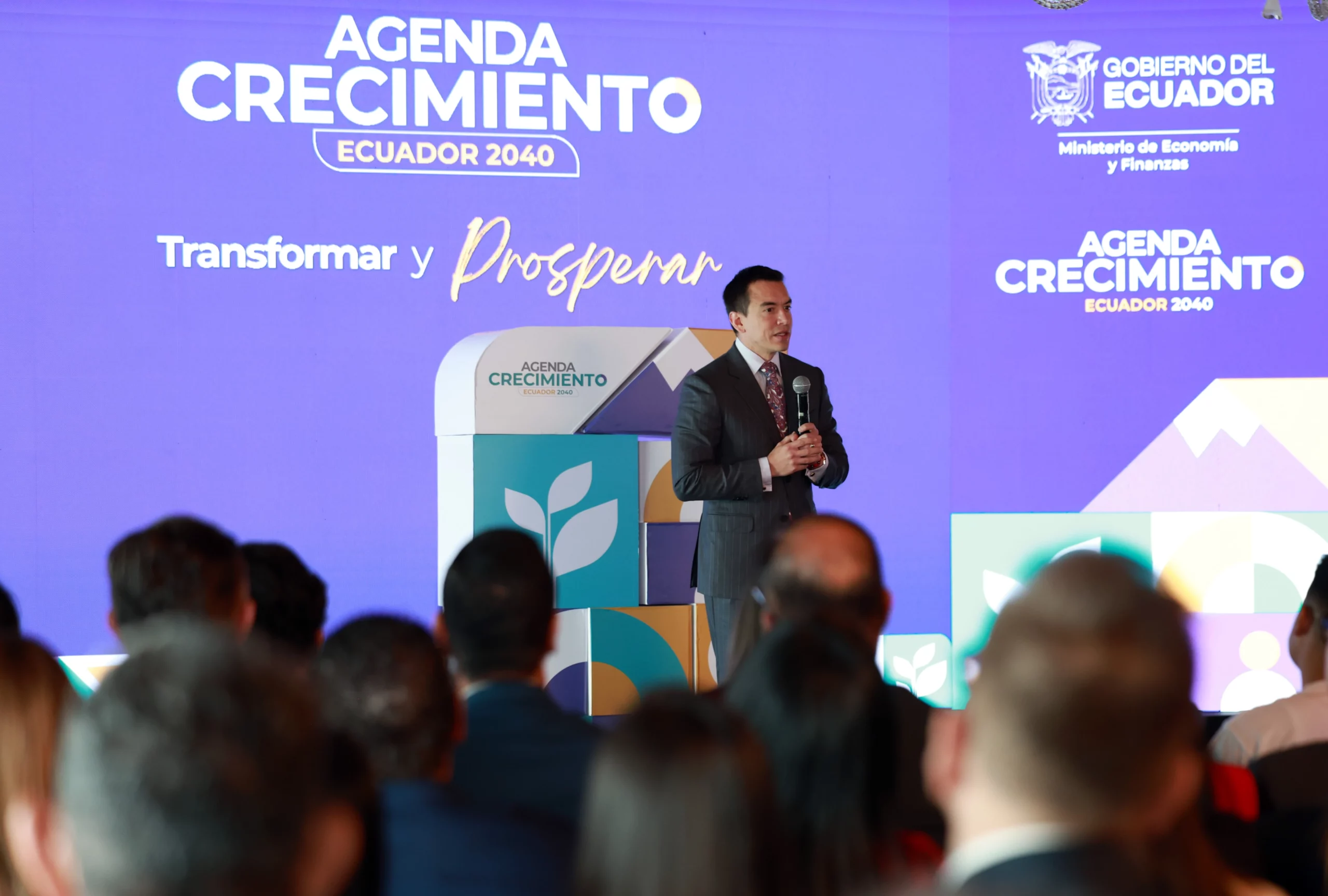
Ecuador formally presented its Agenda de Crecimiento Ecuador 2040 on July 21, 2026, a 15-year policy roadmap designed to lift employment, attract investment, and reshape the business climate with technical backing from the Inter-American Development Bank.
What the 2040 Agenda Promises
The plan was drafted by the ministries of Economy and Finance, Production, Foreign Trade and Investments, and the Public Administration Secretariat, with the IDB providing technical accompaniment throughout the process.
It sets out a coordinated reform path built on four pillars: institutional strength and legal certainty, fiscal stability, competitiveness and productive investment, and strengthening dollarization and financial depth.
For a country that adopted the US dollar as its official currency in 2000, that last pillar is especially critical—it means keeping the banking system liquid and credible so that dollars stay inside the economy rather than fleeing abroad.
Priority public sectors include security, education, health, employment, and housing, reflecting an attempt to tackle the social deficits that have historically undermined political stability.
For private capital, the government and the IDB have flagged mining, energy, agribusiness, manufacturing, and tourism as target industries where foreign and local investors can expect clearer rules and active promotion.
Who Is the IDB and Why It Matters
The Inter-American Development Bank, known as the IDB, is a multilateral lender owned by 48 member countries, including the United States, major European economies, and Latin American nations.
It provides loans, grants, and technical expertise to governments and businesses across Latin America and the Caribbean, often acting as a policy anchor that other investors watch closely.
For a plan of this scale, the IDB’s involvement signals more than a seal of approval—it brings the financial firepower and policy know-how that can turn a printed agenda into paved roads, upgraded ports, and reformed tax offices.
When the IDB attaches its name and balance sheet to a long-term roadmap, it also creates a form of external discipline: future governments may find it harder to rip up the plan without losing access to billions in committed financing.
The Money Behind Ecuador’s Ambitions
IDB President Ilan Goldfajn announced that the bank group would provide US$7.5 billion for Ecuador over the next five years, a figure that could climb to US$10.5 billion if the country successfully mobilizes additional resources and maintains investment-friendly conditions.
To put that in perspective, the IDB’s previous 2022–2025 country strategy for Ecuador had anticipated roughly US$1.4 billion in approvals, making the new envelope a dramatic scaling-up of the lender’s engagement.
An immediate US$200 million policy-based loan has already been approved, targeting reforms to the tax system, public spending quality, strategic planning, and private investment in energy and tourism.
Policy-based loans are a tool the IDB uses to reward governments for enacting specific legal and regulatory changes, meaning this first tranche is not just a cash transfer but a down payment on concrete reform milestones.
A Plan Is a Plan Until It Is Financed
The IDB is also launching a dedicated support program called “Ecuador Crece” to accompany implementation, combining financing, non-reimbursable resources, knowledge transfers, and investments across both the public and private sectors.
Sober observers note that roadmaps in Latin America often age gracefully on shelves, but the difference here is the scale of committed money and the short-term reform triggers attached to the initial loans.
The agenda’s horizon stretches to 2040, yet its first test will arrive quickly: disbursements depend on measurable progress in tax reform, spending quality, and opening energy and tourism to private capital.
For a country that has cycled through periods of boom, bust, and political turmoil, the question is whether this time the institutional scaffolding—and the IDB’s leverage—can keep the reform train on the tracks.
What It Means for Expats and Investors
For foreign residents and anyone considering moving money into Ecuador, the plan’s emphasis on legal certainty and financial depth is a direct response to long-standing complaints about unpredictable courts and a shallow banking sector.
The explicit focus on dollarization means there is no hidden agenda to de-dollarize, a fear that has periodically spooked expat retirees and business owners who hold assets in the country.
Investors eyeing the flagged priority sectors—mining, energy, agribusiness, manufacturing, and tourism—should watch for follow-up regulations that translate the roadmap’s broad promises into specific tax incentives, licensing shortcuts, or public-private partnership frameworks.
The IDB’s “Ecuador Crece” program also opens a channel for private-sector co-financing, which could create opportunities for smaller foreign firms to partner with multilateral-backed projects and reduce their political risk exposure.
What Happens Next
The immediate next step is the rollout of the tax and energy reforms tied to the US$200 million policy-based loan, which will serve as an early signal of the government’s ability to deliver.
Over the coming months, the IDB and Ecuadorian authorities are expected to detail the disbursement schedule for the broader US$7.5 billion envelope, linking each tranche to verifiable reform benchmarks.
The plan’s 2040 endpoint is deliberately distant, but the five-year financing window means the international community will have a clear report card on Ecuador’s progress by 2031.
For now, the announcement has given the country something it has often lacked: a multi-year, externally validated script that both public officials and private actors can use to make long-term decisions.
More: Ecuador news in English, every day from The Rio Times.
Frequently Asked Questions
What is Ecuador’s Agenda de Crecimiento 2040?
It is a 15-year national policy roadmap designed to boost growth, create jobs, attract investment, and improve the business environment through coordinated public-sector reforms. Drafted with technical support from the Inter-American Development Bank, it rests on four pillars: institutional strength, fiscal stability, competitiveness, and financial depth.
How much money did the IDB pledge to Ecuador?
The IDB committed US$7.5 billion over five years, with the potential to reach US$10.5 billion if additional financing is mobilized and reform conditions are met. An initial US$200 million policy-based loan has already been approved to support tax and energy reforms.
Which sectors will the plan prioritize for private investment?
The government and the IDB identified mining, energy, agribusiness, manufacturing, and tourism as key sectors to stimulate private capital. These industries are expected to benefit from clearer regulations and targeted incentives as the roadmap is implemented.
Connected Coverage
Sources: Inter-American Development Bank.
This article was produced by The Rio Times’ automated newsroom system. How we use AI · Report an error · Editorial responsibility: Matthias Camenzind, Editor-in-Chief