Crime Dominates Brazil’s Municipal Elections, Testing Lula’s Leadership
As Brazil gears up for its municipal elections on October 6, 2024, public safety has emerged as a pivotal issue. The rising concern over crime has overshadowed economic matters.
This presents a significant challenge to President Luiz Inácio Lula da Silva‘s administration. Recent polls indicate that nearly 60% of Brazilians consider crime their primary worry, surpassing economic concerns.
This shift in public focus has prompted candidates across the political spectrum to prioritize law and order in their campaigns.
Conservative contenders have drawn inspiration from Salvadoran President Nayib Bukele’s tough-on-crime policies. These policies, while controversial due to civil liberties concerns, have garnered popularity in Latin America.
Even left-leaning candidates, traditionally focused on social issues, have adapted their messaging. Guilherme Boulos, a socialist candidate for São Paulo’s mayorship backed by Lula, has emphasized his commitment to combating crime.
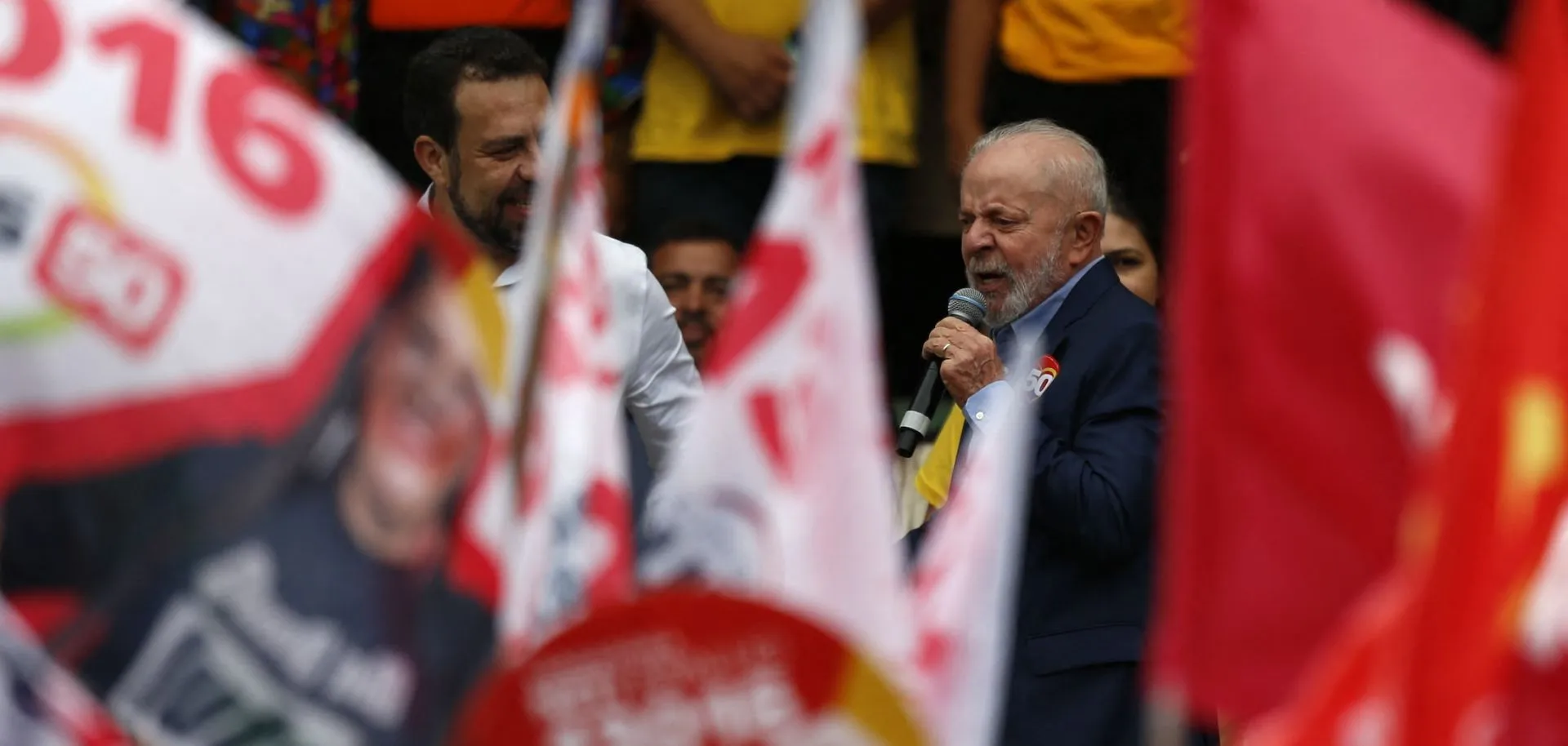
He has proposed doubling the number of local law enforcement agents, highlighting the issue’s importance across party lines. The current mayor of São Paulo, Ricardo Nunes, has also prioritized security in his re-election bid.
Nunes plans to expand the use of artificial intelligence and facial recognition technology. His proposal includes installing 40,000 cameras equipped with this technology throughout Brazil’s largest city.
Crime statistics in Brazil paint a complex picture. While homicide rates have decreased in recent years, they remain high by global standards.
Brazil’s Public Safety Crisis
In 2023, Brazil recorded approximately 46,000 homicides. Other forms of crime, such as phone theft and vehicle robbery, continue to plague urban areas.
Lula’s government has responded to these concerns with proposed constitutional amendments. These changes aim to improve the integration between security forces.
They also grant federal authorities more power in combating organized crime. However, the government plans to present these proposals to Congress only after the municipal elections.
The focus on crime in local elections may foreshadow the political landscape for the 2026 presidential race. Conservative governors, and potential presidential candidates, have already centered their platforms on public safety.
This trend suggests that crime will likely remain a crucial issue in Brazilian politics for the foreseeable future. Brazil‘s approach to public safety faces several challenges.
The country’s police force, largely controlled at the state level, has a reputation for violence. In 2023, Brazilian police killed over 6,300 people, nearly triple the number from a decade ago.
Challenges and Political Implications
Lula’s administration has proposed increasing funding for body cameras for police officers to address this issue. The Atlas of Violence 2024, published by the Brazilian Forum on Public Safety, provides additional insights.
It reveals that cities with over 500,000 inhabitants have the highest homicide rates, with significant disparities between them.
Violence in Brazil is geographically concentrated, with half of all homicides occurring in just 10% of neighborhoods in the most violent cities.
Regional differences in crime rates are also notable. The North region has the second-highest homicide rate, well above the national average.
The Northeast has seen a reduction in homicide rates since 2016, but numbers remain high. These regional variations highlight the need for localized approaches to crime prevention and control.
The study emphasizes the importance of improving municipal management of public safety. It suggests adopting more localized policing strategies.
The implementation of Municipal Guards, for example, has shown an average 15% reduction in homicides in some areas. As Brazil approaches its municipal elections, the focus on public safety reflects deeper societal concerns.
The outcome of these elections may influence national policies and shape the political discourse leading up to the 2026 presidential election.
How candidates and current leaders address these security concerns will likely play a crucial role in shaping Brazil’s political future.
More: Brazil news in English, every day from The Rio Times.
This article was produced by The Rio Times’ automated newsroom system. How we use AI · Report an error · Editorial responsibility: Matthias Camenzind, Editor-in-Chief