Congo and Kenya Agree to Restore Ambassadors
Two neighbours that fell out over a rebel coalition have promised to swap ambassadors again. Nobody has yet named one or set a date.

CONGO AND KENYA
The presidents of DR Congo and Kenya agreed on Sunday 22 November 2026 to restore full diplomatic relations, starting with the return of their ambassadors. The Congolese presidency said they made the pledge at a four-leader summit in Oyo, a town in the Republic of Congo, hosted by Denis Sassou Nguesso, president of the Republic of Congo, the country across the river from DR Congo.
The pledge is meant to end a standoff of nearly three years in which Kinshasa had no ambassador in Nairobi and Kenya’s nominee was never accepted in Kinshasa. For readers in the United States it matters because Félix Tshisekedi, Congo’s president, is pursuing the Washington and Doha peace processes, two diplomatic tracks on the war in the east, and Kenya is a regional neighbour with a stake in the east.
Key Facts
- Who Presidents Félix Tshisekedi (DR Congo) and William Ruto (Kenya), with two mediating leaders.
- What Both agreed to fully restore relations, notably by returning their ambassadors.
- Where Oyo, Republic of Congo, at a four-leader summit.
- Not set No ambassador names and no date for their return.
- As of 24 November 2026, 19:30 GMT.
Two neighbours that fell out over a rebel coalition have promised to swap ambassadors again. Nobody has yet named one or set a date.
The quarrel began in December 2023, when Corneille Nangaa, a former head of Congo’s electoral commission, launched the Alliance Fleuve Congo in Nairobi. The Alliance Fleuve Congo (AFC) is a political-military coalition that includes the M23, an armed group that holds territory in eastern DR Congo.
Kinshasa asked Kenya to arrest Nangaa, but Ruto refused, saying Kenya protects freedom of expression. DR Congo then recalled its ambassador to Kenya, and the Nairobi post has stayed empty since.
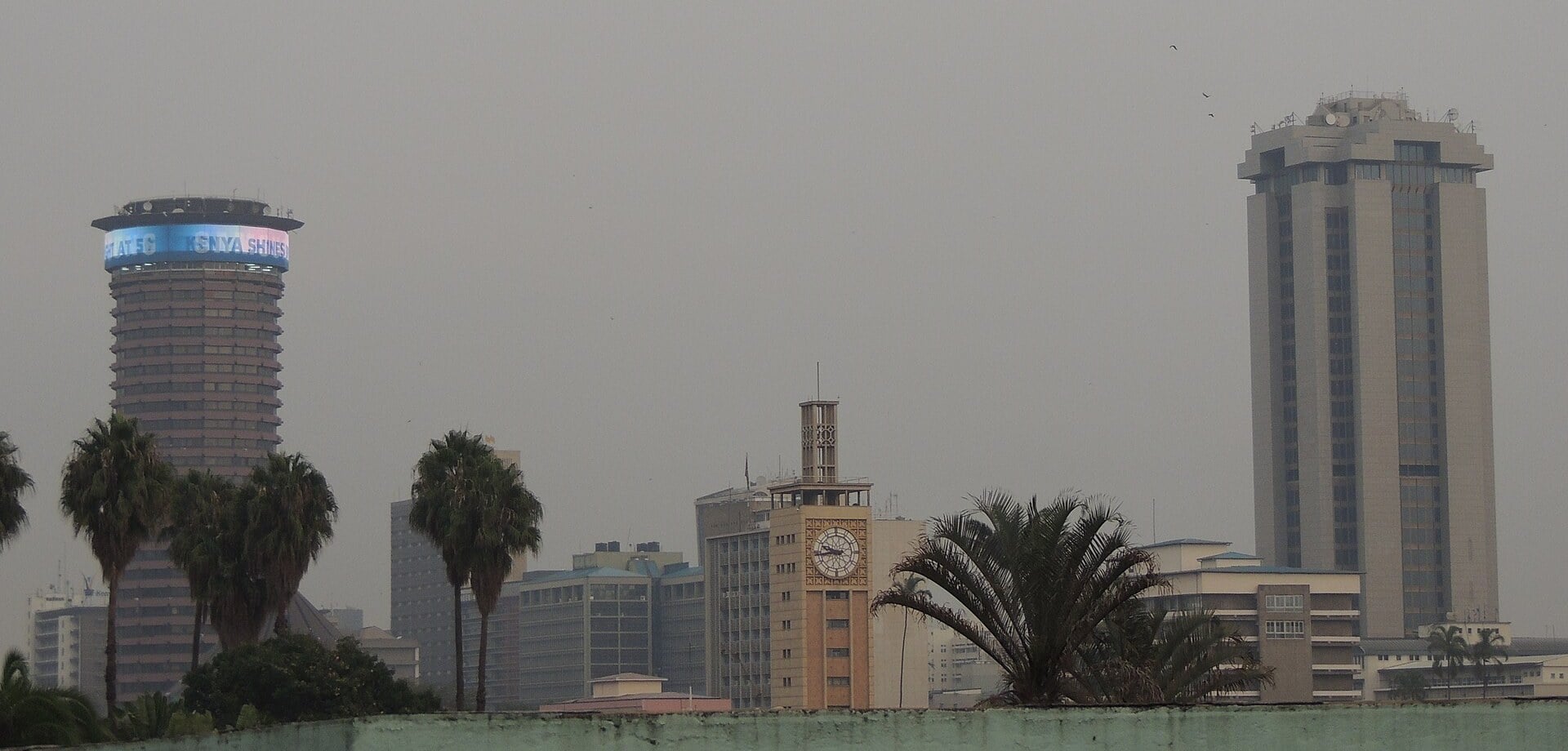
In July 2024 Tshisekedi publicly accused Ruto of taking Rwanda’s side. Congolese authorities had also voiced displeasure at Kenyan political and diplomatic initiatives on the security situation in the east.
Both countries belong to the International Conference on the Great Lakes Region and the East African Community, two regional frameworks where such disputes could in principle be handled. In October 2025 part of the Congolese opposition met in Nairobi around former president Joseph Kabila.
In March 2025 Ruto named Peter Tum as ambassador to DR Congo after an earlier nomination, Shem Amadi, went nowhere. Kinshasa has not accredited Tum, so he has not presented his credentials.
In August 2025 Nairobi nominated a consul general in Goma, a city then held by the AFC and M23. Kinshasa said that needed its prior consent under the 1963 Vienna Convention on Consular Relations, and on 18 August 2025 Kenya’s foreign minister, Musalia Mudavadi, said the consul could act only after an exequatur, the host state’s formal permission, from Congo.
The Congolese presidency’s statement said the two leaders reaffirmed state sovereignty, territorial integrity, non-interference, good neighbourliness and the peaceful settlement of disputes. It added that they will strengthen economic cooperation in trade and investment and intensify cooperation against Ebola.
The final communiqué said the leaders will favour permanent consultation and diplomatic channels to settle any dispute. It said this would happen “notably through the return of ambassadors” (translated from French).
Ruto said the same day on the social media platform X that Kenya will restore ambassador-level representation, relaunch the Joint Commission of Cooperation between the two countries and hold regular diplomatic consultations. His message gave no timetable, and neither did the communiqué.
The summit was held on the initiative of Sassou Nguesso, and Faure Gnassingbé also attended. Gnassingbé is President of the Council of Togo and the African Union’s mediator for the security crisis in eastern DR Congo.
The practical gain is a standing channel: an ambassador gives each government a place to raise a dispute before it reaches a presidential podium. After nearly three years of empty posts, any appointment would be the first working link.
Our reporting on clashes near Bunia in Ituri shows the fighting in the east continues. Kenya’s general election is due in August 2027, and Ruto, whose row with the opposition we cover separately, is expected to seek a second term.
The record names no public opponent of the deal, but it also leaves gaps. The communiqué gives no timetable, and no ambassador has been named.
It is not known whether Kinshasa will now accept Tum or ask for a new nominee. The first concrete sign will be an appointment decree or the presentation of credentials, and no such date has been announced.
Frequently Asked Questions
What did Congo and Kenya actually agree?
They agreed to restore full diplomatic relations, notably by sending ambassadors back. The text gives no names and no date, so it is a promise rather than an act.
Why did relations break down?
Kinshasa objected to Kenya hosting the launch of a rebel-linked coalition and to Kenyan political and diplomatic initiatives on eastern Congo. Kenya answered that it protects freedom of expression.
What should readers watch for next?
Look for an appointment decree or a presentation of credentials. Any of these would show the pledge is becoming policy.
Sources: President William Ruto (post on X, 22 November 2026); Presidency of the Democratic Republic of the Congo (statement and final communiqué of the Oyo summit, 22 November 2026); Kenya’s foreign ministry (statement by Musalia Mudavadi, 18 August 2025); 1963 Vienna Convention on Consular Relations.
This article was produced by The Rio Times’ automated AI newsroom. Editorial responsibility: Matthias Camenzind, Publisher and Editor-in-Chief. The Rio Times also runs Ask Rio Times, which answers from 100,000+ of our own articles, the daily Latin America Power Map, and prediction-market odds on elections and markets.. How we use AI · Report an error