Congo and Its Northern Neighbour Just Agreed to Share Military Intelligence
DR CONGO · DEFENCE
Key Facts
—What was signed: Two memoranda of understanding, one on military training and one on military intelligence, signed at the Hôtel de la Défense in Kinshasa on Friday 21 August 2026.
—By whom: For Congo, Guy Kabombo Muadiamvita, Vice-Prime Minister and Minister of National Defence and Veterans. For the Central African Republic, Rameaux-Claude Bireau, Minister of National Defence, as President Touadéra’s personal representative.
—The border: Nobody measures it the same way. Congo’s defence ministry briefed 1,100 kilometres, Radio Okapi more than 1,600, and the CIA World Factbook 1,747. It follows the Ubangi and then the Mbomou rivers.
—The precedent: Both texts implement a framework military cooperation accord signed in Kinshasa on 18 October 2024 by the same two ministers, which created a joint commission.
—The May meeting: Ministers met in Bangui on 11 May 2026. Congo Quotidien reported that they agreed a joint coordination centre to exchange information on armed-group movements in real time.
—The occasion: The signing took place on the margins of the tenth anniversary of Congo’s higher defence studies college, which reports training 1,692 officials in a decade.
—What is not in them: No published account mentions any financial envelope, equipment transfer or ratification requirement.
The Democratic Republic of Congo and the Central African Republic signed two defence memoranda in Kinshasa on Friday 21 August 2026. One covers military training, the other military intelligence. No published account of the signing mentions money or equipment.
What was actually signed
Congo’s Vice-Prime Minister and Minister of National Defence and Veterans, Guy Kabombo Muadiamvita, signed for Kinshasa. Rameaux-Claude Bireau, Minister of National Defence and Reconstruction of the Army, signed for Bangui as President Faustin-Archange Touadéra’s personal representative.
The venue was the Hôtel de la Défense. The signing fell in the tenth-anniversary week of Congo’s higher defence studies college, the CHESD. Félix Tshisekedi presided over the main ceremony at the Palais du Peuple the day before. Radio Okapi credits the college, together with the military administration school ESAM, with training 1,692 civilian and military officials in a decade.
Congolese outlets differ on whether this was one accord or two. The fuller accounts, based on the Congolese defence ministry’s own briefing, describe two memoranda. One covers military training, and the other covers military intelligence.
Both implement a framework military cooperation accord. The two ministers signed it in Kinshasa on 18 October 2024, establishing a joint commission.
A 1,747-kilometre problem
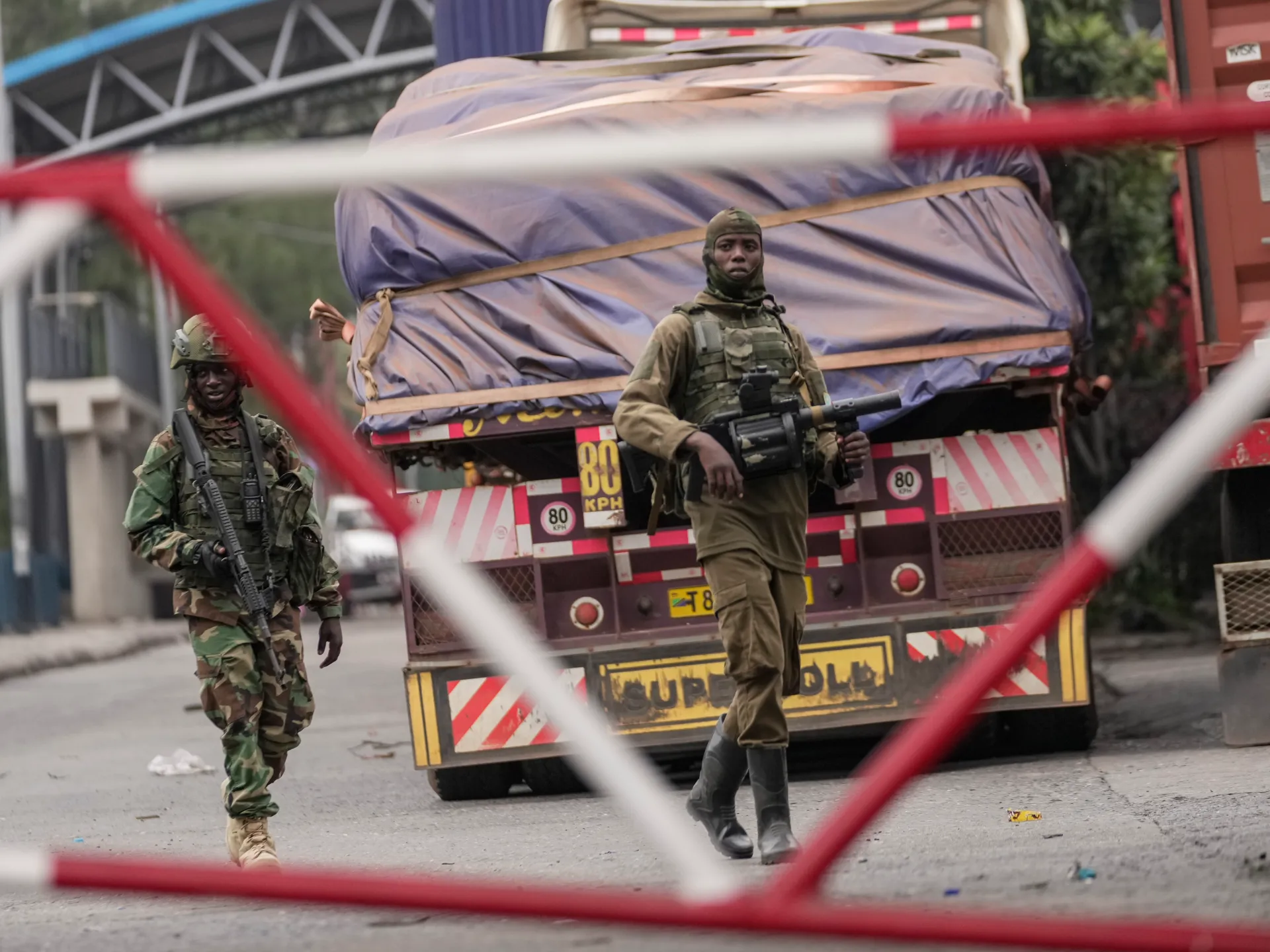
Estimates of the border’s length vary widely. Congo’s defence ministry briefed 1,100 kilometres, Radio Okapi reported more than 1,600, and the CIA World Factbook gives 1,747. It follows the Ubangi and then the Mbomou rivers, and rivers make poor barriers and excellent highways.
Four Congolese provinces touch it: Nord-Ubangi, Sud-Ubangi, Bas-Uele and Haut-Uele. The defence ministry’s own briefing names three of them as the zones at issue.
The threats in that corridor are long-standing rather than new. On the night of 11 June 2026 the Lord’s Resistance Army attacked Banda, in Ango territory in Bas-Uele. A provincial revenue agent was killed and nine people were abducted. Eight schoolchildren taken that night are still missing.
The other recurring issue is armed transhumance. Kabombo ordered a military redeployment in Nord-Ubangi in March 2026 and an identification mission for Mbororo herders in April. On 1 June the National Assembly’s defence and security committee questioned him about the Mbororo presence and this cooperation with Bangui.
What the Central African Republic side pledged
Bireau’s message, relayed by the Congolese defence ministry, was clear. His country would never serve as a rear base for any attack on the Democratic Republic of Congo.
His words, as Congolese outlets carried them: the Central African Republic “will never serve as a rear base for any attack.” He made the same pledge at the October 2024 signing.
It is worth being precise about what the pledge is and is not. No public accusation stands that the Central African Republic hosts groups against Congo. The line reads as mutual reassurance, not a rebuttal.
The Bangui bilateral of 11 May 2026 added machinery. Congo Quotidien reported that the two capitals agreed a joint coordination centre to share real-time data on armed groups. Radio Okapi’s account of the August signing names the Séléka and armed Mbororo herders as the movements in view.
The Russian question sitting underneath
Bangui’s security architecture is the reason an intelligence-sharing pipe between these two capitals is interesting to anyone outside the region.
Le Monde called it, in January 2026, the last African state still clinging to its Wagner contingent. The handover to Russia’s Africa Corps is not complete. Touadéra met Vladimir Putin in Moscow on 5 March 2026; the Kremlin readout listed trade, energy, agriculture, education and health.
In July, Central African forces retook Am-Dafok alongside the UN mission MINUSCA and their Russian allies, according to the state agency ACAP. The transition appears real but incomplete.
Le Monde put the Russian contingent at about 1,500, citing a French military source. A United States Congressional Research Service assessment from April 2026 names the country alongside Libya and Mali. The three host Russia’s largest African deployments, with thousands of personnel.
Two fronts, one army
The eastern crisis has absorbed almost all of Kinshasa’s attention and most of its army. Congolese and AFC/M23 delegations met near Montreux in Switzerland from 17 to 21 August 2026. They agreed on a roadmap under the Doha framework.
The first ceasefire verification mission deployed to Minembwe in South Kivu on 24 August.
It would be easy to read this northern agreement as a response to the eastern war. Nothing in the record connects the two.
What can be said is narrower and still useful. The east consumes the diplomacy. Kinshasa quietly tidies its other borders, using intelligence, not deployment.
Haut-Uele, at the eastern end of this border, holds Congo’s largest gold mine. The corridor carries herders and armed groups along the same rivers, and it gets far less attention than the east.
More: DR Congo news in English, every day from The Rio Times.
Frequently Asked Questions
What did Congo and the Central African Republic sign?
Two memoranda of understanding, one on military training and one on military intelligence, signed in Kinshasa on Friday 21 August 2026.
Who signed them?
For Congo, Guy Kabombo Muadiamvita, Vice-Prime Minister and Minister of National Defence and Veterans. For the Central African Republic, Rameaux-Claude Bireau, Minister of National Defence.
How long is the shared border?
Estimates differ. Congo’s defence ministry briefed 1,100 kilometres, Radio Okapi more than 1,600, and the CIA World Factbook 1,747. It follows the Ubangi and then the Mbomou rivers, and four Congolese provinces touch it.
Is money or equipment attached?
No published account of the signing mentions any financial envelope, equipment transfer or ratification requirement.
Is this connected to the war in eastern Congo?
Nothing in the record connects the two. The memoranda implement a framework accord signed in October 2024, before the Doha process began. They also implement a bilateral meeting held in Bangui in May 2026.
Connected Coverage
This story belongs to our continuing coverage of Africa: The New Scramble. See also our report on the first ceasefire inspectors deployed in eastern Congo.
This article was produced by The Rio Times’ automated newsroom system. How we use AI · Report an error · Editorial responsibility: Matthias Camenzind, Editor-in-Chief