The Comoros Switched On 20 MW of Solar, Paid For in Abu Dhabi
COMOROS · ENERGY
Key Facts
Three plants, three islands: The new capacity is split 12.86 MW on Grande Comore, 4.05 MW on Anjouan and 3.1 MW on Moheli, for a combined total of about 20 MW.
Who paid: The Abu Dhabi Fund for Development provided about 84.4 million dirhams, roughly US$23 million. Masdar built the plants and Global South Utilities manages them.
Storage included: Battery systems on Grande Comore and Anjouan add 16 MWh of capacity with 8 MW of output, which matters more than the panels on a small island grid.
Expected output: Technical studies put annual generation at roughly 33.75 GWh, equivalent to the needs of about 17,500 households.
Emissions avoided: The project is expected to displace around 20,900 tonnes of carbon dioxide a year.
Part of a pattern: An Abu Dhabi developer, Global South Utilities, opened a 50 MW plant in the Central African Republic in August 2026, according to The National.
Reported first in French: Sahara Media in Nouakchott carried the inauguration on 6 September, ahead of most anglophone desks.
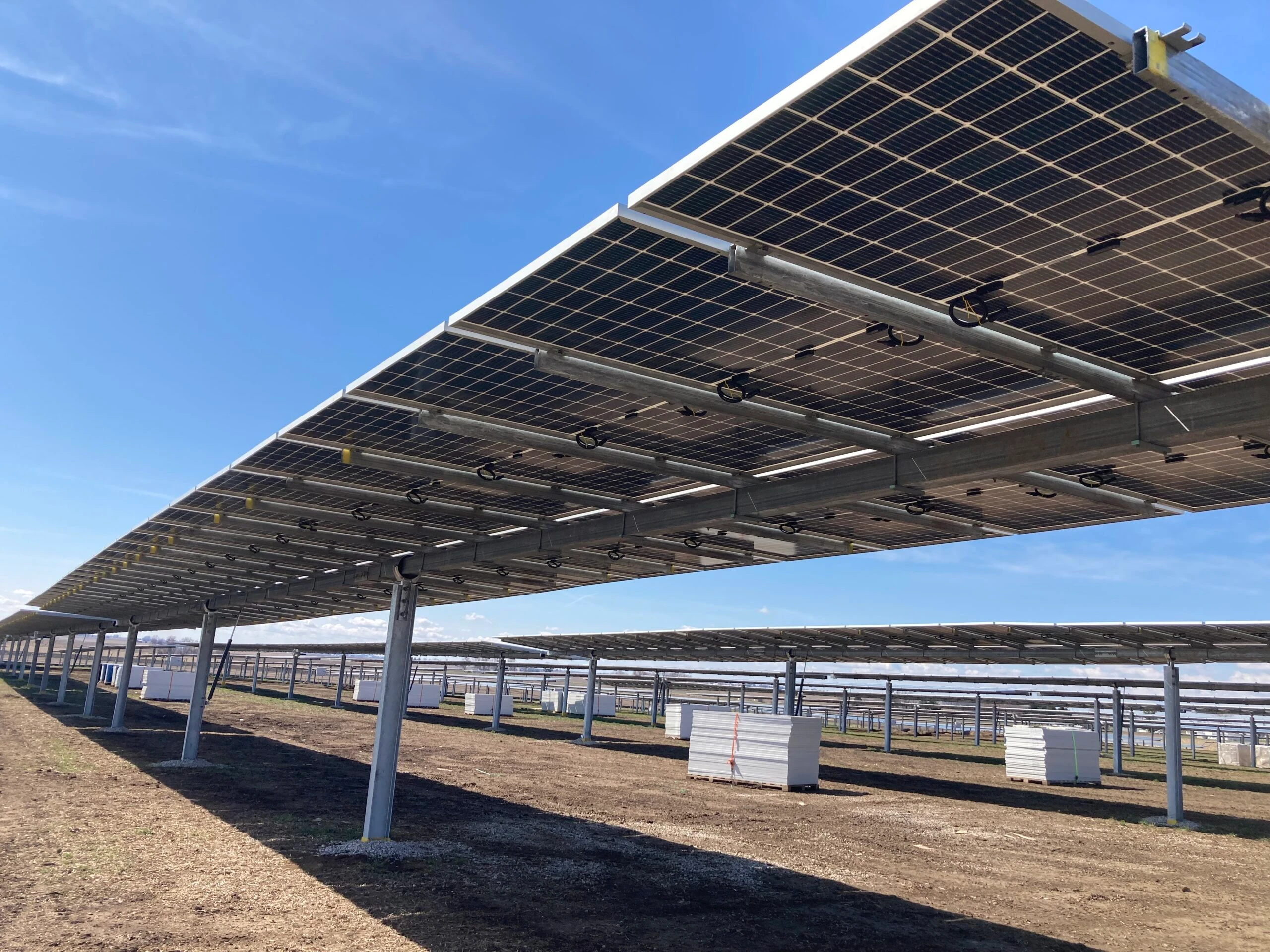
The Comoros solar plants inaugurated this week add about 20 MW of generation across the archipelago’s three main islands, financed with roughly US$23 million from the Abu Dhabi Fund for Development. Masdar built them and an Emirati state utility will run them.
What the Comoros solar plants actually deliver
The headline number is 20 MW, but the useful figure is the storage. Sixteen megawatt-hours of batteries on Grande Comore and Anjouan turn intermittent daytime output into evening supply.
On an island system with no interconnection to anywhere, that distinction decides whether solar displaces diesel or merely supplements it. The Comoros has run on imported fuel for decades.
Technical studies cited at the inauguration put annual output at about 33.75 GWh, enough for roughly 17,500 households. In a country of well under a million people, that is a material share of demand.
The money came from the Gulf, not the West
The Abu Dhabi Fund for Development provided the financing, Masdar delivered the engineering and Global South Utilities took the operating role. None of the traditional development lenders is in the frame.
This is the shape Gulf energy diplomacy in Africa now takes. Concessional money, an Emirati contractor and a long management contract, rather than a grant handed to a national utility.
Why the Comoros is worth Abu Dhabi’s attention
The archipelago sits at the northern entrance to the Mozambique Channel, on the shipping lane between the Gulf and southern Africa. It is small, but it is not incidental.
It also holds a vote at the United Nations, the African Union and the Arab League, of which it is a member. For a state building influence at scale, that arithmetic is part of the return.
The 50 MW plant another Abu Dhabi developer opened in the Central African Republic in August suggests a portfolio approach rather than a one-off gesture.
Neither project is large by Emirati standards, and neither needs to be. The point of a 20 MW plant in a country of this size is that it is visible from every part of the political system.
Comorian governments have spent two decades looking for partners willing to underwrite basic infrastructure. Abu Dhabi has answered a question that a good deal of the development world left open.
What it changes for households and businesses
Reliable evening power is the difference between a cold chain that works and one that does not. Fishing, ylang-ylang distillation and tourism all depend on it.
Diesel imports are the largest single drain on the Comorian trade balance, and every kilowatt-hour generated locally is one not bought in dollars. The saving lands directly on the current account.
Whether tariffs fall is a separate question, and one the utility has not answered. Cheaper generation does not automatically become a cheaper bill.
For the diaspora that funds much of Comorian household spending from France, the relevant test is simpler. Fewer outages mean fewer emergency transfers home.
Small businesses in Moroni and Mutsamudu have carried their own generators for years, and that cost sits inside every price on the islands. Removing it is the quiet economic story here.
The risks that come with the model
A long operating contract held by a foreign state company concentrates technical knowledge outside the country. Comorian engineers need to be inside the maintenance chain, not adjacent to it.
Battery replacement is the other exposure. Cells degrade on a known schedule, and the question of who pays for the second set is rarely settled at a ribbon-cutting.
There is also a governance point. Concessional lending is still lending, and a small state adding obligations needs the generation to earn its keep.
The Comoros has kept its external debt modest by regional standards, which is precisely why this deal was available on these terms. That advantage is worth protecting.
What to watch next
The immediate test is dispatch data: how much of the 33.75 GWh actually reaches customers in the first full year. Island projects often underperform their design case.
The second is whether Abu Dhabi follows with transmission money. Generation without a stronger grid tends to strand itself, and the Comorian network is the weaker half of the system.
Frequently Asked Questions
How much capacity do the Comoros solar plants add?
About 20 MW in total, split between 12.86 MW on Grande Comore, 4.05 MW on Anjouan and 3.1 MW on Moheli.
Who financed and built them?
The Abu Dhabi Fund for Development provided roughly US$23 million, Masdar built the plants and Global South Utilities manages them.
Do the plants include battery storage?
Yes. Grande Comore and Anjouan have battery systems totalling 16 MWh of capacity with 8 MW of output.
How much electricity will they generate?
Technical studies estimate about 33.75 GWh a year, equivalent to the needs of roughly 17,500 households.
Is this part of a larger Emirati programme in Africa?
It appears so. The same operator inaugurated a 50 MW solar plant in the Central African Republic in August 2026.
Connected Coverage
Gulf capital is now one of the main currents in the contest we track in Africa: The New Scramble, and the Emirati footprint runs from these islands to the port politics of the Red Sea and the Horn. For what the Comorian economy actually earns from, see our piece on the three islands that supply most of the world’s ylang-ylang.
This article was produced by The Rio Times’ automated newsroom system. How we use AI · Report an error · Editorial responsibility: Matthias Camenzind, Editor-in-Chief