Colombia Stays on the US Drug Blacklist, but Its Aid Is Going Up
Key Facts
Washington’s annual drug report kept Colombia in the penalty box and let Venezuela out of it. The money, meanwhile, moved in the opposite direction from the language.
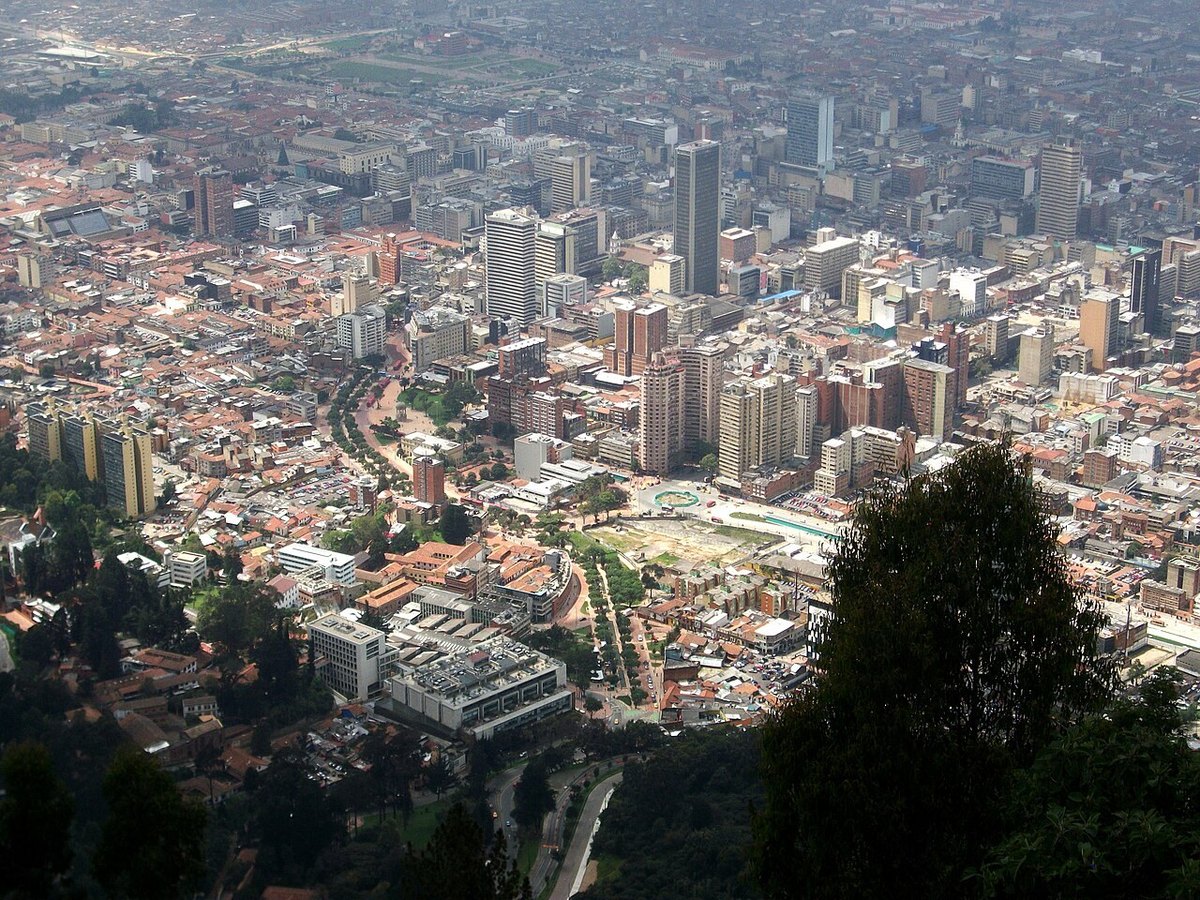
The United States again found Colombia had failed demonstrably on counter-narcotics. The determination, released on 16 September 2026, removed Venezuela from that same category.
How This Annual Ritual Works
Each year by 15 September the US president must name the countries judged to be major drug transit or producing states.
The obligation comes from the Foreign Assistance Act and a later authorisation act.
Within that list the president then says which countries failed demonstrably to meet their international obligations.
That finding can suspend most US assistance and commit Washington to voting against loans in development banks.
But the president can waive it by certifying that assistance is vital to the national interests of the United States.
That waiver is the part most coverage skips, and it is where this year’s story actually sits.
What the Determination Said
This year’s majors list runs to 23 countries. Four were found to have failed demonstrably.
They are Afghanistan, Bolivia, Burma and Colombia. All three of the latter received the national-interest waiver.
So nothing is cut off. The finding is reputational and diplomatic rather than financial.
Trump attributed Colombia’s designation to what he called the incompetence and chaos produced by the former far-left government.
He praised Colombians for electing Abelardo De la Espriella. He said the new president had committed to a vigorous campaign against coca cultivation.
He added that he would consider lifting the status if Colombia makes progress on eradication over the coming year.
The Timing Is the Awkward Part
The review period covers the twelve months to August 2026. Almost all of that is Gustavo Petro’s term.
De la Espriella was inaugurated on 7 August 2026, in Cali. He has held office for roughly six weeks of the period assessed.
That is why Washington could decertify the country while praising its new president in the same document.
Several accounts place the change of government in January. It was August, and the date changes how the finding reads.
The Money Went the Other Way
On 15 September the State Department told Congress it was redirecting US$52 million in foreign military financing.
The money moves away from Slovakia, North Macedonia, Tunisia and Iraq. It goes toward Colombia, Ecuador, Peru and Panama.
The split between the four recipients has not been disclosed.
Secretary of State Marco Rubio put it plainly, saying funds for security in Colombia are already in the annual budget.
So in the same week Washington rebuked Colombia on paper and increased its security support in practice.
Reports that the United States separately reaffirmed economic backing trace to a source we could not locate. Attribute that point to Rubio instead.
Venezuela’s Removal, Read Carefully
Venezuela had been designated as failing since 2005, which is about twenty-one years.
Trump said he had determined that Venezuela should no longer be designated as having failed to fulfil its drug-control commitments.
He tied that to the removal of Nicolás Maduro and to cooperation with what he called the country’s interim government.
Delcy Rodríguez has been Venezuela’s interim president since early January 2026.
Here is the distinction that most headlines lose. Venezuela remains on the 23-country majors list.
Only the failing tag was lifted. Anyone writing that Venezuela was removed from the drug list has it wrong.
Bolivia Was Not Praised Out of Anything
Bolivia stayed on the failed-demonstrably finding, with the same waiver keeping assistance in place.
Washington did credit expanded cooperation under President Rodrigo Paz, citing the extradition of a Uruguayan trafficker in March 2026.
It also noted that the new government has not had enough time to reduce coca crops.
Cultivation rose from 34,000 hectares in 2024 to 36,400 in 2025, an increase of about 7%.
So the accurate summary is that Bolivia was kept in the same category while being credited for improvement.
How Bogotá Answered
Interior Minister Rodrigo Lara said everything is a process and that Colombia is recovering territorial control in many areas.
He said the country is on a good path, and pointed to shared responsibility on the American side.
Note his portfolio, because several accounts get it wrong. Colombia’s foreign minister is Omar Bula Escobar, in office since August.
Former president Andrés Pastrana called for a course correction. He wrote that the country is only just in time to agree a second Plan Colombia.
Colombia’s ambassador in Washington described the finding as a clear reflection of the previous four years of misgovernment.
The head of the American chamber of commerce in Colombia said the political message had turned substantially.
A Second Colombian Ruling the Same Day
A Bogotá family court lifted its suspension of military aerial bombing against armed groups on 16 September.
The original suspension followed a strike in Guaviare on 27 August in which three minors, aged 15, 15 and 16, were killed.
The court refused a blanket ban. It said that would exceed constitutional limits and could encourage groups to use children as shields.
Instead it set a reinforced standard of precaution, requiring stronger verification, proportionality analysis and consideration of lower-risk alternatives.
It also barred any automatic presumption that minors in a camp are legitimate targets.
Separately, President De la Espriella said his government had carried out 85 extraditions in its first month and ten days. That figure is the government’s own.
What It Means If You Live or Invest There
For residents and businesses in Colombia, nothing changes tomorrow. No sanction, no aid cut, no visa consequence follows.
What does change is signalling. Investors and lenders read the designation as country risk, even when the money keeps flowing.
For Venezuela the direction is the reverse, and it sits alongside the wider opening of the oil sector to foreign firms.
Neither move should be read as a verdict on either country’s actual drug enforcement. The finding is a political instrument with a legal shell.
The useful thing to watch over the next year is coca hectarage, not the language of the next memorandum.
Frequently Asked Questions
Was US aid to Colombia cut?
No. A waiver certifies that assistance is vital to US national interests, and Washington is redirecting US$52 million in military financing toward the region.
Was Venezuela taken off the US drug list?
No. Venezuela remains among the 23 countries on the majors list, and only the separate failing finding was lifted.
Who is Colombia’s foreign minister?
Omar Bula Escobar, in office since August 2026. Rodrigo Lara, widely quoted on the decertification, is the interior minister.
Can Colombia get the designation lifted?
Trump said he would consider it within a year if Colombia shows progress on eradication and on dismantling narcoterrorist networks.
Sources: The White House, the 2027 majors list announcement, Infobae, the redirected military financing and Rubio’s remarks, Infobae, the interior minister’s response, Los Tiempos, Bolivia kept on the finding, El Tiempo, the court lifting the bombing suspension, El Colombiano, the new precautionary conditions, El Heraldo, the extradition figure
This article was produced by The Rio Times’ automated newsroom system. How we use AI · Report an error
Read More from The Rio Times