Chile Ex-Minister Slams Truckers Deal
A business leader says the government gave in to force, while the government calls the deal a shared achievement. The deal was announced on 12 November.

Chile Politics
Antonio Walker, a former agriculture minister, said on Tuesday 24 November that Chile’s deal with striking truckers was “a blackmail”. He is a candidate to lead the Confederation of Production and Commerce (CPC), Chile’s main business federation.
President José Antonio Kast’s government agreed on 12 November to cut the diesel price and extend a fuel price freeze, which ended most of the truckers’ stoppage. Finance Minister Jorge Quiroz put the cost to the state at about US$500 million.
Key Facts
- Who. Antonio Walker, a former agriculture minister and candidate to lead Chile’s main business federation, the CPC.
- What. He called the government’s deal with truckers “a blackmail” and a “very bad precedent”.
- Where. Chile, where the deal was struck at La Moneda, the presidential palace.
- When. Walker spoke on Tuesday 24 November 2026; the deal dates from Thursday 12 November.
- As of. Wednesday 25 November 2026, 06:00 GMT
A business leader says the government gave in to force, while the government calls the deal a shared achievement. The deal was announced on 12 November.
The deal ended a strike in its third day, in talks at La Moneda, the presidential palace, on Thursday 12 November. Claudio Alvarado, who holds the posts of interior minister and government spokesperson, and Finance Minister Jorge Quiroz agreed it with two trucker confederations, the CNDC and the CNTC.
Alvarado said at the announcement: “This is an achievement of everyone, not an achievement of the government or of a group of leaders.” On 12 November Quiroz put the cost of the package to the state at about US$500 million.
Under the terms stated by the parties, the diesel price falls by CLP142 a litre (about US$0.14 at USD/CLP 1,033.5, the 24 November close). Of that cut, CLP42 (about US$0.04) reverses the latest rise and CLP100 (about US$0.10) is a further reduction.
Alvarado said the freeze on fuel price rises is extended to 31 March 2027, and that the price change goes through a bill sent to Congress. The 12 November estimate from the finance ministry was about US$500 million for the whole package.
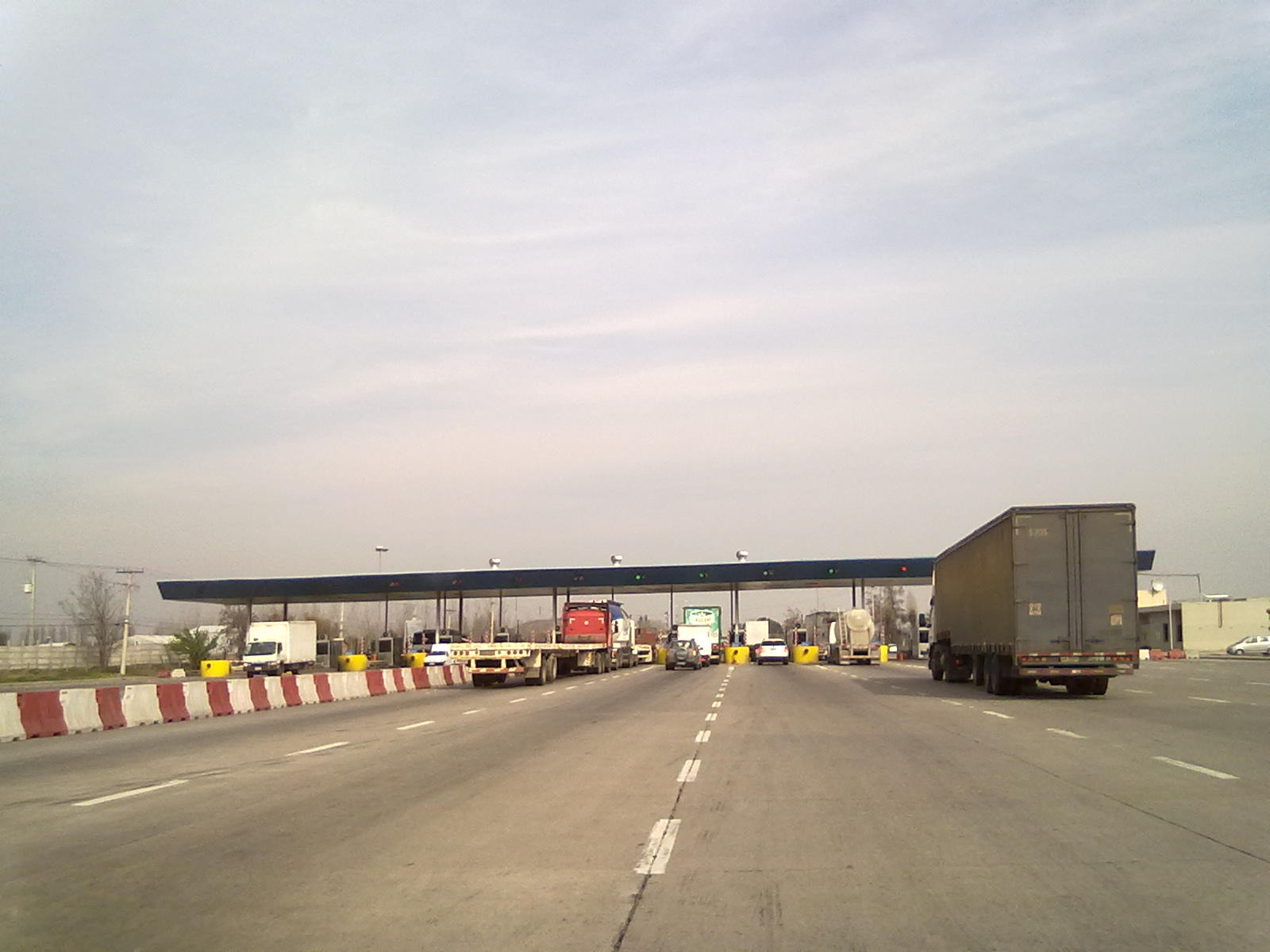
Toll refunds for intercity bus transport rise from 35% to 70%, the government said. The package also sets up a working group to address remaining demands over the coming months.
Under the deal, trucking firms recover 90% of the diesel tax if annual revenue is up to UF 6,000 (an inflation-indexed Chilean unit), 65% up to UF 20,000 and 50% above that. Refunds are renewed through December 2027.
Walker’s criticism came twelve days later. He said on 24 November: “It is a blackmail.”
He added that “that is not a negotiation” and called the deal a “very bad precedent”. He said the government should not have negotiated under pressure.
The CPC is Chile’s main business federation, and Walker’s candidacy puts his criticism in the middle of its leadership race. We could not confirm the date of that election.
Walker called the blockades “super unfair to the productive sectors” because transport costs rose. He said he would have liked the government to talk with the unions but without giving in to measures of force.
He also criticised how the government changed Mepco, the Mecanismo de Estabilización de Precios de los Combustibles, a mechanism that limits how fast fuel prices move at the pump. He said the change should have been made more gradually to avoid such a strong shock.
Walker warned of effects on inflation and growth from the Mepco change. He said Chile is in an “economic recession without a surname”, citing the 1.1% fall in third-quarter GDP.
Alvarado’s position, stated on 12 November, is that the agreement is a shared achievement. Not every group signed: smaller trucker groups stayed mobilised after the announcement.
Some smaller trucker groups said on 12 November that they would stay mobilised. The diesel price cut itself was agreed with the large confederations.
The central bank’s 18 November national accounts put third-quarter output 1.1% below a year earlier. Walker’s warning is that the fuel decisions weigh on inflation and growth.
The fuel price freeze runs to 31 March 2027, according to the government. The bill that carries the price cut has no vote date that we could confirm.
Frequently Asked Questions
What did Antonio Walker say about the truckers deal?
He called it a blackmail and a very bad precedent, and said the state must protect public order. He said the government should not have negotiated under pressure.
Why does the deal matter to the Chilean economy?
It lowers diesel costs for transport but puts a cost on the state budget. Walker warns of pressure on inflation and growth, while the government calls the deal a shared achievement.
Is the diesel price cut already in force?
The price change goes through a bill sent to Congress. We could not confirm a vote date.
Sources
Antonio Walker, remarks of 24 November 2026; Claudio Alvarado, Interior Minister and Government Spokesperson, and Jorge Quiroz, Finance Minister, statements of 12 November 2026; CNDC and CNTC trucker confederations, statements of 12 to 13 November 2026; Banco Central de Chile, national accounts for the third quarter of 2026, 18 November 2026
Connected Coverage
Chile news · Chile Truckers Deal Cuts Diesel by US$0.14 · Chile Cuts Fuel Prices After Truckers Strike
This article was produced by The Rio Times’ automated AI newsroom. Editorial responsibility: Matthias Camenzind, Publisher and Editor-in-Chief. The Rio Times also runs Ask Rio Times, which answers from 100,000+ of our own articles, the daily Latin America Power Map, and prediction-market odds on elections and markets.. How we use AI · Report an error