Strike Averted at World’s Top Copper Mine
About 64% of voting supervisors at Escondida in Chile backed BHP's final offer, averting a strike at the world's largest copper mine.

CHILE · MINING
Key Facts
- The country Chile, on South America’s Pacific coast, mined 3.2 million tonnes of copper from January to August 2026, 8% less than a year earlier.
- What happened Supervisors at Escondida, the world’s largest copper mine, approved a new contract with BHP on Wednesday 14 October, averting a strike.
- The vote About 64% of votes cast in the 1,020-member union backed the company’s final offer.
- The contract The collective contract runs for 36 months, from 2026 to 2029, with better fixed and variable pay and new bonuses.
- The mine Escondida, run by Australian group BHP, produced about 1.3 million tonnes of copper in 2025, roughly a quarter of Chile’s output.
- Power Index Chile ranks 3rd of 14 in The Rio Times Latin America Power Index, with 62.9 points (November 2026 edition).
- Still open The full terms and the total cost of the contract to BHP have not been published.
Supervisors at Escondida in northern Chile, the world’s largest copper mine, approved a new contract on Wednesday 14 October, averting a strike. Copper is the metal in wiring, cars and power grids, so the deal removes a supply risk watched by US buyers and investors.
About 64% of votes in the 1,020-member Supervisors and Staff Union N°2 backed operator BHP’s final offer, Diario Financiero and BioBioChile reported. BHP confirmed the signing of a 36-month contract that afternoon, with better fixed and variable pay and new bonuses, Madero reported.
How the Copper Mine Vote Ended the Dispute
Members voted online on Wednesday morning on BHP’s final offer, which followed a pre-agreement reached in overnight talks. The union announced the result in the early afternoon local time, and BHP confirmed the signing about an hour later, Madero reported.
Diario Financiero put the result at 64.14% in favour and 35.85% against, with 70 of the 1,020 members not voting. BioBioChile, Meganoticias and El Epicentro all reported approval with 64% of the votes.
The company said the new collective contract runs for 36 months, covering 2026 to 2029, Madero reported. BHP added that the deal formally ends this year’s regulated collective bargaining, BioBioChile reported.
The vote ends a dispute that had come within hours of a walkout. Mandatory mediation before the Dirección del Trabajo, Chile’s labour inspectorate, failed on Tuesday night, and the union called a strike for Wednesday.
Overnight talks then produced a pre-agreement, and mediation was extended by one day so that members could vote. BHP had warned in a statement, published by the mining news site Redimin, that a rejection would start the strike on Thursday 15 October.
What Escondida’s Supervisors Won
The deal includes a negotiation-closing bonus of 28 million pesos (about US$28,700) per worker, including a soft loan, BioBioChile reported. Diario Financiero put the same payment at 30 million pesos (about US$30,700), and Madero reported that neither side disclosed the figures.
Members also get a vacation bonus of 1.5 million pesos (about US$1,500), payable in November, and a monthly mobility allowance of 350,000 pesos (about US$360). Diario Financiero and BioBioChile both reported those two amounts.
The package adds full coverage of egg freezing, a childcare payment and new terms for mothers returning from maternity leave, BioBioChile and Diario Financiero reported. Bonuses tied to production and performance were also improved, according to Diario Financiero and Madero.
BHP said the supervisors and staff “continue to have an industry-leading contract for the segment”, BioBioChile and Meganoticias reported. Dollar figures in this article use about 976 pesos to the US dollar on 14 October 2026.
Why the Union Said Yes
In a statement, the union said the deal came “despite countless disagreements and clashes between the negotiating parties”, BioBioChile reported. It credited “the pressure and unity of the rank and file” for winning “better and greater benefits” from the company.
The union also said some issues remain open and will have to be negotiated in the future. “We know there is still much to achieve and that there are still rights to be won,” its board said, Madero reported.
The union, led by president Alexis Barrera, had pressed for higher salaries, a monthly production bonus and an objective performance evaluation. It also opposed company proposals to share workers’ biometric data with outside parties, La Tercera reported.
Members had backed a strike with about 95% of the vote in a ballot held from 28 to 30 September, Redimin reported. BHP then asked for mediation on 5 October, which put the first strike call on hold.
In September, Barrera told Pulso, the business section of La Tercera, how a walkout by supervisors would hit the copper mine. “We believe that if we go on strike, Escondida stops, it cannot operate,” he said then.
Why Escondida Matters Beyond Chile
Escondida produced about 1.3 million tonnes of copper in 2025, roughly a quarter of Chile’s output, La Tercera and Redimin reported. Redimin put the 2025 figure more precisely at about 1.345 million tonnes.
La Tercera reported that Chile mined 369,500 tonnes of copper in August, 13% less than a year earlier. Output from January to August reached 3.2 million tonnes, down 8%, the paper said.
The deal comes during a tense season in Chile’s copper belt, where workers at Centinela, a mine run by London-listed Antofagasta plc, went on strike. BioBioChile reported on Tuesday that copper prices in London were near a record, citing Cochilco, Chile’s state copper commission.
Our report of 13 October covered the union’s strike call after mediation with BHP failed. Wednesday’s vote closed that chapter with a signed contract instead of a walkout.
What It Means for You
A 50% US tariff on semi-finished copper products such as pipes and wire took effect on 1 August 2025, the White House said. Copper ores, concentrates and refined cathodes were left out of those duties.
That means a supply shock at a Chilean copper mine reaches US buyers mainly through the global price rather than through tariffs. BHP had said on Wednesday morning that Escondida was operating normally, and the signed contract now removes the strike threat.
For investors, BHP shares, which also trade in New York, and copper-linked funds are the most direct exposure to the mine. The 36-month contract means this group’s pay is not due back at the bargaining table until 2029.
What Is Not Known
Neither BHP nor the union has published the full terms or the total cost of the contract to the company. Reported figures for the closing bonus also differ between Chilean outlets.
BHP has not said whether the dispute had any effect on production at the copper mine, and none has been reported. The union has not said which of the open issues it will raise in future negotiations.
More: Chile news in English, every day from The Rio Times.
Frequently Asked Questions
What is the Escondida copper mine?
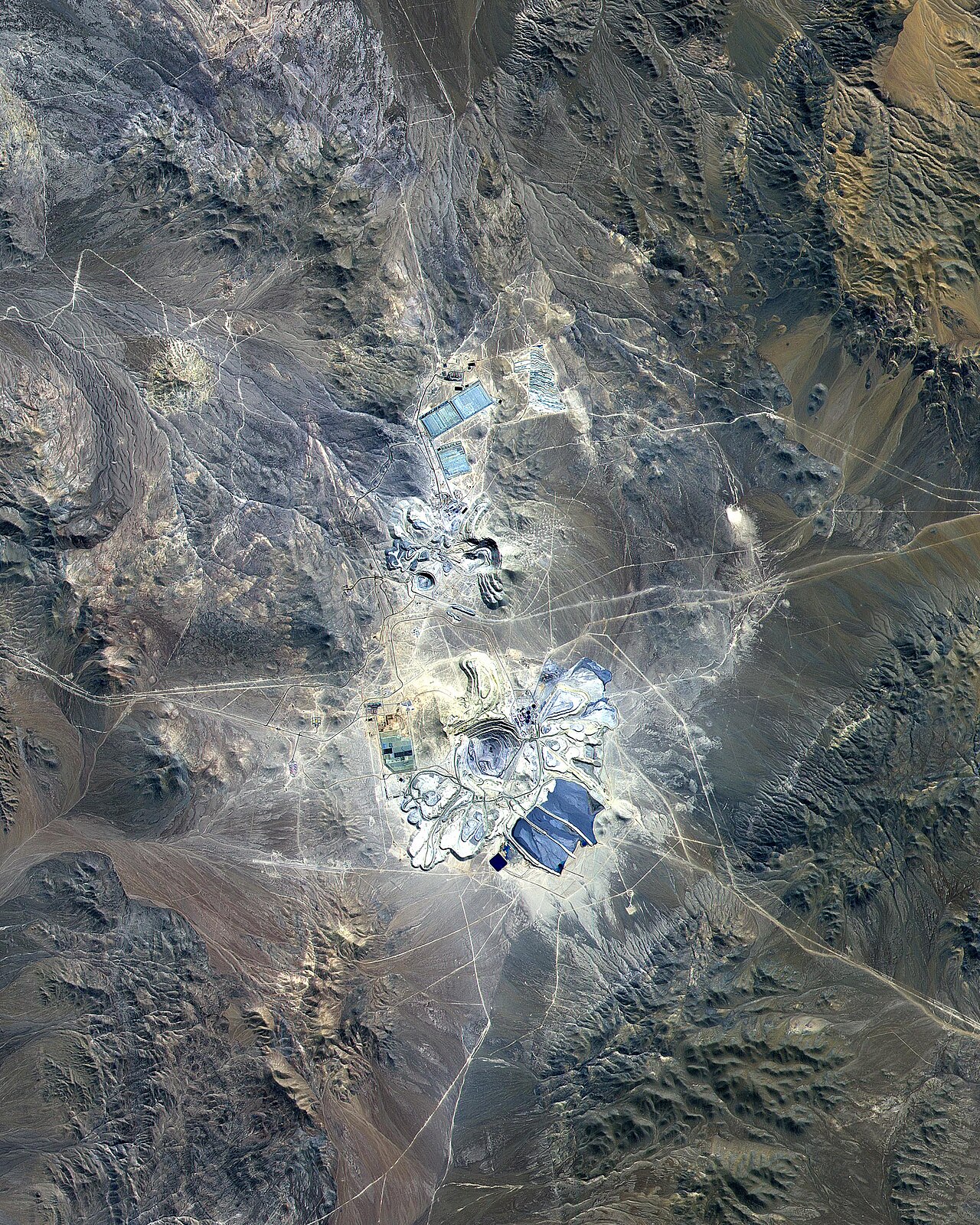
Escondida is an open-pit copper mine in the Atacama Desert of northern Chile, run by Australian mining group BHP. Chilean media describe it as the world’s largest copper mine, with about 1.3 million tonnes produced in 2025.
Is there a strike at Escondida?
No, the strike was averted when about 64% of voting supervisors approved BHP’s final offer on Wednesday 14 October. BHP then confirmed the signing of a new 36-month collective contract.
What did the supervisors get in the deal?
Chilean outlets put the closing bonus at 28 million to 30 million pesos (about US$29,000 to US$31,000) per worker. The deal also adds a vacation bonus, a higher mobility allowance and new benefits for working mothers.
Is the copper mine still operating?
BHP said on Wednesday morning, before the vote, that Escondida continued to operate normally. No disruption to production has been reported, and the signed contract removes the threat of a supervisors’ strike.
Does the United States tax copper from Chile?
A 50% US tariff on semi-finished copper products such as pipes and wire took effect in August 2025. Copper ores, concentrates and refined cathodes were exempt, the White House said at the time.
Sources
- Escondida | BHP statement (via Redimin), 14 October 2026
- Diario Financiero, 14 October 2026
- BioBioChile, 14 October 2026
- Madero, 14 October 2026
- Meganoticias, 14 October 2026
- El Epicentro, 14 October 2026
- La Tercera, 14 October 2026
- Redimin, 14 October 2026
- Diario Financiero, 14 October 2026
- Redimin, 14 October 2026
- La Tercera, 14 October 2026
- BioBioChile, 13 October 2026
- The White House (copper tariff fact sheet), 30 July 2025
In depth
This article was produced by The Rio Times’ automated AI newsroom. Editorial responsibility: Matthias Camenzind, Publisher and Editor-in-Chief. The Rio Times also runs Ask Rio Times, which answers from 100,000+ of our own articles, the daily Latin America Power Map, and prediction-market odds on elections and markets.. How we use AI · Report an error
Copper in Latin America
- Copper in Latin America 2026: Mines, Prices and Politics
- Chile’s State Copper Giant Codelco Explained
- Peru Copper Mining Explained: Output, Big Mines, Exports and Risks in 2026
- Peru Natural Resources Explained 2026