Argentina’s Lower House Passes 2027 Budget
Milei's spending plan cleared its first hurdle, but lawmakers rewrote the parts that matter most to universities and scientists. The final text is still undecided.

ARGENTINA · BUDGET
Argentina’s lower house passed President Javier Milei’s 2027 budget in the early hours of Friday 27 November 2026, after more than 12 hours of debate. La Gaceta, a daily newspaper from the northern city of Tucumán, reported on 27 November that the final vote was 136 to 112, with three abstentions.
The opposition beat the government on two chapters, adding money for public universities and for science. The bill now goes to the Senate, and the first reports gave no date for that debate.
Key Facts
- Who. Argentina’s Chamber of Deputies, the lower house, and President Javier Milei’s government.
- What. The 2027 national budget passed the lower house, 136 votes to 112, with three abstentions.
- When. Early Friday 27 November 2026, in Buenos Aires, after a marathon session.
- Power Index Argentina ranks 4th of 14 in The Rio Times Latin America Power Index, with 60.2 points (November 2026 edition).
- As of. Saturday, 28 November 2026, 6:00 a.m. GMT
Milei’s spending plan cleared its first hurdle, but lawmakers rewrote the parts that matter most to universities and scientists. The final text is still undecided.
Prensa Mercosur, a news site covering the South American trade bloc, noted on 28 November that Milei ran his first two years on a rolled-over 2023 budget. The 2027 text is therefore the second budget of his term, after the one for 2026.
Chequeado, an Argentine fact-checking outlet, reported that Deputies passed the 2026 budget in December 2025 by 132 votes to 97, with 19 abstentions. They rejected chapter XI, which would have repealed the laws on disability emergency and university funding.
Milei’s government sent the bill to Congress on 15 September 2026, and committee backing followed on 17 November, with 27 signatures. That majority report came after the government dropped disability articles 36 to 41, El Litoral, a regional daily, and Canal 26, a news channel, reported that day.
Bertie Benegas Lynch, the libertarian deputy who chairs the Budget Committee, said the budget rests on three pillars: “zero deficit, a smaller state so taxes can fall, and economic predictability” (translated from Spanish; Prensa Mercosur, 28 November). Cristian Ritondo, who leads the chamber bloc of the PRO, the centre-right party of former president Mauricio Macri, said that “Argentina needs to keep the course”, La Gaceta reported on 27 November.
The voting board first showed 137 to 111, the count printed by Infobae, an Argentine news site, and by Perfil, an Argentine daily. Then deputy Carlos Cisneros, of the opposition bloc Unión por la Patria, asked to change his vote to no, La Gaceta and Prensa Mercosur reported, which makes the final count 136 to 112.
iProfesional, a business news site, reported on 27 November that the plan counts revenue of 219.3 trillion pesos (about US$136.6 billion at 1,605 pesos per US$, the market close that day). Spending is 216 trillion pesos (about US$134.6 billion), which leaves a financial surplus (revenue minus spending, after interest on the debt) of 0.2% of GDP.
The budget sets growth, inflation and peso targets: growth of 3% in 2026 and 4% in 2027, and inflation of 18% from December to December 2027, Infobae reported on 27 November. It also puts the peso at 1,847.6 per US$ in December 2027, which, Infobae reported, the Economy Ministry describes as today’s rate adjusted for projected inflation and not as a forecast.
Economy minister Luis Caputo has said that if the targets are met, “it will be the first time in our history that, without being in default, there are four consecutive years of financial surplus” (translated from Spanish; Infobae, 27 November). Caputo did not attend the debate, and Germán Martínez, who leads the Peronist bloc Unión por la Patria, attacked his absence, Prensa Mercosur reported on 28 November.
The opposition then won two votes in the chapter-by-chapter round, Infobae reported on 27 November. On universities, the government text gave 7.3 trillion pesos (about US$4.5 billion), plus up to 1.5 trillion (about US$0.9 billion) for court rulings in university lawsuits, Perfil reported, while the Consejo Interuniversitario Nacional, the council of public university heads, demanded 11 trillion (about US$6.9 billion).
The opposition text with 11 trillion pesos passed by 138 votes to 109, Infobae and iProfesional, a business news site, reported on 27 November. Perfil put the gap with the official offer at about 3.7 trillion pesos (about US$2.3 billion).
The second defeat came in chapter IV, on science, where the government text lost 123 to 127 and the Peronist version passed 130 to 118, Perfil reported on 27 November. The fight concerned INTA, the national agricultural technology institute, INTI, its industrial counterpart, SENASA, the agri-food health service, and CONICET, the national research council.
The approved text sets their funds at the equivalent of 0.35% of the customs value of imports, with 0.20% for CONICET and 0.05% for each institute, Perfil reported, which cancels the planned cut. The remaining chapters passed with large majorities, Perfil reported, which shows the defeat was narrow and not a rejection of the whole bill.
The government’s zero-deficit promise rests on a thin margin, because revenue exceeds spending by only 3.3 trillion pesos (about US$2.1 billion), on the Infobae figures of 27 November. Perfil notes that the 3.7 trillion pesos of extra university money is larger than that margin, and the reports do not say where savings would come from.
Nicolás Massot, of the opposition bloc Encuentro Federal (a group of centrist provincial deputies), called the government’s surplus claim “false” and said it is reached “with creative accounting”, La Gaceta reported on 27 November. Martínez said the government should defend its numbers in Congress, Prensa Mercosur reported on 28 November.
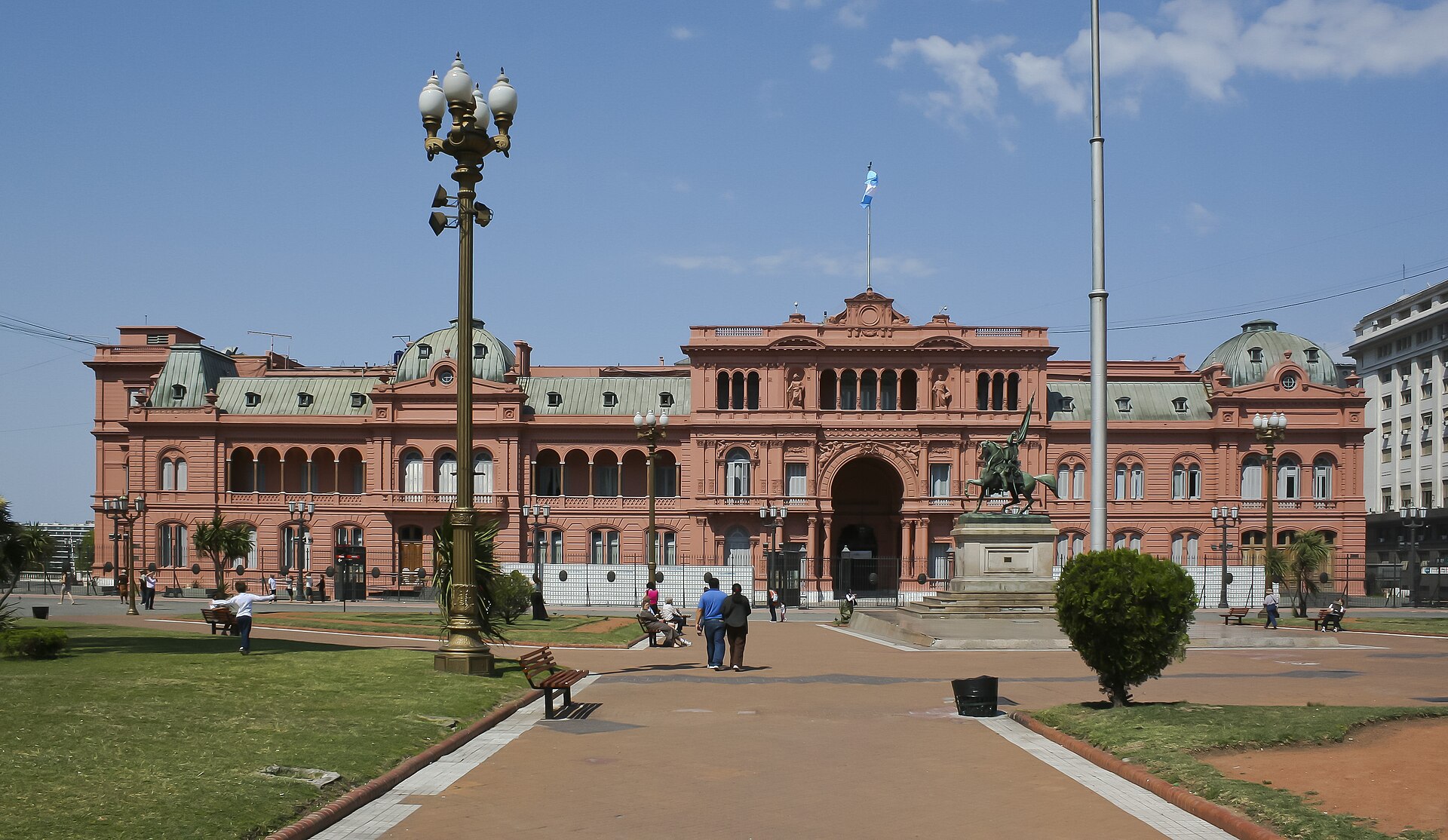
The bill now goes to the Senate, and Infobae reported on 27 November that if senators keep the university and science changes, the Casa Rosada, the presidency, must decide whether to veto part of the law or accept it. Friday’s reports gave no firm date for the Senate debate, and they do not say whether Milei would veto.
More: Argentina news
Frequently Asked Questions
What happens next with the budget?
The Senate must now take it up, and no date has been announced. If senators keep the university and science changes, the presidency must choose between a partial veto and acceptance.
Why did universities and science decide the fight?
Public universities and research bodies depend on state money, so the opposition used the chapter-by-chapter round to protect them. The government wanted the cuts to help balance the books.
What does “zero deficit” mean?
It means the state aims to collect at least as much as it spends. It is the anchor of Milei’s economic programme.
Sources
- Infobae, 27 November 2026
- Perfil, 27 November 2026
- La Gaceta, 27 November 2026
- iProfesional, 27 November 2026
- Prensa Mercosur, 28 November 2026
- Chequeado, December 2025
- El Litoral and Canal 26, 17 November 2026
- RT USD/ARS close, 27 November 2026. The Chamber’s own vote record could not be opened
This article was produced by The Rio Times’ automated AI newsroom. Editorial responsibility: Matthias Camenzind, Publisher and Editor-in-Chief. The Rio Times also runs Ask Rio Times, which answers from 100,000+ of our own articles, the daily Latin America Power Map, and prediction-market odds on elections and markets.. How we use AI · Report an error
In depth