Cattle Smuggling Challenges Brazil’s Meat Industry
Cattle smuggling from Argentina into Brazil’s Paraná, Santa Catarina, and Rio Grande do Sul is on the rise.
The Brazilian Federal Police report more illegal cattle crossing the border. Despite higher prices in Argentina, smuggling has increased.
This issue affects livestock quality, especially European breeds.
These activities threaten Brazil’s meat market, the world’s top exporter. Last year, meat exports hit over $23 billion.
Smuggled cattle bypass health controls, risking Brazil’s hard-earned sanitary status.
Paraná and Rio Grande do Sul were declared free from foot-and-mouth disease without vaccination in 2021. Santa Catarina achieved this in 2007.
The primary smuggling route is between Santo Antônio do Sudoeste and Dionísio Cerqueira.
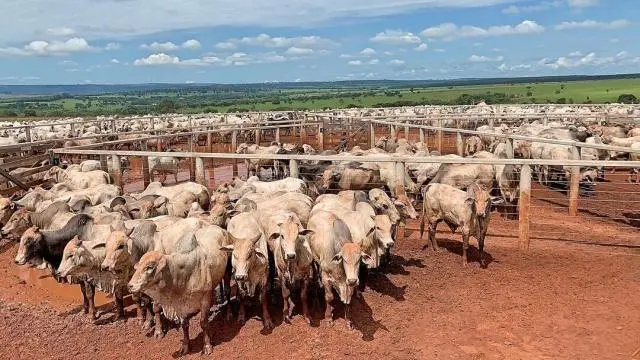
Smugglers use rural roads for transport, often at night. This poses a significant sanitary risk, potentially costing billions.
Paraná, Santa Catarina, and Rio Grande do Sul are crucial for Brazil’s pork and poultry exports.
Paraná’s Agricultural Defense Agency uses special measures to issue Animal Transit Guides to combat smuggling.
The smuggling also threatens the region’s status as free from foot-and-mouth disease. Maintaining this status is vital for market access.
Brazil, with the world’s second-largest cattle herd, must ensure sanitary standards to protect its meat industry.
Background
Brazil competes with other meat-exporting giants like the United States and Australia, where strict sanitary measures are also in place.
The challenge of illicit cattle trade places Brazil at a pivotal point, emphasizing the need for robust international cooperation to tackle cross-border smuggling.
This incident serves as a benchmark for other countries facing similar issues, showing the importance of balancing trade freedoms with stringent biosecurity measures.
The geopolitical aspect of this issue cannot be overlooked, as it stresses the importance of Argentina and Brazil finding common ground to address cross-border smuggling.
Enhanced collaboration could lead to improved economic outcomes for both nations and ensure the integrity of global meat supply chains.
More: Brazil news in English, every day from The Rio Times.
This article was produced by The Rio Times’ automated newsroom system. How we use AI · Report an error
Read More from The Rio Times