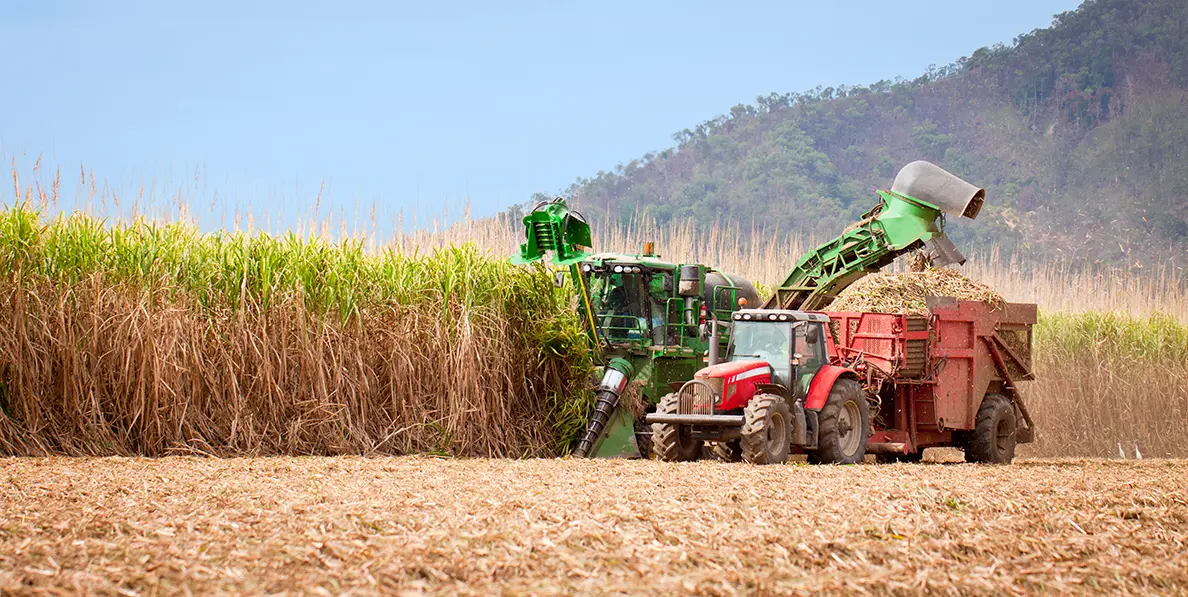
For the second year running, Brazil’s sugar production has increased, promising to stabilize lower prices and alleviate shortages faced by global markets.
The country, renowned as the world’s top sugar exporter, is on course to achieve its second-largest harvest ever.
Favorable weather and expanded sugarcane plantations are driving this achievement
Free daily brief — no card needed
Get every Agri Business story in one morning email
We build you a personalized brief around the topics you follow — free for 7 days. Love it? Your first month after that is US$1.
During New York’s Sugar Week, analysts highlighted the shift towards sugar over ethanol in processing mills, pointing to an anticipated boost in exports.
New development aims to relieve strain from consecutive deficits, easing sugar prices—longest surge since 1989—over the past five years.
This is particularly timely, as countries in Asia and the Middle East continue grappling with low stock levels.
Brazil’s Robust Sugar Harvest Stabilizes Global Supply.
One-stop reference
Company Intelligence
Every listed company in Latin America — financials, ownership and structure for 1,450+ companies across 26 exchanges, in one place.
Marcelo de Andrade of Cofco International shared an insight that surprised many: Brazil’s export capacity had been grossly underestimated.
New forecasts now predict that the Center-South region of Brazil might produce between 41 and 42.5 million tons of sugar, nearing record highs.
This optimism stems from larger-than-expected sugarcane fields, with some areas not harvested last year now contributing to this year’s yield.
The shift in market dynamics represents a significant pivot from the previous year’s scenario. Back then, export bottlenecks at Brazilian ports caused record spikes in sugar prices.
However, as Tom McNeill from Green Pool Commodity Specialists remarked, the panic has subsided. This is supported by a roughly 30% drop in sugar futures and favorable harvesting conditions.
Brazil’s Sugar Dominance
Carlos Murilo Barros de Mello of Hedgepoint Global Markets noted, “Brazil is back in the game in a way we haven’t seen in many years.”
Yet, this resurgence brings its challenges. With India, the second-largest producer, not expected to contribute significantly to the global sugar market until late 2025, reliance on Brazil heightens.
This poses a risk should any disruptions occur, especially since most shipments occur through a single Brazilian port.
Thus, while Brazil’s robust sugar output brings temporary relief, it also underscores a growing dependency on a solitary supply source.
Global markets are barely maintaining balance, and reserves remain critically low.