IBOV 187,366.84 ▲ 1.20% IPSA 11,315.26 ▼ 1.14% IPC MEX 65,010.39 ▲ 0.44% MERVAL 3,075,982 ▲ 1.36% COLCAP 2,569.47 ▲ 0.15% BVL PERÚ 59,620.96 ▲ 1.05% USD/BRL5.09▼ 0.72% USD/MXN16.91▼ 0.02% USD/CLP924.74▼ 1.05% USD/COP3,113▼ 0.49% USD/PEN3.35▼ 0.24% USD/ARS1,512▼ 0.02% USD/UYU40.22▲ 1.23% USD/PYG5,892▲ 0.36% USD/BOB12.45▲ 2.03% USD/DOP58.68▲ 0.30% USD/CRC446.50▲ 1.13% USD/GTQ7.64▲ 2.32% USD/HNL26.84▲ 1.63% USD/NIO36.62▲ 0.69% USD/VES818.05▲ 0.54% USD/PAB1.00— 0.00% USD/BZD2.00— 0.00% USD/JMD 157.28 — 0.00% USD/TTD6.71▲ 1.03% EUR/BRL5.92▼ 0.52% BRENT 88.88 ▼ 0.03% WTI 83.11 ▼ 0.11% IRON ORE 161.91 — — COPPER 6.61 ▲ 0.03% GOLD 4,461 ▲ 1.78% SILVER 65.59 ▲ 1.26% SOY 1,184 ▲ 3.20% CORN 480.50 ▲ 10.02% WHEAT 655.00 ▲ 3.93% COFFEE 317.25 ▼ 5.51% SUGAR 16.43 ▼ 1.79% ORANGE JUICE 138.55 ▼ 0.47% COTTON 85.03 ▲ 2.33% COCOA 5,719 ▲ 3.18% BEEF 223.60 ▼ 3.93% CATTLE 339.10 ▼ 3.16% LITHIUM 75.20 ▲ 1.47% PETR4 41.64 ▼ 0.05% VALE3 72.97 ▲ 0.83% ITUB4 38.60 ▼ 1.03% BBDC4 16.85 ▲ 0.36% ABEV3 14.89 ▼ 0.80% BBAS3 19.37 ▲ 0.47% B3SA3 14.26 ▼ 0.21% WEGE3 47.59 ▲ 0.49% PRIO3 59.14 ▼ 0.19% SUZB3 41.33 ▲ 2.35% RENT3 34.68 ▼ 0.09% AZZA3 15.89 ▼ 2.63% CSAN3 3.22 ▼ 1.83% RAIZ4 0.25 — 0.00% PCAR3 2.75 ▼ 0.36% GMAT3 3.65 ▼ 1.08% PSSA3 48.13 ▼ 0.54% CVCB3 1.33 ▼ 2.92% POSI3 3.36 ▲ 2.44% SLCE3 13.34 ▲ 0.30% NATU3 8.14 ▼ 0.73% IBOV 187,366.84 ▲ 1.20% IPSA 11,315.26 ▼ 1.14% IPC MEX 65,010.39 ▲ 0.44% MERVAL 3,075,982 ▲ 1.36% COLCAP 2,569.47 ▲ 0.15% BVL PERÚ 59,620.96 ▲ 1.05% USD/BRL 5.16 ▲ 0.01% USD/MXN 17.06 ▼ 0.24% USD/CLP 913.98 ▲ 0.04% USD/COP 3,140 ▲ 0.03% USD/PEN 3.36 ▼ 0.66% USD/ARS 1,493 ▲ 0.10% USD/UYU 40.27 ▲ 1.24% USD/PYG 5,939 ▲ 1.68% USD/BOB 11.64 ▼ 0.76% USD/DOP 58.34 ▲ 1.25% USD/CRC 445.92 ▲ 0.89% USD/GTQ 7.62 ▲ 2.21% USD/HNL 26.79 ▲ 1.57% USD/NIO 36.62 ▲ 0.69% USD/VES 762.44 ▼ 0.13% USD/PAB 1.00 — 0.00% USD/BZD 2.00 — 0.00% USD/JMD 157.28 — 0.00% USD/TTD 6.70 ▲ 0.61% EUR/BRL 5.95 ▲ 1.01% BRENT 88.88 ▼ 0.03% WTI 83.11 ▼ 0.11% IRON ORE 161.91 — — COPPER 6.61 ▲ 0.03% GOLD 4,461 ▲ 1.78% SILVER 65.59 ▲ 1.26% SOY 1,184 ▲ 3.20% CORN 480.50 ▲ 10.02% WHEAT 655.00 ▲ 3.93% COFFEE 317.25 ▼ 5.51% SUGAR 16.43 ▼ 1.79% ORANGE JUICE 138.55 ▼ 0.47% COTTON 85.03 ▲ 2.33% COCOA 5,719 ▲ 3.18% BEEF 223.60 ▼ 3.93% CATTLE 339.10 ▼ 3.16% LITHIUM 75.20 ▲ 1.47% PETR4 41.64 ▼ 0.05% VALE3 72.97 ▲ 0.83% ITUB4 38.60 ▼ 1.03% BBDC4 16.85 ▲ 0.36% ABEV3 14.89 ▼ 0.80% BBAS3 19.37 ▲ 0.47% B3SA3 14.26 ▼ 0.21% WEGE3 47.59 ▲ 0.49% PRIO3 59.14 ▼ 0.19% SUZB3 41.33 ▲ 2.35% RENT3 34.68 ▼ 0.09% AZZA3 15.89 ▼ 2.63% CSAN3 3.22 ▼ 1.83% RAIZ4 0.25 — 0.00% PCAR3 2.75 ▼ 0.36% GMAT3 3.65 ▼ 1.08% PSSA3 48.13 ▼ 0.54% CVCB3 1.33 ▼ 2.92% POSI3 3.36 ▲ 2.44% SLCE3 13.34 ▲ 0.30% NATU3 8.14 ▼ 0.73%
since 2009
Wednesday, September 9, 2026

Brazil’s Education System: Progress, Persistent Gaps, and the Economic Stakes

By · June 16, 2025 · 2 min read

The LatAm Brief

One email, every weekday morning. What moved in Latin American markets, politics and expat life.

Yesterday’s subject line: “227 dead in Latin American waters. Yesterday, none.”

Free. We send a confirmation link first — nothing arrives until you click it. Unsubscribe with one click in any edition. If you stop opening us for 30 days we stop sending by ourselves, as we assume the interest is no longer there. See our privacy policy. We never share your email.

Official data from Brazil’s Ministry of Education and the Brazilian Institute of Geography and Statistics (IBGE) reveal a mixed picture for the country’s education system in 2024.

While the nation has achieved near-universal enrollment for children aged 6 to 14, with 99.5% attending school, the story changes for older students and adults.

Only 56% of Brazilians aged 25 or older have finished high school, and just 20.5% hold a university degree. These figures highlight a system where access has improved, but completion and learning outcomes remain weak.

The country’s average adult has 10.1 years of schooling, up from 9.1 years in 2016. However, this still trails developed economies, where the average is over 13 years.

Illiteracy persists, affecting 5.3% of Brazilians aged 15 or older, or about 9.1 million people. Regional and racial disparities are stark: the Northeast’s illiteracy rate stands at 11.7%, compared to under 3% in the South and Southeast.
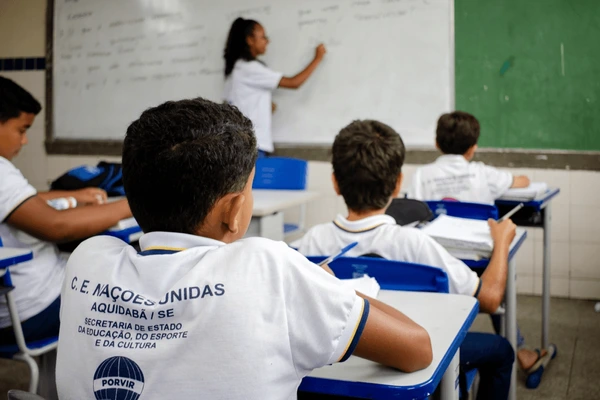
Brazil’s Education System: Progress, Persistent Gaps, and the Economic Stakes
Brazil’s Education System: Progress, Persistent Gaps, and the Economic Stakes.
One-stop reference
Company Intelligence
Every listed company in Latin America — financials, ownership and structure for 1,450+ companies across 26 exchanges, in one place.
Browse the directory →
RT
Ask Rio Times
17 years of Latin America reporting, on demand.
Open the full Ask Rio Times →

Black and brown Brazilians face higher rates of illiteracy and, on average, complete 1.7 fewer years of school than white peers.

Brazil’s Education Gaps Threaten Long-Term Growth

International benchmarks show Brazil lagging behind. In the 2022 PISA assessment, Brazilian 15-year-olds ranked 64th in math, 53rd in reading, and 61st in science out of 81 countries.

Less than half reached basic proficiency in math and science, placing Brazil four years behind the OECD average. Other Latin American countries, including Chile and Mexico, outperformed Brazil in these tests.

Investment remains a core issue. Brazil spends $3,668 per primary student each year, far below the OECD average of $11,914. Spending per secondary student is $4,058, compared to $12,713 in the OECD.

While public universities are tuition-free and highly competitive, private institutions account for most enrollments and rely on government scholarships to support low-income students.

Full-time education has expanded, integrating over 1.4 million students in two years. Yet, youth and adult education programs lost 200,000 enrollments in 2024, reaching historic lows.

Nearly half of adults over 25 have not finished high school, and the need to work remains a leading cause for dropping out. These realities matter for Brazil’s economic future.

Higher education correlates with higher income, and the country’s ability to compete globally depends on better educational outcomes. Without more investment and targeted reforms, Brazil risks leaving millions behind and undermining its growth prospects.

This article was produced by The Rio Times’ automated newsroom system. How we use AI · Report an error

Read More from The Rio Times

The Rio Times · Power Map
See who really holds power in Latin America
Click to open the Power Map

Rotate for Best Experience

This report is optimized for landscape viewing. Rotate your phone for the full experience.