IBOV 188,268.59 ▲ 1.42% IPSA 11,238.63 ▼ 1.16% IPC MEX 64,106.82 ▼ 1.09% MERVAL 3,157,852 — 0.00% COLCAP 2,626.71 ▲ 1.65% BVL PERÚ 60,702.89 ▼ 2.19% USD/BRL5.10▼ 0.11% USD/MXN16.97▼ 0.10% USD/CLP938.93▼ 0.23% USD/COP3,093▼ 0.55% USD/PEN3.36▲ 0.28% USD/ARS1,513▼ 0.08% USD/UYU40.24▲ 3.05% USD/PYG5,868▲ 2.26% USD/BOB12.36▲ 1.91% USD/DOP58.67▲ 0.29% USD/CRC447.58▲ 1.69% USD/GTQ7.63▲ 3.04% USD/HNL26.85▲ 0.57% USD/NIO36.62▲ 0.34% USD/VES830.41▲ 0.45% USD/PAB1.00— 0.00% USD/BZD2.00— 0.00% USD/JMD 157.28 — 0.00% USD/TTD6.73▲ 2.40% EUR/BRL5.91▼ 0.34% BRENT 88.88 ▼ 0.03% WTI 83.11 ▼ 0.11% IRON ORE 161.91 — — COPPER 6.61 ▲ 0.03% GOLD 4,461 ▲ 1.78% SILVER 65.59 ▲ 1.26% SOY 1,184 ▲ 3.20% CORN 480.50 ▲ 10.02% WHEAT 655.00 ▲ 3.93% COFFEE 317.25 ▼ 5.51% SUGAR 16.43 ▼ 1.79% ORANGE JUICE 138.55 ▼ 0.47% COTTON 85.03 ▲ 2.33% COCOA 5,719 ▲ 3.18% BEEF 223.60 ▼ 3.93% CATTLE 339.10 ▼ 3.16% LITHIUM 75.20 ▲ 1.47% PETR4 41.64 ▼ 0.05% VALE3 72.97 ▲ 0.83% ITUB4 38.60 ▼ 1.03% BBDC4 16.85 ▲ 0.36% ABEV3 14.89 ▼ 0.80% BBAS3 19.37 ▲ 0.47% B3SA3 14.26 ▼ 0.21% WEGE3 47.59 ▲ 0.49% PRIO3 59.14 ▼ 0.19% SUZB3 41.33 ▲ 2.35% RENT3 34.68 ▼ 0.09% AZZA3 15.89 ▼ 2.63% CSAN3 3.22 ▼ 1.83% RAIZ4 0.25 — 0.00% PCAR3 2.75 ▼ 0.36% GMAT3 3.65 ▼ 1.08% PSSA3 48.13 ▼ 0.54% CVCB3 1.33 ▼ 2.92% POSI3 3.36 ▲ 2.44% SLCE3 13.34 ▲ 0.30% NATU3 8.14 ▼ 0.73% IBOV 188,268.59 ▲ 1.42% IPSA 11,238.63 ▼ 1.16% IPC MEX 64,106.82 ▼ 1.09% MERVAL 3,157,852 — 0.00% COLCAP 2,626.71 ▲ 1.65% BVL PERÚ 60,702.89 ▼ 2.19% USD/BRL 5.16 ▲ 0.01% USD/MXN 17.06 ▼ 0.24% USD/CLP 913.98 ▲ 0.04% USD/COP 3,140 ▲ 0.03% USD/PEN 3.36 ▼ 0.66% USD/ARS 1,493 ▲ 0.10% USD/UYU 40.27 ▲ 1.24% USD/PYG 5,939 ▲ 1.68% USD/BOB 11.64 ▼ 0.76% USD/DOP 58.34 ▲ 1.25% USD/CRC 445.92 ▲ 0.89% USD/GTQ 7.62 ▲ 2.21% USD/HNL 26.79 ▲ 1.57% USD/NIO 36.62 ▲ 0.69% USD/VES 762.44 ▼ 0.13% USD/PAB 1.00 — 0.00% USD/BZD 2.00 — 0.00% USD/JMD 157.28 — 0.00% USD/TTD 6.70 ▲ 0.61% EUR/BRL 5.95 ▲ 1.01% BRENT 88.88 ▼ 0.03% WTI 83.11 ▼ 0.11% IRON ORE 161.91 — — COPPER 6.61 ▲ 0.03% GOLD 4,461 ▲ 1.78% SILVER 65.59 ▲ 1.26% SOY 1,184 ▲ 3.20% CORN 480.50 ▲ 10.02% WHEAT 655.00 ▲ 3.93% COFFEE 317.25 ▼ 5.51% SUGAR 16.43 ▼ 1.79% ORANGE JUICE 138.55 ▼ 0.47% COTTON 85.03 ▲ 2.33% COCOA 5,719 ▲ 3.18% BEEF 223.60 ▼ 3.93% CATTLE 339.10 ▼ 3.16% LITHIUM 75.20 ▲ 1.47% PETR4 41.64 ▼ 0.05% VALE3 72.97 ▲ 0.83% ITUB4 38.60 ▼ 1.03% BBDC4 16.85 ▲ 0.36% ABEV3 14.89 ▼ 0.80% BBAS3 19.37 ▲ 0.47% B3SA3 14.26 ▼ 0.21% WEGE3 47.59 ▲ 0.49% PRIO3 59.14 ▼ 0.19% SUZB3 41.33 ▲ 2.35% RENT3 34.68 ▼ 0.09% AZZA3 15.89 ▼ 2.63% CSAN3 3.22 ▼ 1.83% RAIZ4 0.25 — 0.00% PCAR3 2.75 ▼ 0.36% GMAT3 3.65 ▼ 1.08% PSSA3 48.13 ▼ 0.54% CVCB3 1.33 ▼ 2.92% POSI3 3.36 ▲ 2.44% SLCE3 13.34 ▲ 0.30% NATU3 8.14 ▼ 0.73%
since 2009
Friday, September 11, 2026

Brazil’s Religious Shift: Still a Christian Powerhouse Amid Rising Secular Trends

By · June 11, 2025 · 2 min read

The LatAm Brief

One email, every weekday morning. What moved in Latin American markets, politics and expat life.

Yesterday’s subject line: “Venezuela pumps the most oil in seven years”

Free. We send a confirmation link first — nothing arrives until you click it. Unsubscribe with one click in any edition. If you stop opening us for 30 days we stop sending by ourselves, as we assume the interest is no longer there. See our privacy policy. We never share your email.

Brazil’s religious landscape is changing, but the country remains one of the world’s most Christian nations. The latest census data from the Brazilian Institute of Geography and Statistics (IBGE) shows that the Catholic population dropped from 65.1% in 2010 to 56.7% in 2022.

Evangelicals increased from 21.6% to 26.9% in the same period. The number of Brazilians with no religious affiliation rose from 7.9% to 9.3%. These figures confirm a clear trend: fewer people identify with traditional religion, and more seek alternatives or none at all.

However, Brazil’s Christian majority remains strong compared to other countries. The image data from Pew Research offers a global and regional perspective.

In Latin America, Brazil’s 83.8% Christian population is only slightly below neighbors like Mexico (89.2%), Argentina (88.5%), and Venezuela (88.1%). Only Uruguay and Chile show notably higher rates of non-affiliation, at 52.4% and 30.3% respectively.

Most other Latin American countries, including Brazil, have less than 11% of their population unaffiliated with any religion. Comparing Brazil to nations outside Latin America, the difference becomes even clearer.
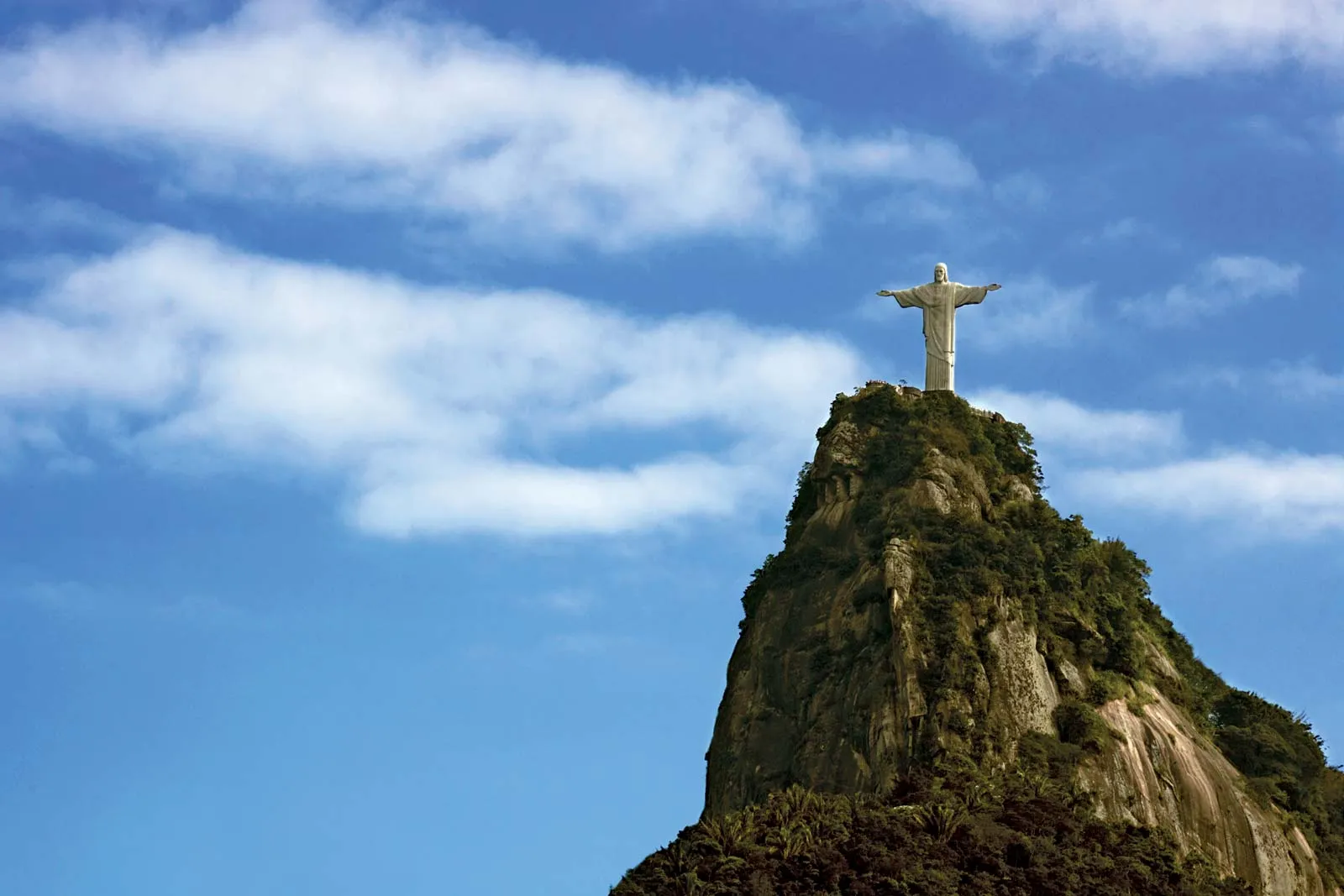
Brazil’s Religious Shift: Still a Christian Powerhouse Amid Rising Secular Trends
Brazil’s Religious Shift: Still a Christian Powerhouse Amid Rising Secular Trends.
One-stop reference
Company Intelligence
Every listed company in Latin America — financials, ownership and structure for 1,450+ companies across 26 exchanges, in one place.
Browse the directory →
RT
Ask Rio Times
17 years of Latin America reporting, on demand.
Open the full Ask Rio Times →

Countries like France (46.5% Christian, 42.6% unaffiliated), the United Kingdom (49.4% Christian, 40.2% unaffiliated), and Japan (2.2% Christian, 57.5% unaffiliated) show much higher secularization.

Even the United States, with 64% Christians and 29.7% unaffiliated, is less religiously homogeneous than Brazil. This context highlights Brazil’s position as a Christian stronghold in a world where secularism is rising.

Several factors drive these changes. Urbanization, increased education, and access to global information have made it easier for Brazilians to question traditional religious ties.

Evangelical churches have grown by adapting to local cultures and offering social support, while Catholicism has declined as it struggles to retain young people. The rise in non-affiliation reflects a broader global trend, but in Brazil, this group remains a minority.

The religious shift has political and economic consequences. Evangelicals have become a key political force, often supporting conservative candidates and policies.

The leftist government faces challenges in gaining support from this group, as recent polls show lower approval ratings among evangelicals compared to Catholics.

Businesses and policymakers must recognize the influence of religious communities, especially as they shape consumer behavior and voting patterns.

Despite the decline in Catholicism and the rise of secularism, Brazil’s Christian identity remains robust. The country’s religious composition is still far more Christian than most developed nations.

For investors, policymakers, and social analysts, understanding these dynamics is vital. Brazil’s changing religious map will continue to influence its society, politics, and economy for years to come.

Country Region Christians (%) Non-affiliated (%)
Uruguay Latin America 44.5 52.4
Chile Latin America 68.3 30.3
Mexico Latin America 89.2 10.6
Venezuela Latin America 88.1 9.7
Brazil Latin America 83.8 9.3
Argentina Latin America 88.5 9.2
Ecuador Latin America 88.5 8.4
Peru Latin America 94.5 5.1
Japan World 2.2 57.5
France World 46.5 42.6
United Kingdom World 49.4 40.2
Germany World 56.2 36.1
Canada World 53.3 34.6
USA World 64.0 29.7
Spain World 69.5 26.4
Portugal World 85.1 13.8
Italy World 80.5 13.3


This article was produced by The Rio Times’ automated newsroom system. How we use AI · Report an error

Read More from The Rio Times

The Rio Times · Power Map
See who really holds power in Latin America
Click to open the Power Map

Rotate for Best Experience

This report is optimized for landscape viewing. Rotate your phone for the full experience.