Brazil’s Ambitious $40 Billion Biofuel Investment Plan by 2037
Brazil is set to draw investments of over 200 billion reais (around $40.74 billion) for biofuel production and marketing by 2037.
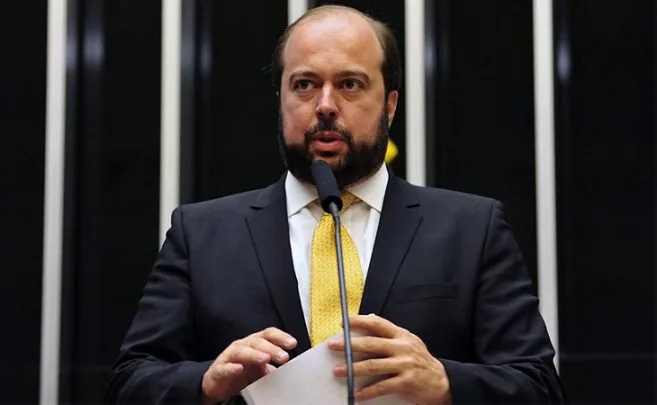
Alexandre Silveira, the Minister of Mines and Energy, confirmed this. He made the announcement on Monday, showcasing Brazil’s commitment to sustainable energy.
Silveira spoke about Brazil’s capabilities at the “Fuels of the Future” panel in Dubai’s COP28 session.
He focused on Sustainable Aviation Fuel (SAF), green diesel (HVO), and various types of ethanol. These fuels represent the future of energy and Brazil’s role in it.
Silveira highlighted the RenovaBio and Rota 2030 programs. Together, they are expected to attract 105 billion reais (about $21.28 billion) in investments.
This is a significant portion of the total projected investment. RenovaBio aims to reduce greenhouse gas emissions in transportation.
It uses a unique Decarbonization Credit system to incentivize biofuel production. This program reflects Brazil’s innovative approach to environmental challenges.
Furthermore, Silveira mentioned an investment of 15 billion reais (about $3.055 billion) in SAF and HVO.
Another 1 billion reais (roughly $203 million) will likely go into synthetic fuels. These investments show Brazil’s diversified approach to biofuels.
Significant investments in various biofuels
The government estimates significant investments in various biofuels.
Ethanol, biodiesel, synthetic fuels, and biomethane will collectively garner over 65 billion reais (about $13.24 billion).
Additionally, carbon capture and storage technologies will attract 3 billion reais (about $611 million). This diversification in biofuels and related technologies is part of Brazil’s comprehensive energy strategy.
Specific projects are already in motion. A biorefinery plant in Bahia, a carbon capture well in Mato Grosso, and a second-generation ethanol plant in São Paulo are underway.
These projects illustrate the practical steps Brazil is taking towards its energy goals.
In conclusion, Silveira emphasized Brazil’s role in addressing global challenges, particularly climate change.
He reaffirmed the country’s commitment to implementing sustainable, fair, and balanced national policies.
These policies aim to meet the needs of Brazilian citizens while contributing to global environmental solutions.
More: Brazil news in English, every day from The Rio Times.
This article was produced by The Rio Times’ automated newsroom system. How we use AI · Report an error
Read More from The Rio Times