Brazil May Vote on Big Tech Rules Next Week
Brazil may soon decide whether its competition authority can set duties for the largest digital platforms, a choice that has become a test of trade relations with Washington.

Politics: Brazil
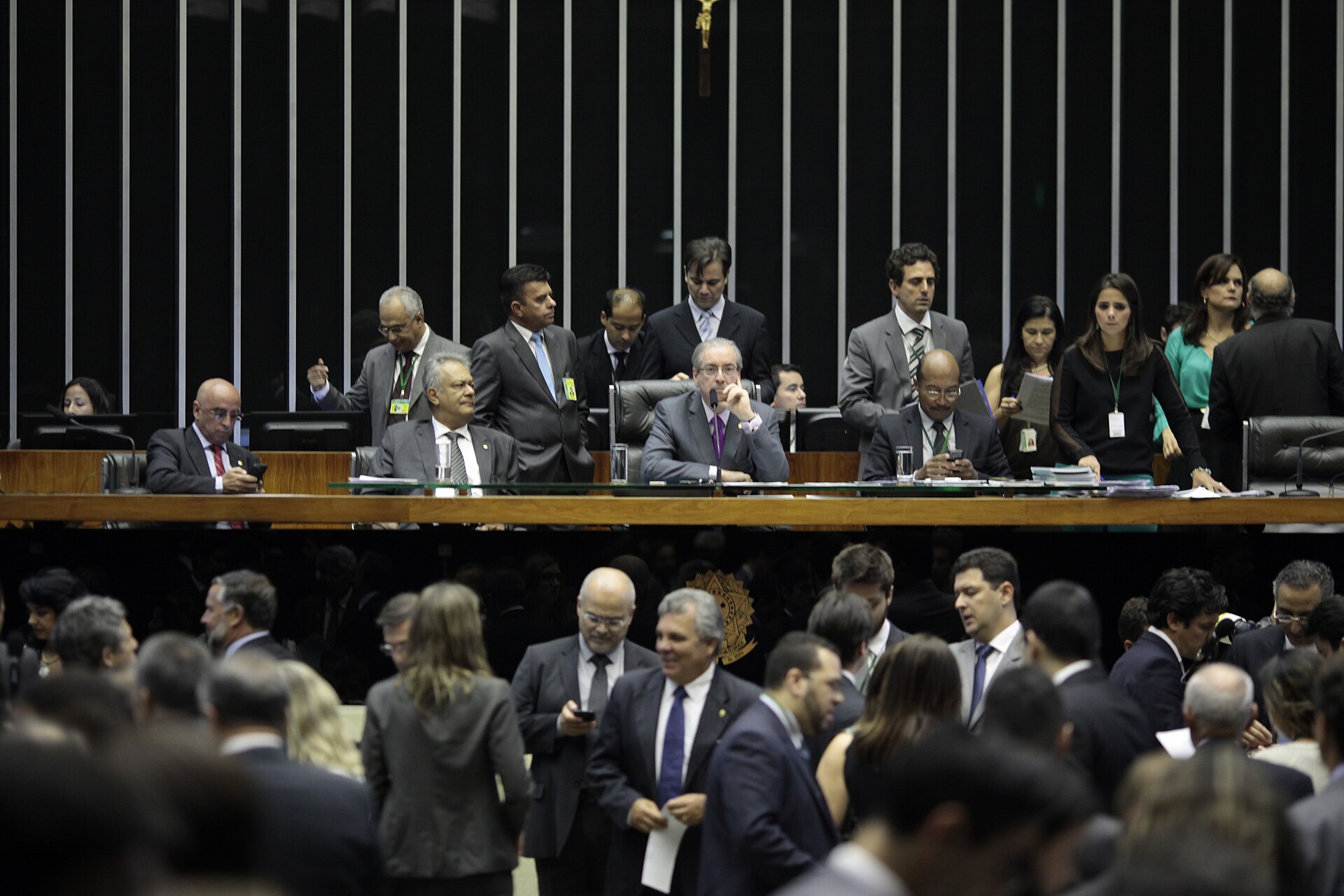
Brazil’s Chamber of Deputies, the lower house, could vote as soon as next week on a bill that would let the country’s antitrust agency write rules for the biggest technology platforms. Rapporteur Aliel Machado, the deputy who wrote the final text, said on Tuesday 24 November 2026 that the date was agreed with Chamber speaker Hugo Motta.
The bill matters in the United States because 20 Republican members of Congress asked Washington in July to raise it in trade talks with Brazil. The rules could reach US technology companies that sell in Brazil.
Key Facts
- Who. Deputy Aliel Machado, the bill’s rapporteur, and Chamber speaker Hugo Motta.
- What. A possible vote on Bill 4,675/2025, which gives antitrust agency Cade power over big platforms.
- Where. Chamber of Deputies, Brasília. The Senate votes next if it passes.
- Power Index. Brazil ranks 1st of 14 in The Rio Times Latin America Power Index, with 74.2 points (November 2026 edition).
- As of. 25 November 2026, 06:30 GMT
Brazil may soon decide whether its competition authority can set duties for the largest digital platforms, a choice that has become a test of trade relations with Washington.
Machado said the bill will go to the floor next week, and that he still has to settle the text with party leaders. A week earlier, on Tuesday 17 November, Motta had said the floor date depended on the rapporteur finishing talks with party blocs, and the Chamber’s record shows Machado filed a revised floor text on Monday 23 November.
The government sent the bill to the Chamber on Thursday 18 September 2025, and deputies approved a fast-track request on Wednesday 18 March 2026, according to the Chamber’s tracking page. If the Chamber approves it, the text goes to the Senate, the upper house, and then to President Luiz Inácio Lula da Silva for signature.
The bill amends Brazil’s competition law of 2011 and creates a new unit, the Digital Markets Superintendence, inside the Administrative Council for Economic Defence, known as Cade, the antitrust agency. A group with yearly revenue above R$50 billion (about US$8.5 billion at 5.91 reais per dollar) worldwide, or R$5 billion (about US$850 million) in Brazil, can be named “of systemic relevance” if it also meets qualitative criteria set by the text.
Meeting the revenue test does not trigger the label automatically, because the text also sets qualitative criteria. Machado says the label alone brings no duties, but we could not check that against the revised text.
Machado argues that the bill is about prices, not speech, and says the text does not regulate content. Machado also cites the Finance Ministry’s savings estimate, below.
The Finance Ministry’s Secretariat of Economic Reforms, a team that studies economic policy, published its own estimate on Monday 16 November. It puts the yearly gain for consumers and businesses at R$15.3 billion to R$50.6 billion (about US$2.6 billion to US$8.6 billion), or 0.1% to 0.4% of gross domestic product, equal to R$70 to R$240 (about US$12 to US$41) per inhabitant.
Industry is against it. The Conselho Digital, a lobby group for digital platforms, published an open letter criticising the revised text on Thursday 9 July 2026.
In the United States, 20 Republican members of Congress, led by Representative Adrian Smith, chair of the House Ways and Means trade subcommittee, and House Judiciary Committee chairman Jim Jordan, wrote to US Trade Representative Jamieson Greer, the White House’s trade negotiator, on Thursday 23 July 2026. They said the bill would “intentionally replicate” the European Union’s Digital Markets Act, the bloc’s rulebook for big platforms, and urged him to raise it in any trade talks with Brazil.
Machado said US Embassy representatives met him in Brasília on Tuesday 7 July 2026 and asked for more time before any vote. He said the visit came at the request of companies.
One point is open: the text of the revised floor opinion filed on 23 November was not available to us. Machado’s statement is the only sign so far of a date, and the Chamber’s tracking page shows none.
Under the urgency regime approved in March, the bill can go straight to the floor without passing through every Chamber committee. Without urgency, it would have to clear each committee first.
Frequently Asked Questions
What would the bill do?
It would let Cade name the largest platforms as systemically relevant and then set duties such as transparency and data portability. Each case needs its own proceeding.
Why does the United States care?
US officials and lawmakers say the rules would hit American companies hardest. They want the issue in trade talks with Brazil.
What happens after the Chamber vote?
If deputies approve it, the bill goes to the Senate. It becomes law only after Senate approval and the president’s signature.
In depth
Sources
Published Wednesday 25 November 2026 · Source: Bill 4,675/2025 tracking page, Chamber of Deputies (entries to 23 November 2026) · Bill 4,675/2025, National Congress · Finance Ministry note of 16 November 2026 · Letter of 20 House Republicans to the US Trade Representative, 23 July 2026
This article was produced by The Rio Times’ automated AI newsroom. Editorial responsibility: Matthias Camenzind, Publisher and Editor-in-Chief. The Rio Times also runs Ask Rio Times, which answers from 100,000+ of our own articles, the daily Latin America Power Map, and prediction-market odds on elections and markets.. How we use AI · Report an error
Connected Coverage
Brazil runoff, Sunday, October 25: When is the Brazil runoff election. Latest: Brazil runoff polls, Flávio 51%, Lula 49%.