Brazil’s Chamber Passes Fiscal Bill Intact
Brazil’s Congress has cleared a bill the government calls a first step, and the talk in Brasília has already turned to a second one.

Economy: Brazil
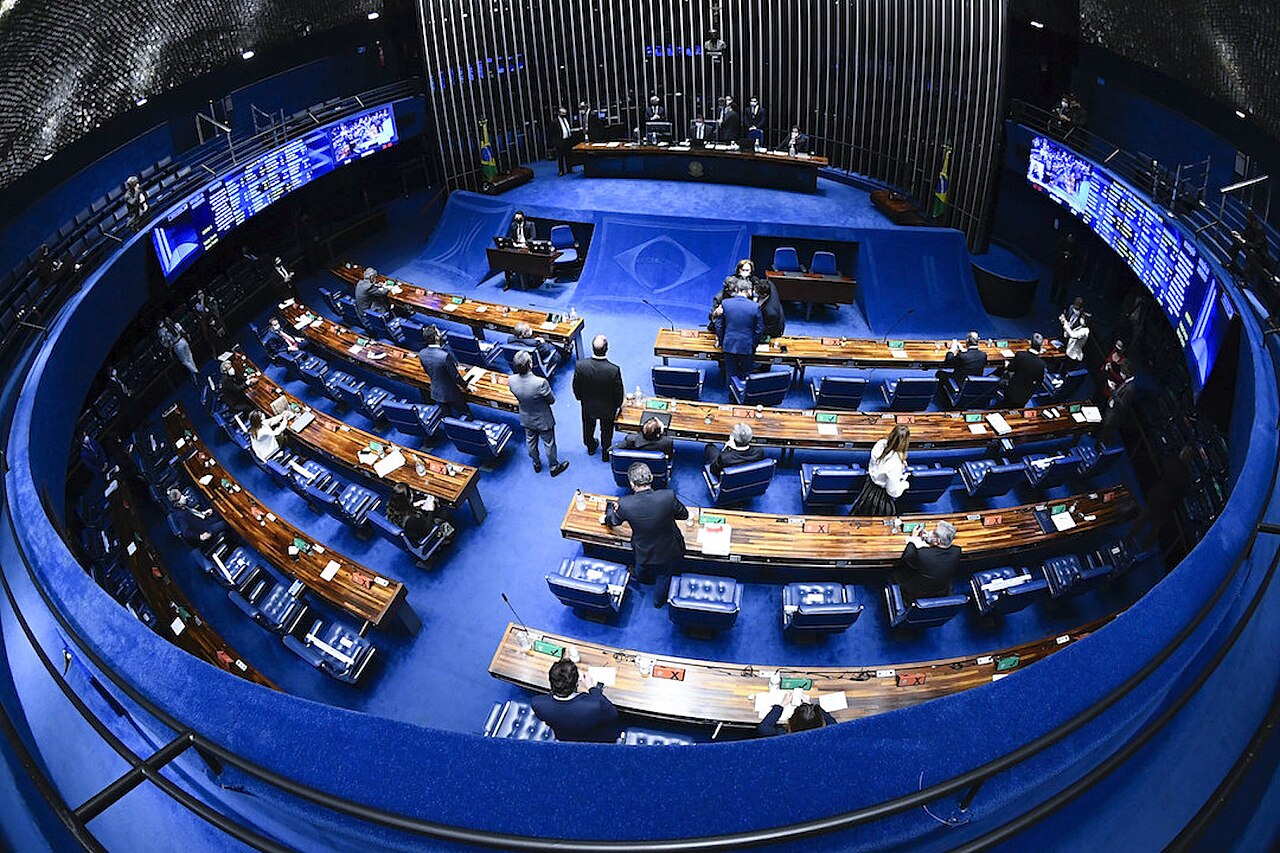
Brazil’s Congress finished the first half of a fiscal repair job on the evening of Monday 23 November 2026, and talk of a second half has already started. The Chamber of Deputies, the lower house, passed the government’s fiscal-adjustment bill unchanged by 353 votes to 128, with 5 abstentions, and sent it to President Luiz Inácio Lula da Silva for signature.
Finance Minister Dario Durigan calls the bill a first step. A press report of 14 November, citing unnamed sources, says the economic team is weighing a second one: a change to the Constitution aimed at spending that sits outside the spending cap.
Key Facts
- What. Fiscal-adjustment bill PLP 299/2026 passed unchanged, 353 to 128, with 5 abstentions.
- Numbers. From 2027 the bill cuts the cap on real spending growth to 2% from 2.5% in spending-freeze years.
- When. Lula has 15 working days to sign or veto, until about 15 December.
- Power Index. Brazil ranks 1st of 14 in The Rio Times Latin America Power Index, with 74.2 points (November 2026 edition).
- As of. 24 November 2026, 12:00 GMT.
Brazil’s Congress has cleared a bill the government calls a first step, and the talk in Brasília has already turned to a second one.
The bill, numbered PLP 299/2026, was filed on Wednesday 11 November 2026, and the Senate approved its substitute text by 45 votes to 31 on Thursday 12 November, the National Congress vote record shows. The same record shows that on Wednesday 18 November the Senate rejected an amendment, number 40, by 30 votes to 47 and approved the supplementary round by 69 to 2.
Brazil’s fiscal framework, the arcabouço fiscal, is the spending rule set by Complementary Law 200 of 30 August 2023 and limits real spending growth, meaning growth after inflation, to between 0.6% and 2.5% a year. The new bill lowers that ceiling to 2% in years when the government has to freeze spending, starting in 2027, the Chamber of Deputies said on 24 November.
Brazil’s central bank said on 29 October that gross government debt reached 82.9% of GDP in September 2026, or R$11.1 trillion (about US$1.9 trillion), up 4.3 percentage points in 2026. Net public-sector debt stood at 70% of GDP in the same statistics.
Durigan spoke on Monday 23 November at an event hosted by Itaú BBA, a Brazilian investment bank. “We must complete this ‘last mile’ so that we can adjust the public finances,” he said in Portuguese, calling the bill a first step.
Business press on 24 November cites a government estimate that the package would improve the 2027 primary budget result, the balance before interest payments, by R$45.1 billion to R$56.1 billion (US$7.6 billion to US$9.5 billion, at the rate of 5.9314 reais per US dollar from market data provider RT market data on 24 November 2026 at about 10:00 UTC). The estimate does not name the ministry that produced it.
The bill lets the government delay how fast companies can offset tax debts with credits, a saving estimated at R$12.8 billion to R$18.3 billion in 2027 (US$2.2 billion to US$3.1 billion), the Chamber’s news service said. It also raises the cut in tax incentives from 10% to 20%, worth about R$15 billion (about US$2.5 billion).
The 2027 target is a primary surplus, meaning a budget balance before interest payments, of R$18.7 billion (about US$3.2 billion) after deductions of about R$64.7 billion (about US$10.9 billion), the Chamber’s news service said on 24 November. The bill also excludes up to R$10.5 billion (about US$1.8 billion) of diesel subsidies from the 2026 target and gives Congress 60 days after publication to vote on the “supersalary” rule.
“Fiscal consolidation is the main lever to guarantee the long-term sustainability of social programmes,” Durigan said at the same event. He described the bill as a first step in that effort.
Five deputies abstained, and the Chamber’s vote count of 23 November shows 128 against. A press report of 14 November mentioned political resistance to a second round.
The second step is a proposed constitutional amendment, known in Brazil as a PEC, that would target spending outside the cap. On 14 November the economic team was reportedly discussing it, for an optimistic saving of about R$20 billion (about US$3.4 billion), a press report of that day said.
Spending outside the cap totals R$273.5 billion (about US$46 billion), according to the government’s latest bimonthly budget report cited in press accounts of 14 November, including R$114.3 billion (about US$19.3 billion) in court-ordered payments and R$69.6 billion (about US$11.7 billion) for Fundeb, the basic-education fund. Those are the items the proposed amendment would target.
No official document on the PEC has been published, and none of these reported points is confirmed. Durigan said on 23 November that he would take proposals to Lula within two weeks, which points to about Monday 7 December.
Investors outside Brazil follow this because debt and the real, Brazil’s currency, move the value of Brazilian bonds and of Brazilian stocks listed in the United States. Durigan argues that a stronger fiscal balance helps bring interest rates down, so a larger saving would, on his argument, ease pressure on rates.
Under Article 66 of the Constitution Lula has 15 working days from receipt to sign or veto, which points to about Tuesday 15 December. Official data come first: the central-government budget balance for October is due on Friday 27 November and gross debt data on Monday 30 November, according to the RT economic calendar, a market data provider’s schedule.
Frequently Asked Questions
What happens to the bill now?
It goes to President Lula, who can sign it or veto it within a fixed period. Congress then has to settle the “supersalary” rule, which decides which payments to public officials may exceed the constitutional pay ceiling.
Why do investors outside Brazil care?
The bill and the possible second step both aim to improve the budget balance, which feeds into the real and Brazilian bonds and shares. Durigan argues that a stronger fiscal balance helps bring interest rates down.
What is the second step?
It is a possible constitutional amendment on spending outside the cap, reported on 14 November. No official document on it has been published.
Sources
Brazilian Chamber of Deputies, vote of 23 November 2026 and summary of 24 November 2026; National Congress, Senate vote pages of 12 and 18 November 2026; Banco Central do Brasil, public debt statistics of 29 October 2026; Complementary Law 200 of 30 August 2023; statements by Finance Minister Dario Durigan (17 and 23 November 2026); RT market data and economic calendar (24 November 2026).
This article was produced by The Rio Times’ automated AI newsroom. Editorial responsibility: Matthias Camenzind, Publisher and Editor-in-Chief. The Rio Times also runs Ask Rio Times, which answers from 100,000+ of our own articles, the daily Latin America Power Map, and prediction-market odds on elections and markets.. How we use AI · Report an error
Brazil runoff, Sunday, October 25: Brazil runoff start time and results schedule. Latest: Brazil runoff polls, Flávio 51%, Lula 49%.