Today concludes Brazil’s leadership of the UN Security Council, with Foreign Minister Mauro Vieira having assumed the role on October 1.
Next month, China will lead, followed by Ecuador in December.
The Security Council focuses on international peace. It has five permanent members: China, France, Russia, the UK, and the US.
Ten rotating members include Brazil, Albania, and others.
During Brazil’s term, the Israel-Hamas conflict dominated the agenda. Vieira chaired an emergency meeting yesterday.
He criticized the delay in passing a resolution to the conflict.
Vieira expressed that the Council has failed to stop human suffering in Gaza. The Council heard many speeches but took no decisive action.
Since the conflict began, the Council rejected resolutions from Brazil, the US, and Russia.
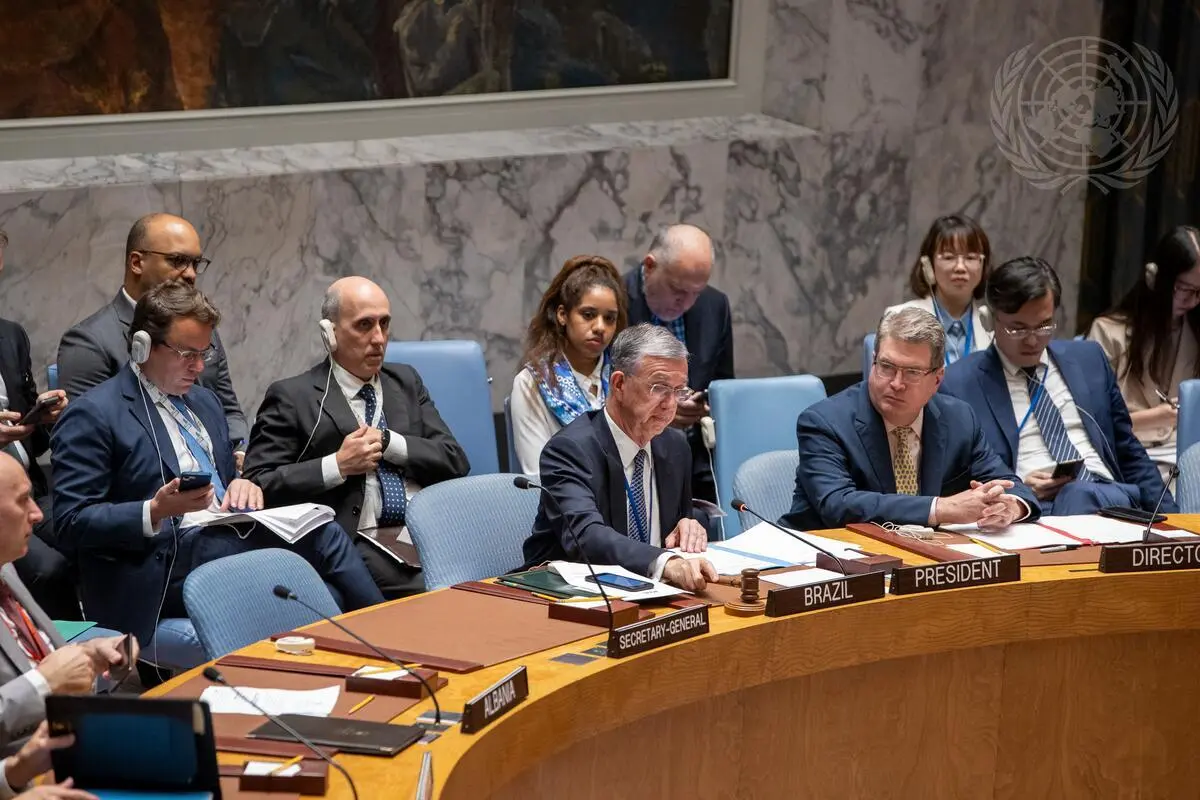
Vieira spoke at the Peace Summit in Cairo on October 21. He noted the Council’s inaction impacts civilian lives.
He believes it’s not in the global community’s interest.
President Luiz Inácio Lula da Silva has criticized the Security Council before. He called for reforms, especially regarding the veto power of permanent members.
Lula has been advocating for more permanent seats since his first term. However, no changes are in sight.
Background
The Security Council’s role in peacekeeping has been under scrutiny for years. Brazil’s term highlights this ongoing debate.
Brazil’s leadership was keen on addressing the Israel-Hamas conflict. However, it faced obstacles, showcasing the Council’s complexities.
In comparison to other rotating members like Albania or Gabon, Brazil pushed for more proactive measures.
This approach reflects Brazil’s own historical push for a greater role in global affairs.
But the Council’s structure, especially the veto power of permanent members, often hampers quick action.
This situation isn’t unique to Brazil or this specific conflict. Many countries, particularly from Africa and other developing regions, have faced similar challenges.
They often advocate for reform, but substantive changes remain elusive.
More: Egypt news in English, every day from The Rio Times.
This article was produced by The Rio Times’ automated newsroom system. How we use AI · Report an error
Read More from The Rio Times