Bolivian Leadership Conflict and Its Broader Implications
(Analysis) On June 26, in a bold move, Bolivia’s military commander, Juan José Zúñiga, smashed a tank through the Palacio Quemado’s gates. He was detained shortly after, along with others.
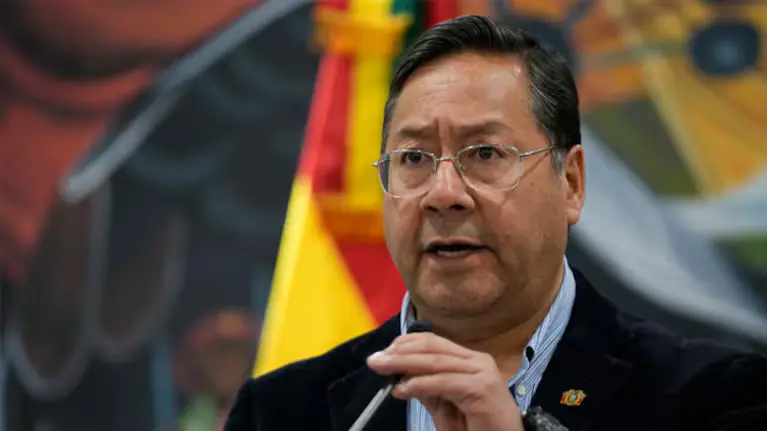
President Luis Arce, undeterred, spoke to many gathered in Murillo Square, marking the coup’s failure. But beneath this scene of democratic triumph, deeper national issues loomed.
The attempted coup revealed the fragility within. The division between Arce and his mentor, Evo Morales, poses serious threats to Bolivia’s governance.
It impacts economic policies, halts legislative processes, and risks future upheavals.
In 2025, Bolivians will face a pivotal election. The Movimiento al Socialismo (MAS), which has been influential since Morales’ historic 2006 win as the first Aymara president, remains a significant force.
This victory heralded transformative changes, notably the gas industry’s nationalization, spurring economic growth and political stability.
These developments fostered a new indigenous middle class, a shift celebrated by then Vice President Álvaro García Linera as a progressive moment.
However, in November 2019, a combined civil and military revolt forced Morales out amid accusations of electoral misconduct and unlawful reelection bids.
Morales, from his exile in Argentina, appointed Arce, his former economy minister, as his successor.
The party regained control by the following year, transitioning to what García Linera called an “institutional administrative moment,” focusing on governance over revolutionary activism.
Yet, this shift led to strife, notably starting on Arce‘s inauguration day in 2020, when he chose not to acknowledge Morales, sparking internal party conflict.
The strain gave rise to ‘arcismo,’ a faction pushing for fresh leadership. This faction diverges sharply from Morales’s approach, emphasizing individual over collective leadership.
This split led to Morales being barred from future presidential runs by the Constitutional Court, deepening the rift.
Bolivia’s Political Turmoil
This internal conflict has broader governance implications. Social analyst Armando Ortuño points out the resulting governance paralysis and inability to address critical economic and social issues.
Parliament remains inactive, unable to pass necessary legislation, including international loans vital for managing severe currency shortages.
Economically, Bolivia has struggled since 2015 with dwindling dollar reserves, exacerbated by dropping gas prices and insufficient investment in exploration.
Inflation is expected to reach 5% by year’s end, with a black market for dollars emerging amid fiscal challenges, raising the risk premium to near 2000 points.
Foreign debt, though less than 30% of GDP, is a growing concern, with gold reserves difficult to liquidize, covering less than two weeks of imports.
Arce remains optimistic, noting low inflation and plans for strategic investments in oil and industrial sectors to address trade imbalances.
Yet, without addressing the leadership conflict, these plans may falter, further destabilizing the economy.
Morales, initially denouncing Zúñiga’s coup as self-sabotage by Arce later framed it as an attempt by Arce to undermine his return.
This internal warfare risks empowering the military, traditionally seen as a wildcard in Bolivian politics. García Linera describes this situation as potentially catastrophic.
To navigate this crisis, both Arce and Morales must negotiate to stabilize their parties and the country.
Their failure to reconcile could leave the party vulnerable to electoral defeat in 2024. This underscores the importance of unity for any potential success in the upcoming elections.
The ongoing division highlights the challenges of transitioning from a revolutionary to a governance-focused entity. This is critical for Bolivia’s stability and democratic future.
The story of MAS’s struggle is not just about power but about the broader trajectory of Bolivia’s national identity and international standing in a rapidly changing global landscape.
More: Bolivia news in English, every day from The Rio Times.
This article was produced by The Rio Times’ automated newsroom system. How we use AI · Report an error · Editorial responsibility: Matthias Camenzind, Editor-in-Chief