Bolivia Drivers Strike Over Diesel Price
A 14.6% diesel price rise has pushed Bolivian drivers toward strikes and blockades, and President Rodrigo Paz says the price will follow world markets.

Economy: Bolivia
Bolivian drivers in Chuquisaca department began an indefinite strike with road blockades around Sucre, the constitutional capital, from midnight on Wednesday 25 November 2026, a day after the fuel regulator raised the diesel price by 14.6%. Drivers in the Yungas, a mountain region of La Paz department, also stopped departures, according to ANF, the Bolivian news agency Fides.
The strike puts freight and food costs at risk in a country under an International Monetary Fund (IMF) loan programme. The National Hydrocarbons Agency (ANH), the state fuel regulator, set diesel at Bs 20.57 per litre (about US$1.74) from midnight on Tuesday 24 November.
Key Facts
- What. Drivers strike and block roads after diesel rose 14.6% to Bs 20.57 (about US$1.74) a litre.
- Where. Sucre, capital of Chuquisaca department, and the Yungas valleys of La Paz department, Bolivia.
- When. Strike from Wednesday 25 November 2026; national drivers’ assembly in La Paz on Thursday 26 November.
- Power Index. Bolivia ranks 13th of 14 in The Rio Times Latin America Power Index, with 27.9 points (November 2026 edition).
- As of. 25 November 2026, 07:00 GMT
Bs means bolivianos, the national currency. This article converts at about Bs 11.8 per US$, the Central Bank of Bolivia’s official rate of 24 to 25 November 2026.
A 14.6% diesel price rise has pushed Bolivian drivers toward strikes and blockades, and President Rodrigo Paz says the price will follow world markets.
The rise follows Supreme Decree 5716 of September 2026, the decree that lifted the diesel subsidy and set a 5% variation band for the regulated price. That decree raised diesel from Bs 9.80 (about US$0.83) to Bs 17.95 (about US$1.52), as the latest diesel price rise built on.
The ANH said in its communique that the adjustment aligns the regulated price with its import-cost parity, “consolidating a technical mechanism that is predictable and works normally” (translated from Spanish, as are all Spanish quotes here). It added that the step reduces smuggling incentives and secures supply, and that the agency will inspect filling stations.
The IMF board approved a 36-month loan arrangement for Bolivia on 2 October 2026. The new price is Bs 2.62 (about US$0.22) a litre above the old one.
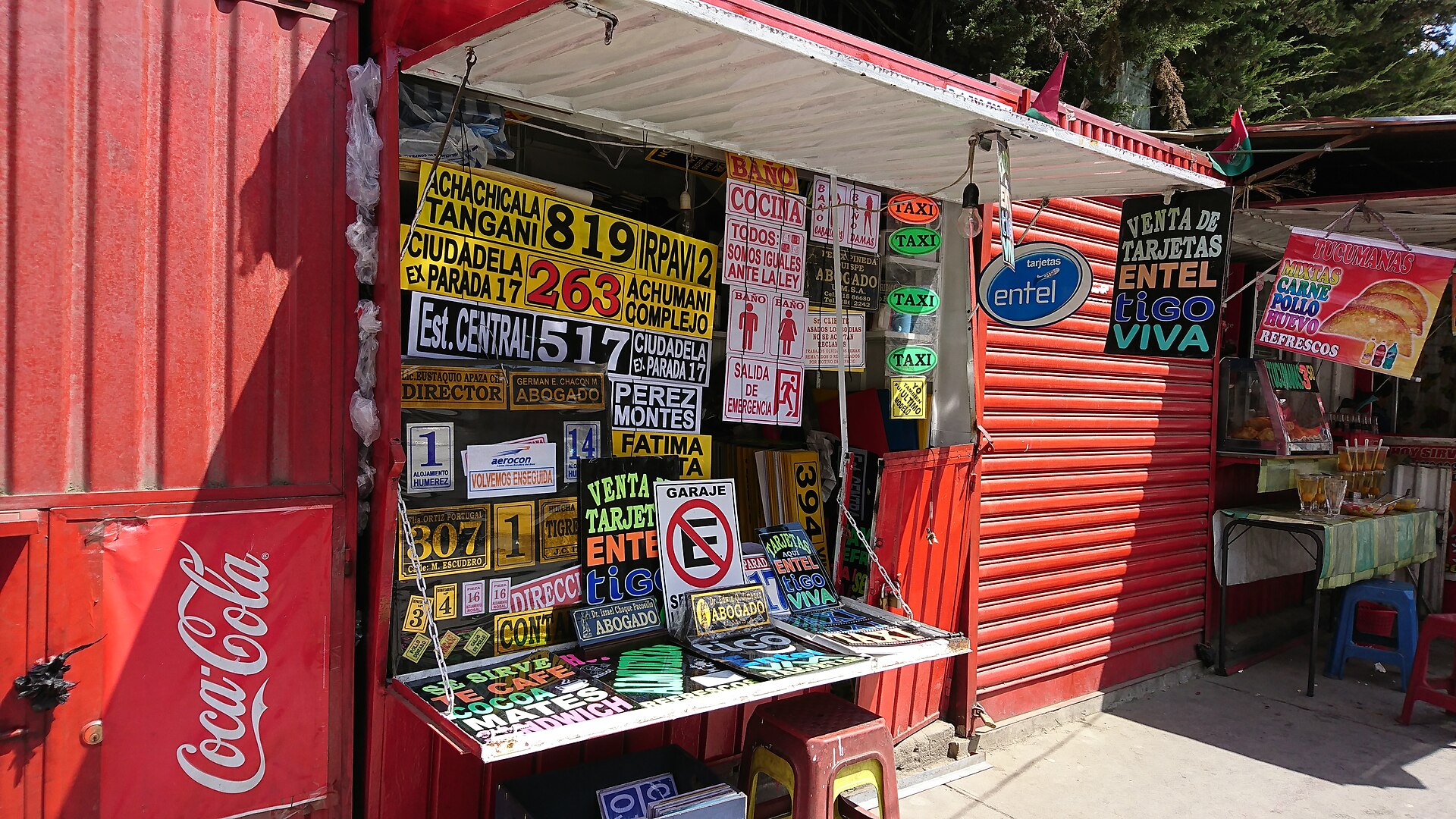
Teodoro Copa, executive secretary of the drivers’ federation of Chuquisaca department, said after an emergency assembly on 24 November that the strike covers all kinds of transport and reaches the city’s streets and the four routes to other departments. He told Erbol, a Bolivian news outlet: “We propose the repeal of that damned decree 5716.
That is the decree that is hurting us.” Copa also demands pay cuts for ministers, legislators, governors and mayors, saying the government broke its austerity pledge, according to ANF.
No government reply to that demand, or to the 24-hour ultimatum below, was known by Wednesday morning. David Apaza, head of the Yungas transport federation in La Paz department, said the sector declared an emergency and suspends departures toward the north of La Paz from Wednesday, ANF reported.
The suspension lasts until a national drivers’ assembly in La Paz that ANF reports for Thursday 26 November. Lucio Gómez, executive secretary of the Confederación Sindical de Choferes de Bolivia, the national drivers’ confederation, told ANF on 24 November that drivers already work at a 35% loss from fuel costs.
He added: “That is why there is total discontent among national transport as a whole.” Luis Áñez, president of the Cámara Boliviana de Transporte (Bolivian Transport Chamber), said on 24 November that the sector is in emergency and gave the government 24 hours to restore Bs 17.95 (about US$1.52).
He demands repeal of the decree and the dismissal of the heads of the Hydrocarbons Ministry, the ANH and YPFB, the state oil company Yacimientos Petrolíferos Fiscales Bolivianos. The chamber warns of a “technical bankruptcy” because freight and passenger fares are regulated.
Limbert Tancara of the Asociación del Transporte Libre de La Paz, a free-transport association, told ANF that some intercity firms cut departures to Cochabamba, Potosí and Tarija to one or two a day.
Tancara said: “It seems the government’s intention is to bankrupt the sector.” Álvaro Ayllón, president of CADETRAN, the La Paz departmental transport chamber, said the rise will make freight operations harder and that operators may have to absorb it without passing it on to freight rates.
Gold-mining cooperative federations also declared an emergency on 24 November, and Josué Caricari of Fencomin, a federation of gold-mining cooperatives, said “tolerance is ending”. Klaus Frerking, president of the Cámara Agropecuaria del Oriente, the eastern agriculture chamber, said the costs with this measure “become unsustainable”.
Planting covers about 3 million hectares between November and the first half of January, according to Frerking. He estimates that rice planting could fall 50% and maize output by 500,000 tonnes.
President Rodrigo Paz defended the rise in remarks after an event in Cochabamba, published on 25 November. He said: “If it falls internationally, prices fall; if they rise, they rise, that is how it is.”
Paz also said: “What I cannot do is, through the subsidy, make a few people millionaires.” He said the government wants to stop the price gap from favouring smuggling, and he plans to present a proposal on hydrocarbon governance by the end of the year.
For US readers, diesel moves Bolivia’s freight, farm machinery and intercity buses, so a stoppage passes quickly into food and shipping costs across a landlocked economy that imports its fuel. Frerking’s estimate of 500,000 tonnes of maize lost shows how a Bs 2.62 (about US$0.22) rise can reach the farm gate.
The next dated step is the drivers’ national assembly in La Paz on Thursday 26 November, according to ANF. Paz says he wants refineries built so that Bolivia can process crude at home and produce fuel more cheaply.
Frequently Asked Questions
Why did Bolivia raise the diesel price?
The regulator says it wants the regulated price to match its market parity and to cut smuggling incentives. The president says prices will fall if world prices fall.
Who is on strike in Bolivia?
Drivers’ unions in Chuquisaca and the Yungas have stopped work, and other chambers have declared emergencies. The national confederation decides its next step at the La Paz assembly.
Why does this matter outside Bolivia?
Bolivia is a gas producer that is cutting fuel subsidies under an IMF programme. Transport stoppages there show how hard such reforms are to hold.
In depth
Sources
Communique of the National Hydrocarbons Agency (ANH), 24 November 2026 · IMF press release on the 36-month arrangement for Bolivia, 2 October 2026 · Statements by the Cámara Boliviana de Transporte, Confederación Sindical de Choferes de Bolivia and regional drivers’ federations, 24 November 2026 · Statements by the Cámara Agropecuaria del Oriente, 24 November 2026 · Statements by President Rodrigo Paz, Cochabamba, 25 November 2026
This article was produced by The Rio Times’ automated AI newsroom. Editorial responsibility: Matthias Camenzind, Publisher and Editor-in-Chief. The Rio Times also runs Ask Rio Times, which answers from 100,000+ of our own articles, the daily Latin America Power Map, and prediction-market odds on elections and markets.. How we use AI · Report an error