Bolivia Constituent Assembly Call Comes From Top Judge
BOLIVIA · POLITICS
Key Facts
- —Who said it Romer Saucedo Gómez, president of Bolivia’s Supreme Tribunal of Justice, in an interview with EFE.
- —When and where On 7 September 2026, while attending a forum of BRICS supreme court presidents in New Delhi.
- —What he said Let us open the Constitution and see what direction we give the country, with the whole country taking part.
- —The catch The context is a budget fight. The judiciary wants its share raised from 0.35 to 5 percent.
- —The counter-offer Legislators have proposed 3 percent, well below what the courts are demanding.
- —The silence No response from President Rodrigo Paz’s government to this specific call could be sourced.
A Bolivia constituent assembly is not a small proposal. It came from the head of the judiciary, in the middle of an argument about money.
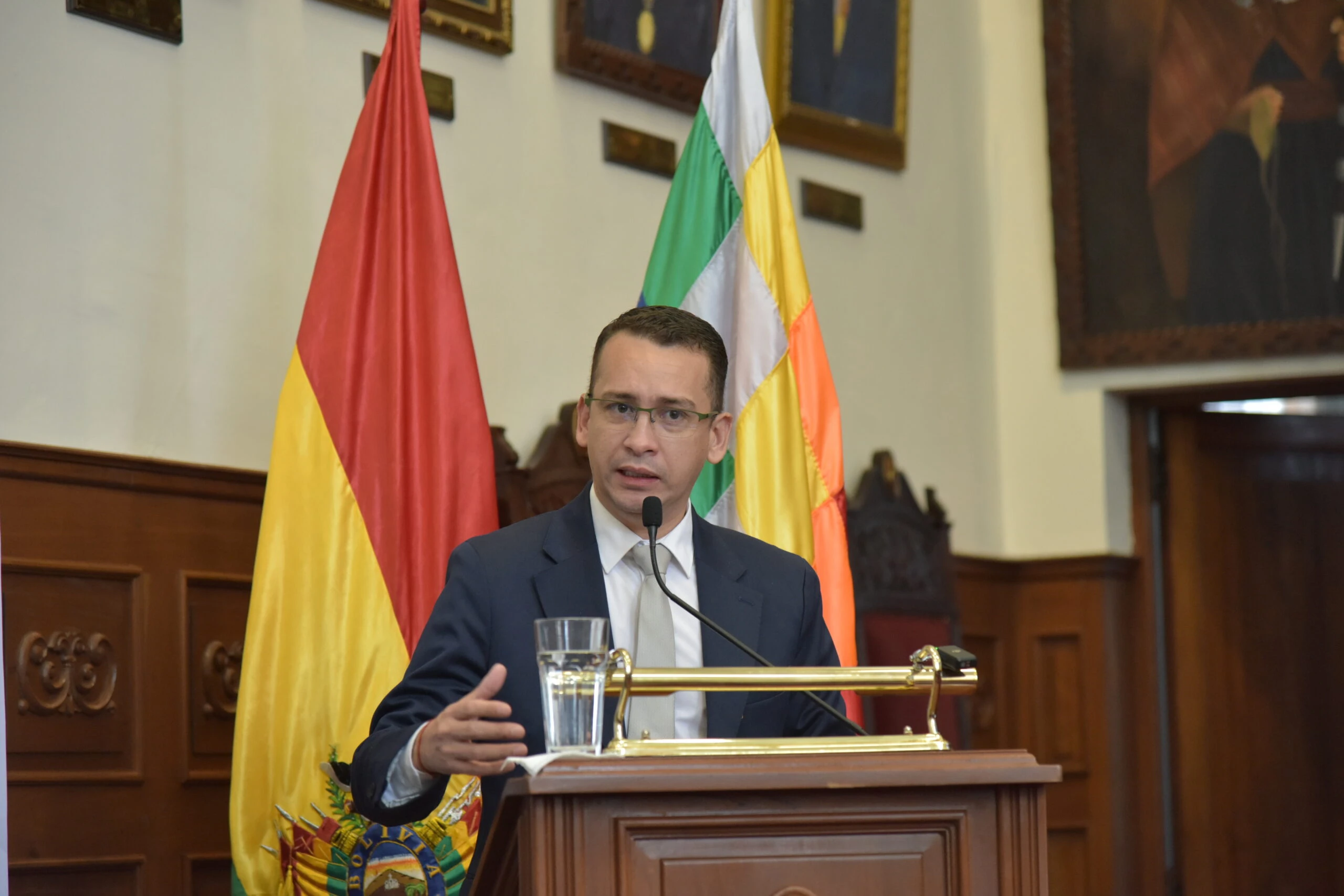
The head of Bolivia’s judiciary has called for a Bolivia constituent assembly. Romer Saucedo Gómez leads the Supreme Tribunal of Justice.
He made the call in an interview with the agency EFE on 7 September. He was in New Delhi at a forum of BRICS supreme court presidents.
His words were an invitation rather than a demand. Let us open the Constitution, he said, and see what direction we give the country, with the whole country taking part.
He criticised the government’s preferred route of partial constitutional reform through the legislature. Excluding broad sectors, he warned, could produce social upheaval.
Why the Bolivia Constituent Assembly Call Lands Now
The immediate context is money. The judiciary is fighting the government over its share of the national budget.
The courts want their allocation raised from 0.35 percent to 5 percent. Legislators have proposed 3 percent.
A judiciary funded at a third of one percent of the budget is a weak branch by design. That is the argument behind the demand.
Calling for a constituent assembly raises the stakes from a line item to the constitutional order itself. That is a deliberate escalation.
What a Constituent Assembly Would Mean
Bolivia’s current Constitution dates from 2009 and came out of the last such process. It was the defining political project of the Morales era.
Reopening it would put the plurinational state, autonomy arrangements and judicial elections back on the table. Nothing in Bolivian politics is small once that door opens.
Saucedo’s alternative to it is the government’s partial reform through Congress. He argues that route leaves too many people out.
What We Could Not Establish
No response from the government of President Rodrigo Paz to this specific call could be sourced. That absence is itself worth recording.
There is an earlier exchange from 30 June, when a presidential spokesman called a threatened judicial strike unheard of. Saucedo replied that the magistrates have what the government lacks.
That was about the strike, not about the assembly. We do not present it as a reply to Sunday’s remarks.
The Other Bolivian Story This Week
President Paz decreed three days of national mourning on Monday 7 September. It follows two explosions at a military depot in Viacha, outside La Paz.
The blasts were on Friday 4 September at the Libertador Simón Bolívar regiment. The depot had stored black powder, mining explosives and pyrotechnics since 2019.
Nine people were killed and 81 injured, on Associated Press figures. The second explosion damaged homes up to two kilometres away.
Paz said the mourning is national but activities will not stop, with flags at half mast. The municipality of Viacha had declared its own three days of mourning on 5 September.
What to Watch
The first marker is whether the government answers. Ignoring a call from the head of the judiciary has its own cost.
The second is the budget vote. Three percent against five is the argument that produced this.
The third is whether other institutions join the call. One judge asking is a position, and a coalition asking is a process.
More: Latin America news in English, every day from The Rio Times.
Frequently Asked Questions
Who called for a constituent assembly?
Romer Saucedo Gómez, president of Bolivia’s Supreme Tribunal of Justice, in an interview with EFE on 7 September 2026 while attending a forum of BRICS supreme court presidents in New Delhi.
What is the dispute behind it?
A budget fight. The judiciary wants its share of the national budget raised from 0.35 percent to 5 percent, against a legislative proposal of 3 percent. Saucedo also criticised the government’s preferred route of partial constitutional reform through Congress.
What happened at Viacha?
Two explosions at a military depot outside La Paz on Friday 4 September 2026 killed nine people and injured 81, on Associated Press figures. President Rodrigo Paz decreed three days of national mourning on 7 September.
Sources: EFE, Infobae, ABI, Unitel, El Deber, Opinion, La Razon, Associated Press, Rio Times.
This article was produced by The Rio Times’ automated newsroom system. How we use AI · Report an error · Editorial responsibility: Matthias Camenzind, Editor-in-Chief