Beyond the Backdrop: Analysing Latin American Themes in Gaming
(Sponsored) Latin America offers game developers an unusually rich combination of history, mythology, music, architecture and environmental diversity. Yet the region’s use in gaming has often revealed a tension between creative possibility and cultural simplification.
At its best, Latin American influence produces distinctive worlds and gives greater visibility to underrepresented cultures. At its weakest, it reduces a vast and varied region to jungles, ruins and revolutions.
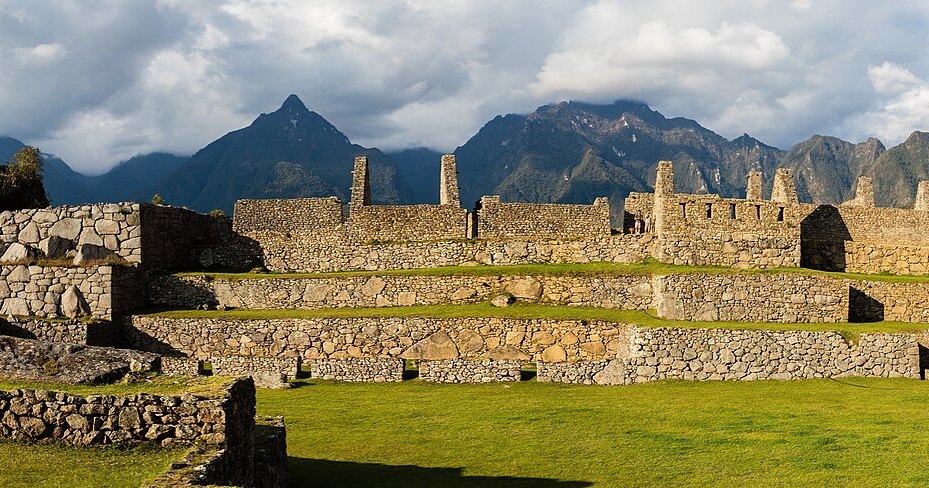
Early representations frequently treated Latin America as an exotic setting rather than a living collection of cultures. Adventure games used rainforests, ancient temples and lost cities to create danger and mystery, borrowing imagery from Maya, Aztec and Inca civilisations while rarely examining their differences.
The region became a convenient visual shorthand: stepped pyramids, golden artefacts, tropical vegetation and supernatural mythology could immediately signal exploration. This approach helped establish recognisable environments, but it also encouraged cultural compression.
Latin America includes more than 30 countries and territories, hundreds of Indigenous peoples and languages, and communities shaped by Indigenous, European, African, Asian and Middle Eastern influences. Combining these traditions into a generic “Latin” aesthetic may produce an attractive fictional world, but it can erase the distinct histories that give the source material meaning.
The Tomb Raider franchise illustrates both the attraction and the limitations of archaeological adventure. Shadow of the Tomb Raider, set primarily in Peru, uses Andean landscapes, Indigenous-inspired settlements and pre-Columbian mythology to create a visually compelling environment.
Its detailed architecture and environmental design demonstrate how Latin American settings can support exploration beyond familiar European or North American locations. However, the game still places a British adventurer at the centre of a story involving Indigenous knowledge and cultural artefacts.
This reflects a recurring problem: Latin American cultures may supply the world, mystery and emotional stakes while an outsider remains the principal agent. Other games have used contemporary settings shaped by political instability.
The fictional countries of Just Cause and Far Cry 6 draw heavily on Latin American geography, revolutionary history and authoritarian politics. These settings provide clear conflicts and striking imagery, but they can reinforce the idea that the region is defined by dictators, guerrillas and permanent disorder.
Fictionalisation gives developers freedom, yet invented countries often combine Cuban architecture, South American landscapes and Central American political references without acknowledging their different contexts. Crime-focused games create another influential pattern.
Titles involving cartels, smuggling and urban violence reflect genuine social issues, but repetition can make these subjects appear representative of Latin American life as a whole. When criminality becomes the dominant lens, ordinary experiences such as family life, education, sport, work, migration and creativity receive far less attention.
The problem is not that games should avoid difficult subjects. It is that a narrow range of stories can become stereotypical when alternative perspectives are missing.
More recent releases demonstrate broader possibilities. Forza Horizon 5 presents a fictionalised version of Mexico through cities, deserts, beaches, forests and festivals.
The game’s celebratory tone contrasts with depictions centred on conflict or poverty. Mexican culture is expressed through murals, music, architecture and public celebration, while the open-world format allows the country to function as more than a corridor between missions.
Nevertheless, even positive representations require scrutiny. Tourism-oriented portrayals can create a polished national collage in which regional differences and social tensions are softened.
Celebration may replace hostility, but it can still turn culture into colourful scenery designed for an international audience. Authenticity therefore depends on more than visual accuracy.
Local characters must possess agency, humour, ambitions and contradictions independent of the player’s objectives. Independent games have been particularly effective at developing intimate perspectives.
Brazilian title Dandara draws inspiration from Afro-Brazilian history, naming its protagonist after Dandara dos Palmares, a seventeenth-century resistance figure. Its influence is not presented as a conventional historical reconstruction; instead, it shapes an imaginative world concerned with freedom and oppression.
Similarly, Cris Tales, developed by Colombian studios, incorporates architecture and visual references associated with Colombia while building an original fantasy identity. These games show that cultural specificity need not restrict creativity.
It can provide the foundation for new mechanics, artistic styles and narrative structures. Music is another important area of influence.
Salsa, samba, mariachi, reggaeton and Andean instrumentation can quickly establish atmosphere, but indiscriminate mixing risks treating separate traditions as interchangeable. Thoughtful sound design considers where a style originated, which instruments are appropriate and how music functions within the represented community.
The same principle applies to language. Spanish-language dialogue may improve credibility, but Portuguese, Quechua, Guaraní, Nahuatl and numerous other languages complicate the assumption that Latin America has one linguistic identity.
The strongest representations usually involve creators, performers and consultants from the cultures being portrayed. Their contribution can identify inaccuracies, but it also expands the range of possible stories.
Consultation should begin during concept development rather than functioning as a final-stage check. Latin American contributors need meaningful creative authority, not simply responsibility for validating decisions already made elsewhere.
Ultimately, Latin American themes enrich gaming with games like slots with free spins with developers move from cultural extraction towards cultural collaboration. Ancient mythology, colonial history and modern political conflict remain legitimate subjects, but they should not define the region’s entire imaginative role.
Games can also explore speculative futures, domestic dramas, ecological stories, comedy and everyday urban life. The next stage of representation will not come from discovering more exotic imagery.
It will come from recognising Latin America as a collection of dynamic societies capable of producing their own heroes, genres and visions of the future.
Read More from The Rio Times