In a groundbreaking move, Beijing has granted its first food-service license for humanoid robots, ushering in a new era for the city’s catering industry.
EncoSmart, a local robotics startup, received this historic approval from the Beijing Municipal Administration for Market Regulation on September 12, 2024.
EncoSmart’s Lava series of humanoid robots will soon replace traditional chefs in kitchens across Beijing. These advanced machines can prepare popular fried foods, such as french fries and fried chicken, in just two minutes.
The robots utilize state-of-the-art visual perception technology to recognize ingredients and calculate optimal cooking times, ensuring consistent flavor and quality. The Lava robots are not limited to a fixed repertoire of dishes.
They possess self-learning capabilities, allowing them to adapt and expand their culinary skills over time. This feature promises to broaden the range of meals available to Beijing residents and visitors alike.
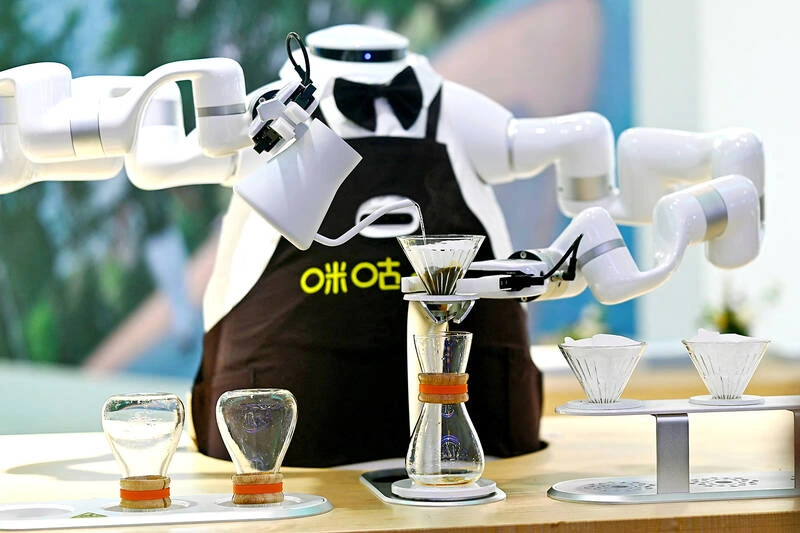
Chen Zhen, founder and CEO of EncoSmart, believes that China’s vast catering industry will provide ample data to further develop and improve these robotic chefs.
The company’s innovative approach has already attracted significant investment. EncoSmart raised 40 million yuan (US$5.6 million) in angel financing in April 2024.
A Step Towards Robotics Revolution
Beijing’s approval of humanoid robots in the food service industry aligns with China‘s broader national initiative to promote robotics in traditional sectors.
This push has already seen humanoid robots performing tasks such as sorting products, managing pharmacies, and even doing household chores.
As robotic chefs become more prevalent, they are expected to revolutionize food preparation. This change will impact restaurants and food chains across Beijing.
The technology promises to deliver fast, consistent, and high-quality meals, potentially transforming the dining experience for the city’s residents.
The concept of robot chefs is still in its early stages in China. However, rapid technological advancements and the scale of the country’s food industry suggest a promising future for this innovation.
As technology continues to evolve, robot chefs may soon become a common sight in kitchens. This shift could happen quickly throughout China.
This article was produced by The Rio Times’ automated AI newsroom. Editorial responsibility: Matthias Camenzind, Publisher and Editor-in-Chief. The Rio Times also runs Ask Rio Times, which answers from 100,000+ of our own articles, the daily Latin America Power Map, and prediction-market odds on elections and markets.. How we use AI · Report an error