
BARBADOS · IMMIGRATION
Key Facts
- The country An eastern Caribbean island republic that relies on tourism and has a large diaspora abroad.
- Why it matters Two bills would give investors permanent residency and great-grandchildren of Barbadians a route to citizenship.
- Why now The House passed both bills on 27 October 2026 and the Senate sits on 4 November.
- What happened US$2.5 million (BBD 5 million) in an approved national project can lead to permanent residency.
- What it means for you US investors, remote workers and descendants of Barbadians should watch the Senate vote and start date.
In Plain English
A permanent resident may live in Barbados and take a job without a work permit, but is not a citizen. A qualifying resident permit is a temporary permit of up to five years for people who have applied, or are eligible to apply, for permanent residence or citizenship.
The Barbados Welcome Stamp is the island’s remote-worker visa, set up under the Remote Employment Act, 2020. The Senate is the upper house of Parliament, and a bill must pass both houses before it can become law.
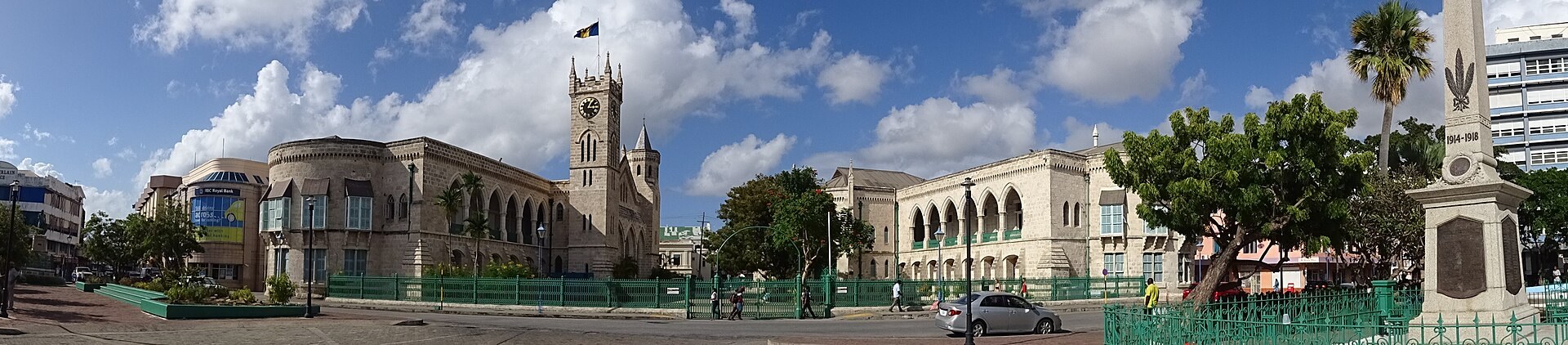
Barbados is moving to give foreign investors permanent residency for putting at least US$2.5 million (BBD 5 million) into a government-approved national project, under an Immigration Bill that Parliament’s records show passed the House of Assembly on Tuesday, 27 October 2026. A companion Citizenship Bill would let grandchildren and great-grandchildren of Barbadian citizens, born abroad, apply to register as citizens, and both bills now await the Senate.
Parliament’s website lists the Senate’s next sitting for Wednesday, 4 November 2026 at 11:00 a.m., and its bill register shows a Senate notice date of 29 October for both bills. Neither bill takes effect until a date is fixed by proclamation, so no one can yet apply under the new rules, and the guide to who holds power in Barbados explains the House the bills passed through.
What the Immigration Bill Does
Under section 10, a person who is not a citizen may be registered as a permanent resident after a qualifying investment of US$2.5 million (BBD 5 million, at the fixed rate of BBD 2 to US$1) or more in a project that the minister designates by order as an approved national development project. The project must serve a public purpose and contribute significantly to the country’s economic, social, infrastructural, environmental, technological, cultural or strategic development.
The minister may revoke the status if the investment was misrepresented or is withdrawn early. Home Affairs and Information Minister Gregory Nicholls moved both bills on 29 April 2026, and the House referred them to a joint committee of Parliament whose report is dated 11 August 2026.
Other applicants can qualify after five years of continuous lawful residence, or after 180 days in the past three years plus points, each worth six months of residence. Time on a work permit, a student visa or the Barbados Welcome Stamp remote-worker visa all counts as lawful residence under the bill.
Points go to applicants under 50 (3 points), applicants with more distant Barbadian descent (3 points) and investors who put US$500,000 (BBD 1 million) or more into approved national projects but fall short of the qualifying amount (2 to 8 points). A qualifying resident permit lets people who have applied, or are eligible to apply, live in Barbados for up to five years.
What the Citizenship Bill Does
A person born outside Barbados who is a grandchild or great-grandchild of a Barbadian citizen may apply to register as a citizen, though the minister may refuse on grounds such as national security, public policy or a prison sentence of 12 months or more. Immigrants who held that status under the former Immigration Act for more than three years may register as citizens when the Act starts.
Permanent residents who are not nationals of the Caribbean Community (CARICOM), the regional bloc, can apply after 360 days of residence within the previous 1,460 days, while CARICOM nationals need 270 days within 1,095. The president may also register people of distinguished service or global distinction.
Work Permits, Medical Visas and Penalties
A work permit may be granted after the minister weighs the Barbados Jobs Registry, labour-market tests and the employer’s evidence that nobody exempt from needing a permit, such as a Barbadian, permanent resident or CARICOM national, is available for the job. Employing a worker without a permit brings an administrative penalty of up to US$25,000 (BBD 50,000), and a repeat offence is punishable by a fine of US$125,000 (BBD 250,000) or five years in prison, or both.
A medical visa lets a patient stay for more than six months and up to 12 months, renewable, for treatment at an approved medical institution, and a spouse, parent, caregiver or dependent child may be included. People smuggling is punishable by a fine of US$750,000 (BBD 1.5 million) or 15 years in prison, or both.
What It Means for You
US citizens with a Barbadian grandparent or great-grandparent who was a citizen could gain a route to citizenship, and US remote workers on a Welcome Stamp would see that time count toward permanent residence. US investors would need a designated project and at least US$2.5 million (BBD 5 million), and fees, forms and the first project orders are still to be set.
US employers with staff in Barbados should expect work permits to depend on the Jobs Registry, and US patients can use the new medical visa. Anyone planning to file should wait for the Senate vote on 4 November and the proclamation date, and follow the wider Caribbean coverage.
What Is Not Known
Both bills start on a date to be fixed by proclamation, and Parliament’s pages give no date. The list of approved national development projects is also unknown, because the minister designates projects by order and the bills name none.
Application fees and forms are left to later rules, and the Citizenship Bill leaves its forms and fee to later rules. The Senate may amend either bill on or after 4 November, and the bill register lists no Senate stage yet.
Frequently Asked Questions
Can foreigners buy Barbadian citizenship under the new bills?
No, the Immigration Bill grants permanent residency, not citizenship, for a qualifying investment of US$2.5 million (BBD 5 million) or more. Permanent residents who are not CARICOM nationals can apply for citizenship after 360 days of residence within 1,460 days.
Who can claim Barbadian citizenship through a grandparent?
Under the Citizenship Bill, a person born abroad who is a grandchild or great-grandchild of a Barbadian citizen may apply to register as a citizen. The minister can refuse on grounds such as national security or a sentence of 12 months or more.
When will the Barbados Immigration Bill become law?
The House of Assembly passed it on 27 October 2026, and the Senate’s next sitting is Wednesday, 4 November 2026. It takes effect only on a date fixed by proclamation.
Does time on the Barbados Welcome Stamp count toward permanent residency?
Yes, under the bill the Welcome Stamp counts as lawful residence for permanent residency. Applicants need five years of continuous lawful residence, or 180 days in three years plus points.
Sources: Parliament of Barbados, Immigration Bill, 2026, bill register (House passage 27 October 2026, Senate notice 29 October 2026); Immigration Bill, 2026, text dated 27 October 2026; Parliament of Barbados, Barbados Citizenship Bill, 2026, bill register; Barbados Citizenship Bill, 2026, text dated 27 October 2026; House of Assembly, Order Paper for the 24th Sitting, Tuesday 27 October 2026; Parliament of Barbados, next sitting of the Senate, Wednesday 4 November 2026; Parliament of Barbados home page, 30 October 2026.
This article was produced by The Rio Times’ automated newsroom system. How we use AI · Report an error · Editorial responsibility: Matthias Camenzind, Editor-in-Chief