Australia’s Tight Election Race Kicks Off Amid Economic Strains
Australia’s Prime Minister Anthony Albanese announced a federal election for May 3 on March 28, 2025, sparking a fierce five-week campaign.
Facing Liberal-National Coalition leader Peter Dutton, Albanese aims to secure a second term, a feat unseen since John Howard’s 1998 win. This contest unfolds as cost-of-living pressures and a housing crisis grip the nation’s sluggish economy.
Albanese pitches stability, touting Labor’s A$17.1 billion tax cuts and A$150 energy rebates to ease household burdens. Inflation, now at 4%, prompts optimism after the Reserve Bank’s February rate cut—the first in over four years.
Yet, his approval rating dips below zero, and Labor ties with the Coalition at 31% and 38% in polls. Dutton counters with plans to slash migration by 25% to 140,000 annually, addressing the housing shortage worsened by post-pandemic inflows.
He also pushes a 12-month fuel excise halve and nuclear power plants by 2050, targeting outer-suburban voters. History favors Albanese—Australia hasn’t ousted a first-term government since 1931.
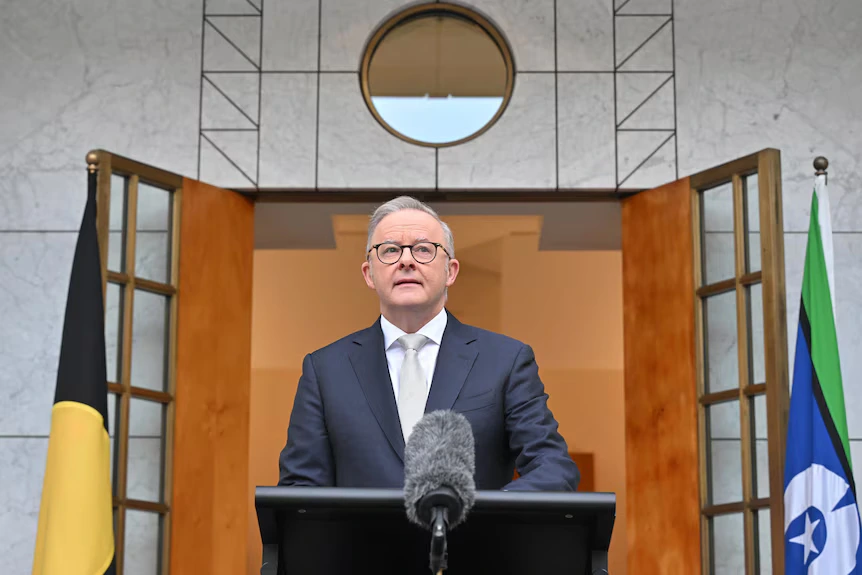
Australia’s Election and Trade Tensions
Global uncertainty looms as U.S. President Donald Trump prepares 25% tariffs on Australian steel, set for April 2, threatening trade ties. Albanese calls this “unjustified,” while Dutton’s team eyes a hung parliament, needing 19 seats to disrupt Labor’s 78-seat majority.
Polls predict a close race, with a 78% chance of no clear winner. Since 2022, Albanese has battled 7.8% inflation peaks and a failed Indigenous rights referendum, shifting focus to economic relief.
Dutton, rebuilding from the Coalition’s 2022 low of 58 seats, targets marginal seats like Reid and Parramatta. The Greens and independents, at 13% and 10%, could sway the outcome.
Businesses watch closely as Australia’s $2.5 trillion economy braces for tariff impacts and RBA’s next moves, likely holding rates on April 1.
Albanese seeks a rare consecutive victory, while Dutton aims to force a minority government. Voters, squeezed by a 5% income drop in 2023, face a stark choice in this pivotal election.
This article was produced by The Rio Times’ automated newsroom system. How we use AI · Report an error
Read More from The Rio Times