Pharma Multinationals Pledge $8bn Argentina Research Amid Patent Split
ARGENTINA · PHARMA
Saturday, May 30, 2026 — 03:00 BRT — By Sofia Gabriela Martinez
Key Facts
—The pledge. CAEME, the Argentine chamber of foreign pharma multinationals, committed $8bn in clinical-research investment over six years from 2026 to 2032.
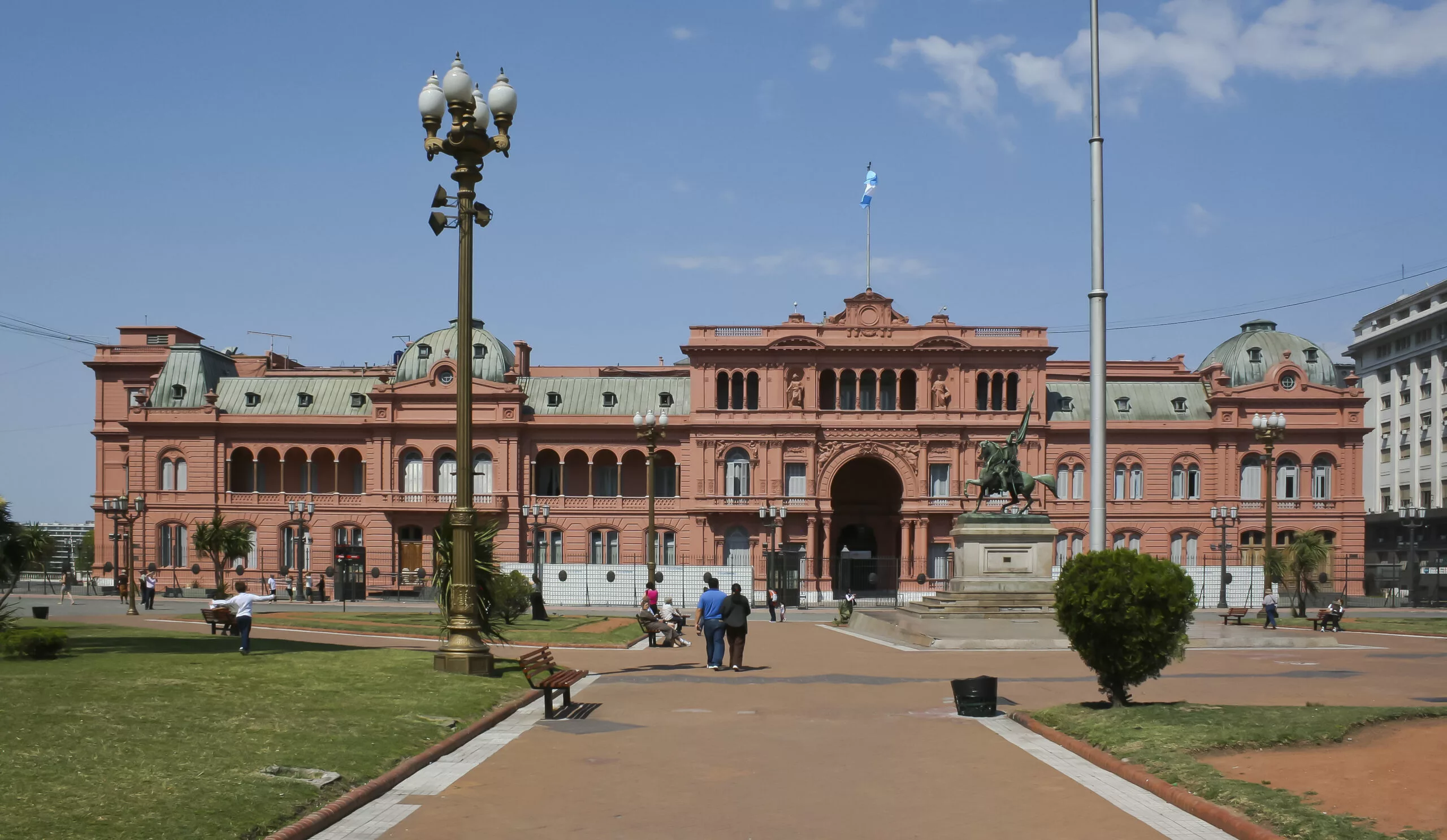
—The room. President Javier Milei hosted the Casa Rosada announcement alongside Health Minister Mario Lugones and Pfizer, Merck, Roche, Novartis, GSK, Sanofi and BMS country chiefs.
—The split. The pledge arrived as Congress debates the Patent Cooperation Treaty (PCT), which national Argentine pharma laboratories oppose and the government has postponed.
—The context. Clinical research is roughly half of all private business R&D in Argentina, and 9.5 of every $10 of business research and development inflows.
—Latin American impact. Buenos Aires now competes with São Paulo for the regional clinical-trial hub role that has been quietly consolidating around Latin America.
Foreign pharmaceutical multinationals pledged $8bn of clinical-research investment in Argentina across six years on Friday in a Casa Rosada announcement that tied the CAEME pledge to the country’s pending adoption of the Patent Cooperation Treaty. The chamber, which represents the country offices of Pfizer, Merck, Roche, Novartis and other foreign-headquartered drug makers, framed the commitment as conditional on the regulatory and intellectual-property framework holding. National Argentine pharma is opposed.
Inside the CAEME pledge of $8bn
The Cámara Argentina de Especialidades Medicinales, known by its initials CAEME, announced the pledge in a coordinated statement with the Ministry of Health on Friday afternoon. The figure totals $8bn between 2026 and 2032, an accumulated commitment that the chamber’s member companies will fund through individual clinical-trial budgets.
The participating laboratories include Pfizer, Merck and Co., Roche, Novartis, Bristol Myers Squibb, GlaxoSmithKline and Sanofi. CAEME’s president Gastón Domingues Caetano said the agreement would allow Argentine patients to access innovative treatments at the same time as patients in the most developed countries.
Clinical research currently accounts for around 50 percent of all private business research and development in Argentina, by CAEME’s own measure. The chamber said 9.5 of every $10 of business R&D inflows correspond to clinical research, with foreign sponsors covering the full patient costs of the trials they fund.

Why the Patent Cooperation Treaty splits the sector behind the CAEME pledge
The pledge cannot be read separately from the Patent Cooperation Treaty, known as the PCT. Argentina is one of the few large economies that has not adopted the treaty, which lets a single international patent application count toward national patent grants in member states.
Milei committed Argentina to PCT adoption when he signed a Reciprocal Trade and Investment Agreement with United States President Donald Trump in February 2026. The bill has been before Congress for months and was recently postponed without a new date as opposition from domestic generic-pharma laboratories intensified.
Argentine domestic laboratories argue that PCT adoption will lock in monopoly periods on imported innovator drugs and slow the entry of cheaper generic copies. The foreign multinationals counter that the framework is needed to make Argentina viable for global research programmes.
What the CAEME pledge means for Argentine hospitals
The pledge will run through the Ministry of Health’s clinical-trial framework, with the chamber’s member companies signing protocols at participating hospitals. The model builds on a separate framework agreement that CAEME signed last month with the Buenos Aires city government for clinical trials at city hospitals.
Argentine public hospitals receive payments from foreign sponsors for the trials they host, covering staff time, lab work, equipment use and a per-patient overhead. Patients in the trials receive the experimental treatment free of charge, with the sponsor covering all related care.
The Hospital Italiano in Buenos Aires, the Fundación Favaloro, and several public hospitals in the City and in Córdoba and Mendoza provinces are the country’s largest clinical-trial hosts and would be the most direct beneficiaries.
The CAEME pledge in the regional clinical-trial map
Latin America is the fastest-growing clinical-trial region globally, behind only South-East Asia. Brazil has been the regional leader, with São Paulo and Rio de Janeiro hosting the bulk of large Phase III oncology and immunology trials. The CAEME pledge is Buenos Aires’s most visible attempt to close that gap.
Argentine clinical research currently generates an estimated $500m a year in foreign-currency inflows, by CAEME’s accounting. The new pledge implies an average annual investment of around $1.33bn, a roughly 2.5x step-up if the commitments materialise on schedule.
Mexico and Chile have less developed clinical-trial pipelines but stronger regulatory bandwidth. Colombia’s framework is closer to Argentina’s, and the country has been quietly competing for the same Phase II and III trials that the new pledge would direct toward Buenos Aires.
What happens next on the CAEME pledge
Two parallel tracks matter from here. The PCT bill is technically still before Congress, and the foreign multinationals will watch for a vote schedule before they release the first tranche of the pledged $8bn.
Domestic pharma chambers, including Cilfa and Cooperala, have been lobbying against the treaty and met with congressional finance and health committees through May. The government’s choice on when to call the vote is the most-watched legislative variable in the sector.
The Milei administration has framed the pledge as evidence that the reform agenda is attracting marquee foreign investment. The government also confirmed an Argentina Week in Paris for the second half of 2026, building on the Mercosur-European Union trade agreement, which began provisional application in May.
What is CAEME?
The Cámara Argentina de Especialidades Medicinales is the chamber that represents the country offices of foreign-headquartered pharmaceutical multinationals, including Pfizer, Merck, Roche, Novartis, GSK and Sanofi.
What is the Patent Cooperation Treaty (PCT)?
An international treaty that lets a single patent application count toward national patent grants in 156 member states. Argentina has not adopted it; Milei committed to adoption when he signed a Reciprocal Trade and Investment Agreement with the US in February 2026.
Why are national Argentine laboratories opposed?
Domestic generic-pharma producers argue that PCT adoption will extend monopoly periods on imported innovator drugs and slow generic entry, raising costs for the public health system and trimming their own market share.
Is the $8bn pledge binding?
It is a chamber-level commitment that aggregates the member companies’ clinical-trial budgets through 2032. Each individual project depends on company strategy and the PCT framework holding, so the figure is indicative rather than contractually fixed.
How does this compare with Brazil?
Brazil remains the regional clinical-trial leader, with São Paulo and Rio de Janeiro hosting most large Phase III oncology and immunology programmes. The CAEME pledge is the most visible Argentine attempt yet to close that gap.
For the broader Argentine investment landscape, see our coverage of Milei’s investor address at the Latam Economic Forum. For the regional macro view, read our piece on Banxico’s Mexico 2026 growth cut and Moody’s downgrade.
The Rio Times — Saturday, May 30, 2026 — 03:00 BRT — By Sofia Gabriela Martinez
This article was produced by The Rio Times’ automated newsroom system. How we use AI · Report an error · Editorial responsibility: Matthias Camenzind, Editor-in-Chief