Analysis: The Foundations and Implications of Moro’s Testimony Against Bolsonaro
RIO DE JANEIRO, BRAZIL – The disclosure of the content of ex-Minister Sérgio Moro’s deposition to the Federal Police (PF), containing accusations of interference by President Jair Bolsonaro in the police force’s work, has led to differing reactions in the political world.

On the one hand, some said that Moro had simply reiterated everything he had said when resigning from the Ministry, and had provided little evidence against the President. On the other hand, attention was drawn to the former judge’s suggestion that the investigations should be pursued.
Sérgio Moro visited the Federal Police Superintendence in Curitiba last Saturday, May 2nd. The deposition lasted over eight hours and its contents were disclosed on Tuesday, May 5th, by CNN Brasil. The deposition includes the main points raised by the former Lava-Jato judge.
For political analysts, the material is only the start of future investigations into Bolsonaro, and it is still too early to assess their full impact. The accusations by Moro are now part of an investigation launched by the Federal Supreme Court (STF) at the behest of the Federal Prosecutor General.
“Moro’s deposition did not add much to his resignation speech on April 24th. But this is only the beginning of an investigation that will take months and it is still premature to assume that the investigations will not lead anywhere,” notes the analysts of the political risk consultancy Eurasia Group.
According to XP Política analysts, the statement does not show a “silver bullet”, but demonstrates the ex-Minister’s strategy, with “windows into different investigations and further evidence being taken”.
“The path Moro has chosen is measured. It provides means to corroborate what he said when leaving the Ministry and leaves it up to investigators to interrogate Jair Bolsonaro on what prompted his attempt at interference, as he reported,” they point out.
“Politically, the deposition supports what was necessary for the ex-judge: it shows that he did not agree with political interference in the PF,” they add. “Brazil is really a peculiar country: 2020 is coming before 2021”.
The main points in Sérgio Moro’s deposition (the quotations in italics are excerpts from the statement issued by the Federal Police on May 2nd):
1. INSISTENCE ON INTERFERING WITH PF
“During the period in which he was in charge of the Ministry of Justice and Public Safety, there were requests from the President of the Republic to replace the Superintendent in Rio de Janeiro, with a name to be appointed by the President, and then to replace the Director of the Federal Police, and again, the Superintendent of the Federal Police of the State of Rio de Janeiro, who would have replaced the former, again with names to be appointed by the President”.
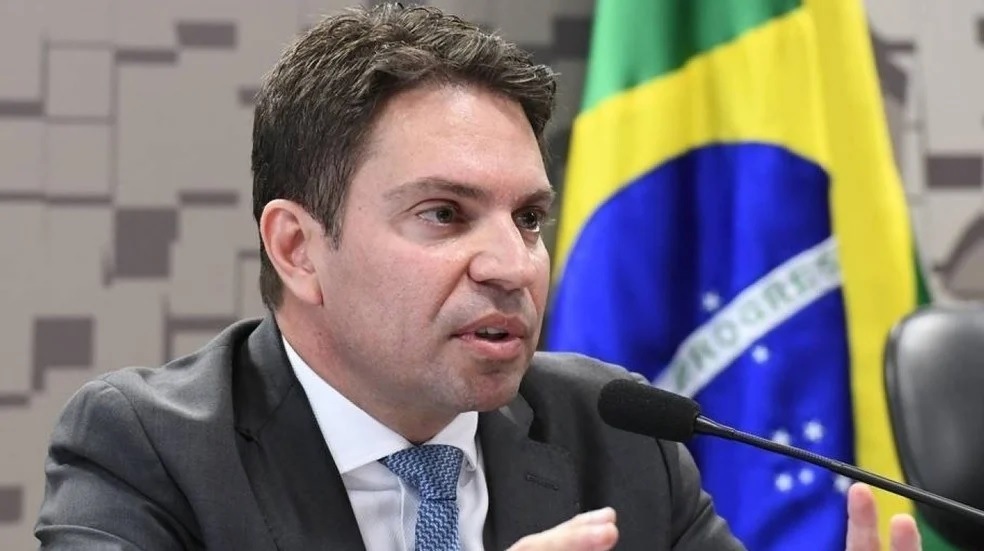
Sérgio Moro said that in August last year, President Jair Bolsonaro requested the replacement of the Rio de Janeiro Federal Police Superintendent Ricardo Saad. According to the ex-Minister, “after much resistance,” both he and Maurício Valeixo accepted this.
The President, countering this, publicly said that he had asked for the replacement for reasons related to productivity, and the PF issued a public note reporting on the quality of the service provided.
Moro said the only reason the change was approved was because the successor, Carlos Henrique, had been Valeixo’s choice. In the process, Bolsonaro even insisted that the nominee would be Alexandre Saraiva, but he was discouraged from this proposal.
From that time on, the pressure from the President to replace Valeixo increased. Alexandre Ramagem’s name came up as the President’s preference.
Moro says he considered agreeing but decided he could not change the general director without a strong reason. He also felt that the person advocated by Bolsonaro had notorious connections with the Presidential family.
According to the deposition, Bolsonaro even suggested two other names, both of which lacked the required qualification for the position. In January, Moro suggested two options to the President: Fabiano Bordignon and Disney Rosseti.
He said the change would cause attrition, but at least it would not undermine the credibility of the Federal Police – which would not be the case if either of the names suggested by Bolsonaro were to be appointed.
Moro said that in early March, during an official trip to the United States with Valeixo, he received a message from Bolsonaro, again requesting the replacement of Rio de Janeiro’s superintendent, Carlos Henrique.
The message read: “Moro you have 27 Superintendencies, I only want one, that of Rio de Janeiro”. The then Minister replied that he had not named anyone and that Valeixo was in charge of deciding on the appoiintments for regional superintendencies.
Sérgio Moro says he discussed the potential replacement with Valeixo during the trip. They even “considered the possibility,” but the Director-General said he would not be able to remain in office if there were another change of position with no cause, for a name appointed by the President.
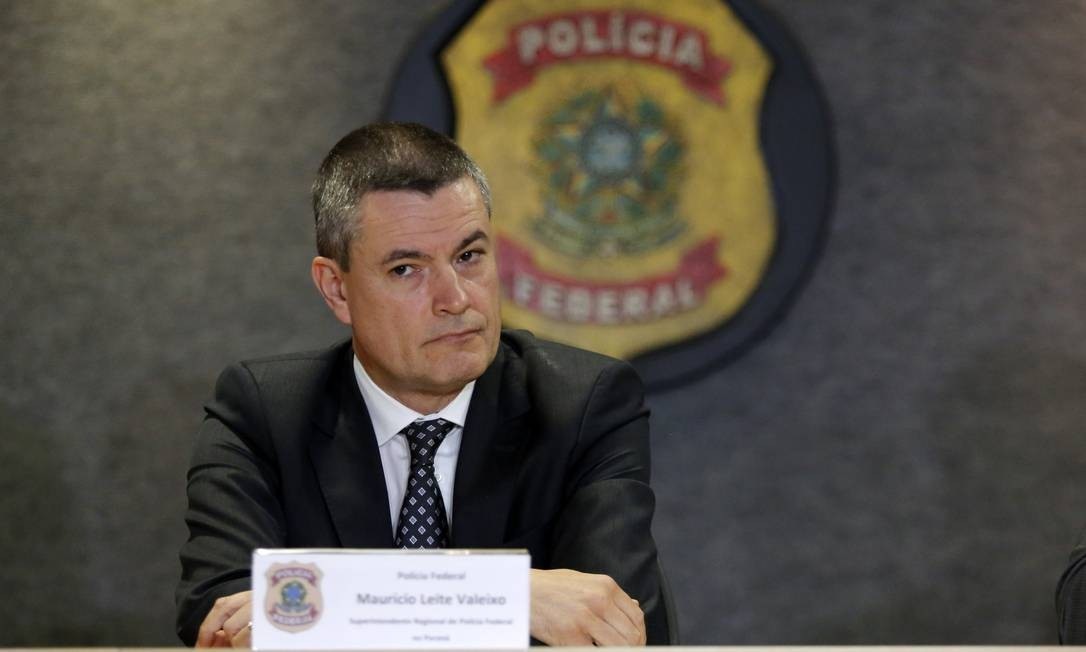
At the time, Valeixo said he was tired of the pressure for the change at the Rio de Janeiro Superintendence and, therefore and to prevent a conflict between Moro and Bolsonaro, he would agree to step down.
The then Minister said he considered accepting the changes (in the superintendency and general direction of the corporation), provided they were technical choices and names not close to the President, since at the time “there was no request for interference or intelligence from inquiries underway in Rio de Janeiro”.
However, Moro said he believed that he could not accept the change in the Rio de Janeiro Superintendency. That was when Bolsonaro’s insistence for a replacement at the general administration and at the Rio de Janeiro post increased. In March, the President also began to complain about the appointment made to the Pernambuco Superintendency.
Amid increased pressure, Moro said that Bolsonaro verbally stated in the Planalto Palace that “he needed people of his trust so that he could interact, call and gather intelligence reports”.
According to Moro, at a meeting with the cabinet on April 22nd, Bolsonaro demanded the replacement of the Rio de Janeiro superintendent and the force’s general directorate, and requested intelligence reports. The President also said, per Moro’s testimony, that he could interfere in all Ministries and that if he were unable to change the Rio de Janeiro superintendent, he would change the Director-General and the Minister of Justice himself.
The next day, Moro said that Bolsonaro sent him a link to a news article “reporting that the PF would be on the trail of Bolsonarist deputies,” followed by a message that this would be another reason for the change in the PF.
The Minister and the President met that same day at 9 AM. During the meeting, Bolsonaro said that Valeixo would be dismissed “on request or by official letter” and that he would appoint Alexandre Ramagem to the post. Moro said he told the President that this would be a political interference on the PF, with a blow to the government’s credibility, and more so during the novel coronavirus pandemic.
He also said he could replace Valeixo “as long as there was a cause, such as poor performance or a serious mistake,” and asked the President to reconsider, but that if this failed, he “would be forced to step out and report the truth about the replacement”. Moro said that Bolsonaro said he was sorry, but that his mind was made up.
Moro then said he had a meeting with the Military Ministers in the Planalto Palace about what had been discussed with the president. They pledged to try to get Bolsonaro to change his mind. Asked by Minister Luiz Eduardo Ramos of the Government Secretariat about an intermediate solution, the ex-judge said he would accept the appointment of one of the technical names he suggested to the General Directorate, but not a new replacement in the Rio de Janeiro Superintendence.
Moro said the publication of Valeixo’s dismissal in the early hours of April 24th rendered his resignation irreversible.
2. INDICATION OF POTENTIAL WITNESSES AND EVIDENCE
“Which points out that these meetings were recorded, as a rule, and the President himself this week threatened to disclose a video against the deponent from one of such meetings; that all the ministers and the Planalto’s advisory officials took part in these Cabinet meetings”.
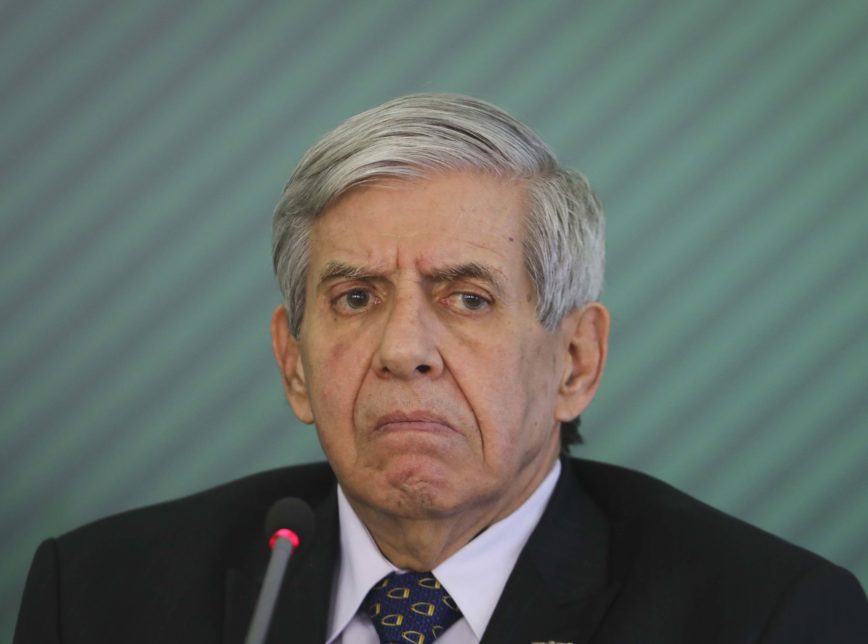
“On that occasion, the deponent mentioned the President’s requests for an intelligence report from the PF, which had even been demanded by the President at the Cabinet meeting, at which time Minister Heleno stated that the kind of intelligence report the President wanted could not be provided”.
Moro offered the way for investigators to gather evidence (recordings and exchange of messages) and pointed to potential witnesses. He gave specific emphasis to members of the government’s military wing.
In several parts of his deposition, Moro mentioned Ministers Augusto Heleno of the Institutional Security Cabinet, Walter Braga Netto the Chief of Staff, and Luiz Eduardo Ramos of the Government Secretariat. The uniformed ministers today hold strategic positions in the government cabinet.
These remarks could place the Ministers in a sensitive position. If Moro’s accusations are true, how will they behave in a deposition to investigators?
However, some of the evidence related to the exchange of messages may be compromised, as the ex-Minister himself says that since he was intercepted by hackers, he began to delete content from his cell phone “not for illegality, but to protect privacy and even relevant information about his activity, including issues of national interest”.
Nevertheless, Moro said in his deposition he found other messages exchanged with Bolsonaro regarding the STF inquiry and a decision by the President that Valeixo would be replaced.
3. INSTITUTIONS
“That during his press conference held on April 24th, 2020, he recounted true facts, the purpose of which was to clarify the reasons for his resignation, to preserve the autonomy of the Federal Police, of the replacement of Director and Superintendents, without cause and with misuse of purpose, as later acknowledged by the Supreme Court in a ruling issued on April 29th that suspended the appointment of PF Director-General Alexandre Ramagem; That when asked whether he found in the facts submitted in his press conference a crime committed by the President of the Republic, he clarifies that the facts reported there are true, but that he did not state that the President of the Republic had committed a crime, that it had been the Federal Prosecutor General (PGR) that referred to a possible crime when calling for the launching of an inquiry”.
In his deposition, Sérgio Moro tried to discuss actions taken by other institutions. Speaking about the President’s misuse of purpose, he mentioned the STF ruling to block the appointment of Alexandre Ramagem to the General Direction of the Federal Police.
The ex-Minister also refrained from accusing Bolsonaro of committing a crime, placing the burden on the PGR, which launched an inquiry to ascertain the facts. More than once, Moro said in his statement that “it is up to the competent institutions” to investigate whether there was a crime.
The move suggests a strategy to avoid a potential charge of slanderous accusations, or even complicity, as Moro may have been aware of illicit acts committed by the President.
4. INTELLIGENCE REPORTS
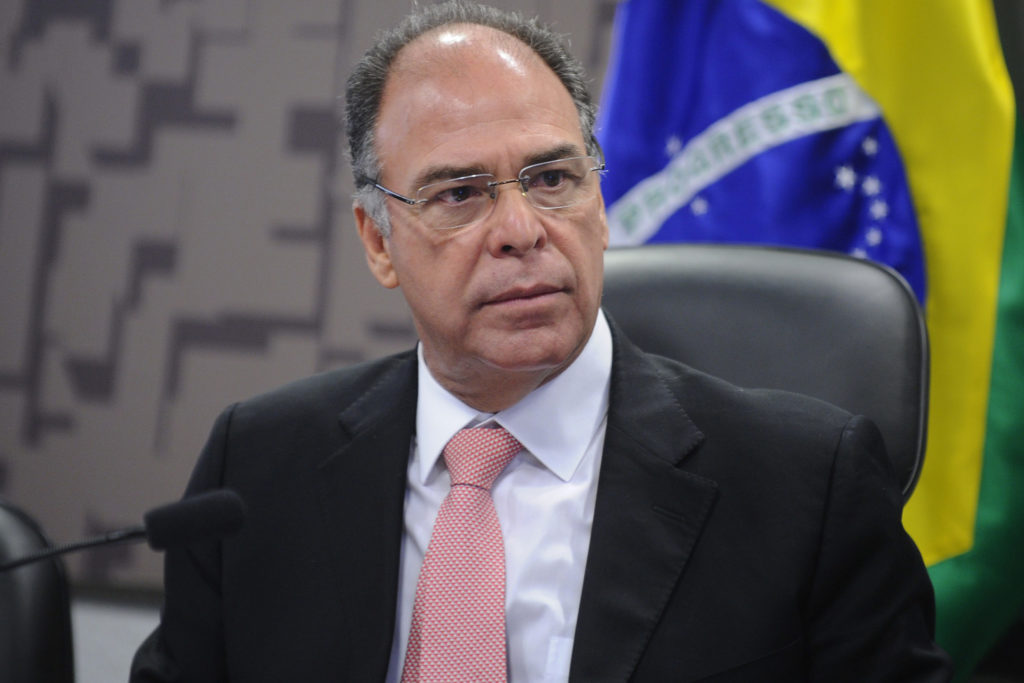
“That the President’s claim that he did not receive data or intelligence reports from the Federal Police was untrue; that the deponent, in what concerns the work of the Federal Police, reported on actions performed, safeguarding the confidentiality of investigations; that the deponent, for instance, served as past Ministers and reported sensitive operations by the Federal Police, after the launching of search and arrest operations; That the deponent did so many times and there are Whatsapp messages on this subject available; that, by way of example, this occurred after search and arrest involving the current Minister of Tourism and Senator Fernando Bezerra, but that this intelligence did not include confidential data from the inquiries”.
“As for intelligence reports, he clarifies that the Federal Police is not the body directly producing intelligence for the Presidency of the Republic; that Federal Police intelligence reports on strategic and National Security matters are inserted by its Intelligence Directorate into SISBIN and that ABIN [the Brazilian CIA] consolidates this intelligence data with data from other bodies and submits it to the President of the Republic”.
“That the President never asked the deponent to produce a PF strategic intelligence report on a specific content, causing it to be strange that this was alleged as a reason for the dismissal of the PF Director-General”.
“That at the time the deponent referred to the President’s requests to obtain a PF intelligence report, which had even been demanded by the President at the Cabinet meeting, at which time Minister Heleno stated that the kind of intelligence report the President wanted could not be provided”.
“Sixth, that the protocols for forwarding intelligence reports produced based on information passed on to ABIN by the Federal Police and which would prove that the President of the Republic already had access to the intelligence reports to which he was legally entitled may be requested from the ABIN”.
Sérgio Moro does not accuse President Jair Bolsonaro of committing crimes, but rather speaks of his interest in obtaining intelligence reports. Since Moro says that the material the President would be entitled to receive had already been forwarded in the regular manner, there is an implied interest in content unspecified in the deposition.
The ex-judge also recounted an incident in which Minister Augusto Heleno states that the document requested by the President could not be provided – specifying a point of divergence between the President and the government’s military wing and a potential path to be followed by investigators.
5. OTHER CASES
“That the Federal Police of Minas Gerais conducted an extensive investigation and this was shown to the President in the first half of 2019, in a meeting held at the Planalto Palace, with the presence of the deponent, Director Valeixo, the Superintendent of Minas Gerais and detectives in charge of the case; that at the time the President did not raise any objections to what was presented to him”.
“THAT the investigation on the potential principals of the crime was not finalized due to the judicial decision contrary to the analysis of ADÉLIO’s lawyer’s cell phone; that the President had and has full knowledge of this judicial obstacle; that the deponent understands that before the end of the investigations, it is not possible to establish whether or not ADÉLIO acted alone and that, in any case, the deponent, contrary to what has been publicly stated by the President of the Republic today (May 2nd, 2020), has never obstructed that investigation; on the contrary, he asked the Federal Police for maximum commitment and even told AGU, in the person of Minister André Mendonça, of the importance of the AGU joining the cause to demand access to the cell phone, not out of the President’s personal interest, but also for issues related to National Security”.
“That the President in a statement on April 24th, also complained about the deponent and the Federal Police’s lack of commitment to clarify the gatekeeper’s statements about the alleged involvement of the President in the murder of Mariele and Anderson; that such complaint has no grounds since it was the deponent himself who requested the MPF and the Federal Police to intervene in the investigation of this case and the Federal Police took a statement from the gateman in which he recanted, in addition to conducting other steps”.
Sérgio Moro has also sought to defend himself against criticisms voiced by President Bolsonaro regarding his behavior and that of the Federal Police in investigations involving the stabbing he suffered during the 2018 election campaign in Juiz de Fora, and in the incident that included his name in the case involving the murder of Rio de Janeiro city councilor Marielle Franco and her driver Anderson Gomes.
According to Moro, the President was provided with all the details of the investigations concerning the stabbing affair and at the time there was no opposition to the information provided. Moro says that Bolsonaro was aware of the difficulties in proceeding with the investigation into potential principals of the crime, since a judicial decision prevented access to the cell phones of Adélio Bispo’s defense counsel.
In the second case, Moro argues that it was he who requested the MPF and the PF to act on the statements given by the condominium porter where then deputy Jair Bolsonaro was living at the time of the city councilor and her driver’s murder.
The ex-Minister also used the deposition to deny any negotiation involving his potential appointment as a Justice of the Federal Supreme Court (STF), which had been alleged by Bolsonaro.
Source: InfoMoney
More: Brazil news in English, every day from The Rio Times.
This article was produced by The Rio Times’ automated newsroom system. How we use AI · Report an error
Read More from The Rio Times