Africa Intelligence Brief — Monday, November 2, 2026
Executive Summary
Africa Intelligence Brief for November 2: Algerian troops escort fuel to Niger; Ebola kills 5,372 in DR Congo; South Africa votes Wednesday.
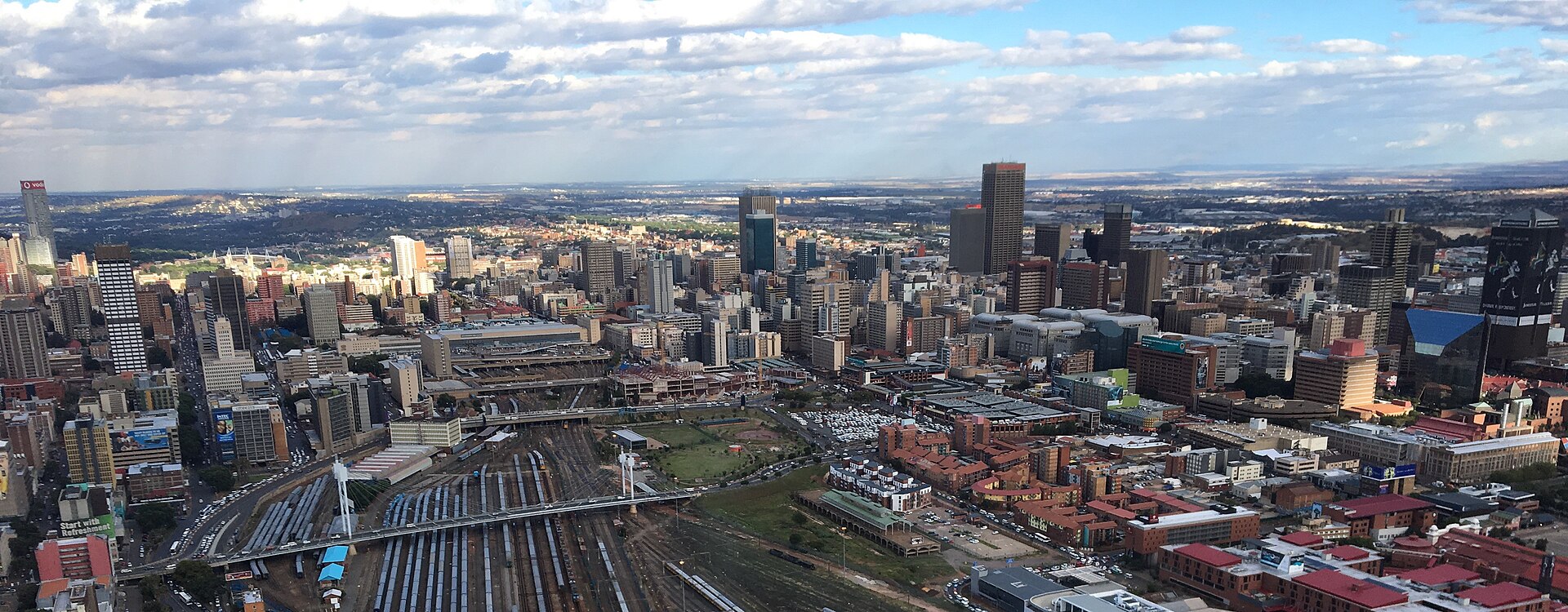
The region’s temper on Monday is one of anxious transition, as old arrangements end, new armed deployments begin and voters and defendants wait for decisions that will shape their politics. Africanews pages dated 2 November show a continent in which security, disease and diplomacy are being renegotiated at the same moment, from the Sahel to the Horn.
The register is formal and defensive: governments speak of protection, liquidation periods and cooperation, while those affected speak of cost, exclusion and abandonment. In Dakar, entrepreneur Momar Assane Diouf told Africanews that the money spent on the Youth Olympic Games could have been better spent on the cost of living, and in Moscow President John Mahama raised the issue of Ghanaians’ recruitment at the Russia–Africa summit.
The through-line is sovereignty under strain: states assert control over borders, pipelines, prisons and polling stations while the people inside them test whether that control protects them. In Niger, Tanzania and South Africa alike, the question is who is entitled to decide, and who pays when the decision goes wrong.
Key Facts
Algeria–Niger convoy. About 60 Algerian fuel tankers, escorted by soldiers, reached Agadez on 31 October.
DR Congo Ebola. The Bundibugyo strain has no known vaccine or treatment.
Western Sahara. The UN mission MINURSO ceased operations on 1 November after 35 years.
South Africa vote. Local elections are on Wednesday 4 November, with more than 29 million people registered.
Tanzania verdict. Judgment in opposition leader Tundu Lissu’s treason trial is due on Friday 6 November.
Algeria And Niger: Protection As A Projection Of Power
Algeria’s mood is one of assertive caution, as Africanews reported on 2 November, citing RFI. The outlet calls it Algeria’s first military deployment abroad since the 1973 Arab-Israeli war, presented as help for Niger against armed groups on the shared border and as protection for the Trans-Saharan Gas Pipeline.
Africanews also links the step to growing influence of the United Arab Emirates and Libya in the Sahel, which suggests Algiers is defending a sphere of influence as much as an energy route. A US reader should read it as a sign that Sahel security is increasingly set by regional powers, with energy corridors helping to draw the map.
Western Sahara: A Mission Ends, The Grievance Does Not
Rabat’s mood is one of vindication, with Morocco’s Royal Cabinet saying on 30 October, according to Le360 and APA, that non-renewal was a significant step towards closing the file. Africanews reported on 2 November that the palace called the mission an instrument to internationalise the dispute, while UN spokesman Stéphane Dujarric said the date marks the start of the liquidation period.
The Polisario Front called the decision unacceptable and Algeria’s foreign ministry criticised what it described as excessive bias in the US proposal, according to Africanews. A US reader should note that Morocco and Algeria are left with fixed positions and no UN monitor between them.
DR Congo: Dread Without A Vaccine
Fear in Congo has outrun the data, as the national biomedical research institute INRB said, according to Africanews on 2 November, that the jump in deaths came from a retrospective adjustment of data rather than a sudden surge. Africanews said the Bundibugyo strain has no known vaccine or treatment.
An official reassurance set beside the absence of a known vaccine or treatment explains why the mood is dread rather than panic. A US reader should expect travel and screening debates to follow the outbreak.
South Africa: A Vote Between Disillusion And Defiance
South Africa enters its local elections in a mood of disillusion with the governing party and defiance among its challengers, as polls of 25 and 26 October put ANC support near 25%, down from 38% in 2021 and level with the DA. In Durban’s eThekwini, one poll put Jacob Zuma’s MK at 48%, the DA at 25.2% and the ANC at 14.5%.
MK still needs a turnout on the scale of 2024 to win outright, which makes participation the real measure of how angry voters are. For a US reader the vote tests whether the coalition politics that followed 2024 deepen, since a weakened ANC in the big cities would complicate national bargaining.
Tanzania: Defiance Behind Prison Walls
Tanzania’s mood is tense and watchful, as Eastleigh Voice reported around 26 and 27 October that Lissu began a hunger strike on 26 October and that his party says three lawyers were barred from seeing him at Ukonga Prison. He could face the death penalty if convicted, and the High Court found on 16 October that prison officers had monitored confidential talks between lawyers and client.
His lawyer Rugemeleza Nshala said Lissu is ready to face the consequences but will keep fighting for the rule of law, which frames the case as a contest over legitimacy rather than a single trial. A US reader should read the verdict as a gauge of how far Dar es Salaam tolerates opposition politics, and of how the country will be judged abroad.
What This Means From Latin America
The Trans-Saharan Gas Pipeline, which Africanews says is meant to carry Nigerian gas through Niger to Algeria, is the clearest commodity link, because any new African supply route competes for buyers that Latin American producers also court. The end of the UN mission in Western Sahara is also likely to bring fresh lobbying to Latin American capitals, where governments with positions on the dispute will be asked to reaffirm or revise them.
Ebola is the practical concern for health ministries, since a strain without a known vaccine or treatment, as Africanews put it on 2 November, raises the stakes for airport screening and laboratory surveillance. Africanews also reported that more than 270 Ghanaians had fought for Russia as of mid-August and that Kenya, South Africa, Nigeria, Cameroon, Gambia and Botswana report similar cases, a pattern of foreign recruitment that Latin American foreign ministries will want to watch.
What We Are Watching
- Tuesday, 3 November, 12:15 a.m. ET: Egypt S&P Global Composite PMI: October data is due with a forecast of 48, following a previous reading of 47.2. It shows whether Egypt’s private sector is still contracting.
- Wednesday, 4 November: South Africa local elections: voting is due across the country, with more than 29 million people registered, according to The Post on 7 August. The result will show how far support has shifted from the ANC towards the DA and MK.
- Wednesday, 4 November, 2:15 a.m. ET: South Africa S&P Global Composite PMI: October data is due with a forecast of 50.2, following a previous reading of 49. A move above 50 would signal expansion on the eve of the vote.
- Thursday, 5 November, 5:00 a.m. ET: Ghana Inflation Rate: October data is due with a forecast of 5.4, against a previous reading of 5.2. It shows whether living costs are easing or pressing harder on households.
- Friday, 6 November: Tanzania, Lissu judgment: the court is due to rule in the treason trial of the opposition leader. The outcome will set the tone for Tanzanian politics and its reputation abroad.
- Friday, 6 November: Zambia 2027 budget The budget will show the spending plans that businesses and households face.
Frequently Asked Questions
Why is Algeria sending troops to Niger?
Africanews reported on 2 November, citing RFI, that the soldiers will help Niger fight armed groups on the shared border and protect the Trans-Saharan Gas Pipeline. Africanews calls it the first such move abroad since 1973.
What happens now that the UN mission in Western Sahara has ended?
Africanews reported that MINURSO ceased operations on 1 November, and UN spokesman Stéphane Dujarric said that date marks the start of the liquidation period. Morocco welcomed the end of the mission, while the Polisario Front called the decision unacceptable.
How large is the Ebola outbreak in DR Congo?
Africanews reported on 2 November that the national biomedical research institute INRB attributed the jump in deaths to a retrospective adjustment of data rather than a sudden surge. Revisions of that kind are normal in an outbreak, yet they can erode trust.
When do South Africans vote in the local elections?
South Africans vote on Wednesday 4 November 2026, a date announced by President Cyril Ramaphosa on 30 April and proclaimed by Minister Velenkosini Hlabisa. Polls on 25 and 26 October put ANC support near 25%, level with the DA.
This article was produced by The Rio Times’ automated newsroom system. How we use AI · Report an error · Editorial responsibility: Matthias Camenzind, Editor-in-Chief
Part of our ongoing coverage
Africa: The New Scramble — the great-power contest over the continent.
LatAm Markets: Live Signals → — real-time movers, turnover leaders and FX across Latin America.