USA & Canada Intelligence Brief — Wednesday, September 23, 2026
Executive Summary
USA & Canada Intelligence Brief for 23 September 2026: Washington welcomes Xi Jinping while defending its ban on three newsrooms in court, a CNN poll
USA & Canada Intelligence Brief — Wednesday, 23 September 2026
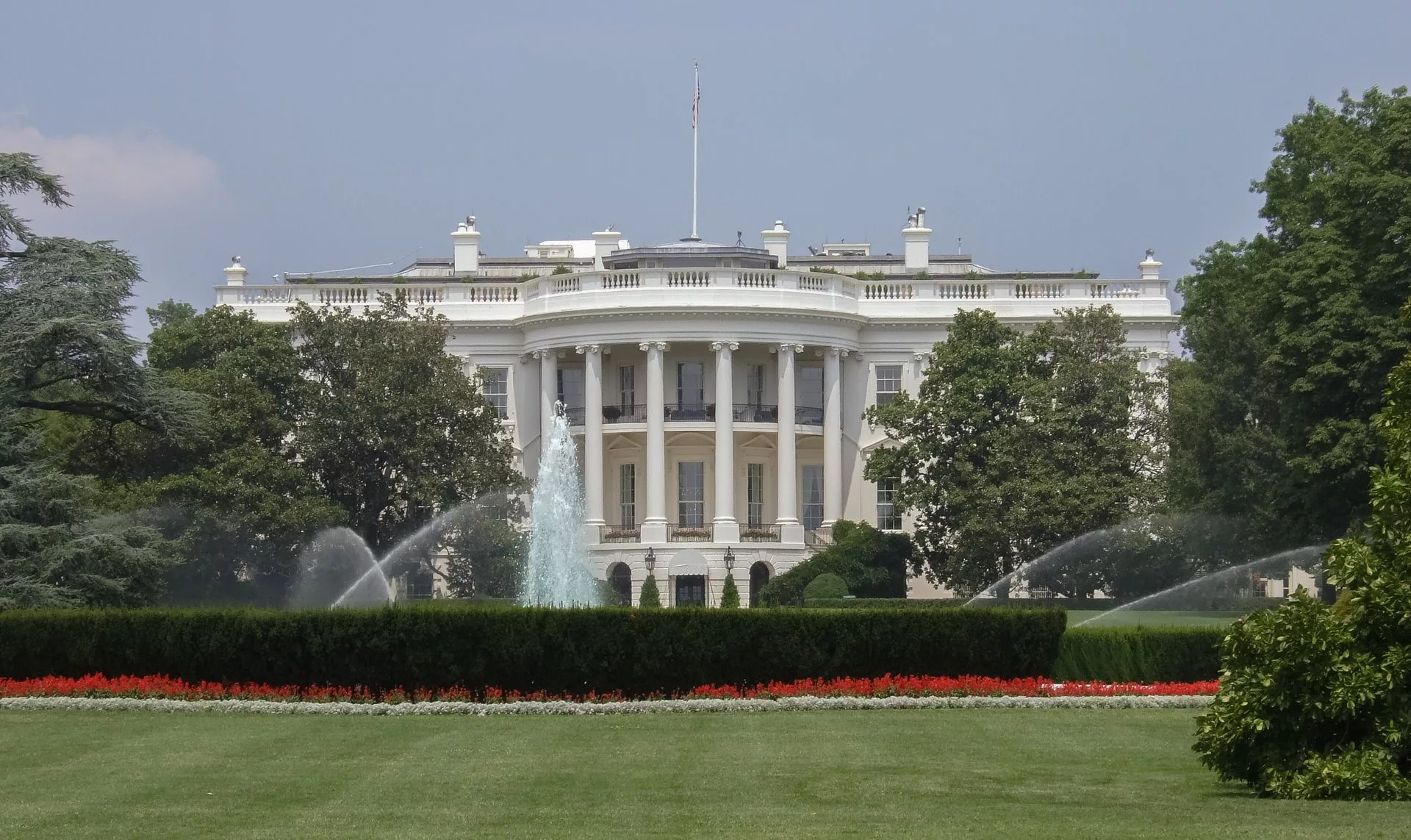
The White House spent Wednesday courting one autocrat while fighting its own reporters. Trump drove out to an air base in the evening to greet China’s Xi Jinping on the tarmac; his lawyers had stood in a federal courtroom hours earlier, defending a ban on three American newsrooms.
The two quarrels met in a single sentence. A government lawyer asked the judge to leave the reporters locked out at least until the Chinese president has gone home, because, he said, national security matters most during such a visit.
American voters are angry about money and not consoled by the alternative. In a CNN poll published on Wednesday, 44 per cent of registered voters call their vote for Congress a message of opposition to Trump, against 19 per cent who call it a message of support, yet only about a quarter approve of each party in Congress.
The chairman of the Senate Armed Services Committee is embarrassed by his president’s guest. Senator Roger Wicker, a Republican of Mississippi, told the chamber on Tuesday that Trump should not have invited Xi, and called him “a brutal, unelected and oppressive dictator”.
Ottawa is deliberately looking past Washington, and was taunted for it. Prime Minister Mark Carney spent the week in New York building coalitions with Europeans and never met Trump, who wrote on Wednesday morning that Canada is “destroying itself” through immigration.
Canada now has three votes running at once, and Trump is on every ballot. British Columbia’s premier called a snap election for 24 October in which he named the American president more than twenty times, while Quebec votes on 5 October and Alberta holds its referendum on 19 October.
Read across CNN, NPR, the Associated Press through PBS, NBC News, the White House’s own briefing page and the Press Democrat of California. Then the Canadian Press through BNN Bloomberg and the Chronicle-Journal of Thunder Bay, the Prime Minister’s Office in Ottawa, the Hill Times and the Bank of Canada.
Washington Rolls Out The Carpet, And Bolts The Door
The welcome for Xi Jinping was designed to flatter, and it went ahead on Wednesday evening. Xi arrived in Washington and “was met with a rare planeside greeting” from Trump at Joint Base Andrews, the military airfield outside Washington that receives visiting leaders, rather than being driven to the White House, the Associated Press reported after the event.
The First Lady gave the reason in plain terms. Melania Trump told Fox & Friends, the morning programme of the Fox News Channel, on Wednesday that her husband chose to go himself because “they have a great relationship”, adding: “He’s coming on our soil, and we need to welcome them with the most respect.”
The staging at the airfield was exact. A red carpet 100 feet long was unfurled at the foot of the aircraft steps, where a 21-person honour guard waited with Trump and Melania Trump, and Xi and his wife Peng Liyuan came down and shook their hands, the Associated Press reports.
Thursday carries more of it. The Office of the First Lady says the arrival ceremony on the South Lawn will feature 479 military personnel from every branch of the armed forces, a review in the Rose Garden, and a flyover by one B-2 Spirit bomber and four F-22 Raptor fighters.
It is a repayment, not a first meeting. The visit reciprocates the ceremony that met Trump in Beijing in May, where, the Associated Press reports, a red carpet, an honour guard and about 300 Chinese youths waving both flags chanted “Welcome, welcome! Warm welcome!” — though Xi himself was not at the airport.
What steadies the reading is that nobody expects much of it. The Associated Press writes that “expectations are low that the trip will produce any major breakthroughs”, with tensions high over trade, artificial intelligence, Trump’s war with Iran and China’s designs on Taiwan. The black-tie dinner on Thursday evening will seat technology chiefs including Nvidia’s Jensen Huang and SpaceX’s Elon Musk.
This desk read no Chinese source today, so the account above is an American one. The Associated Press describes a three-day visit beginning on Wednesday, while the Office of the First Lady calls Thursday 24 September the day of the state visit proper. Both are correct, for different things.
A Judge Starts Where The White House Is Weakest
The ban that Trump announced on Friday 18 September reached a courtroom on Wednesday afternoon. Judge Timothy J. Kelly of the United States District Court for the District of Columbia, whom Trump himself appointed, heard the emergency request on Wednesday afternoon. CNN, the cable news network, MS NOW, the cable channel formerly called MSNBC, and Politico, a Washington political news site, asked him to restore their reporters’ passes.
He opened not on free speech but on fair procedure. Courts have held that the White House cannot revoke a journalist’s pass without notice or a chance to appeal, and Kelly told both sides that process “wasn’t played out here”, CNN reports.
He said so before either lawyer spoke. Kelly told them “I just say to both sides that’s where I am”, and set out his order of business: “Before we get to any core first amendment issues, there is a due process claim and a due process issue that seems to me the first stop in figuring out how to resolve the motion.” That sequence favours the newsrooms.
The newsrooms’ lawyer said the government had changed its story. Theodore Boutrous of the law firm Gibson Dunn argued that national security was never mentioned when the ban was announced, and appeared only after the lawsuit was filed: “All of the sudden this is a national security case,” he said, as though “a light bulb went off”.
He put the principle bluntly. The administration is “literally arguing that reporters shouldn’t scrutinize national security” matters, he said — “That’s the sin” — and the stories the White House cited “are just garden variety reporting”.
The government asked for delay rather than victory. Justice Department lawyer Michael Velchik urged Kelly, at a minimum, not to restore the passes until after Xi’s visit, saying the security concerns are paramount during it and that the judge should not override the President’s “personal determined judgement over that period”.
The judge tested the newsrooms too. Kelly asked whether a president could pull the pass of a reporter found to have “passed on classified information to a foreign enemy”, and then whether the substance of a story could ever justify a ban; Boutrous said it could not, because “Once you go down that road, it is … blatant viewpoint discrimination”.
Nothing has been decided. The hearing ended without a ruling from the bench, and Kelly said he would “try to get an answer as soon as I can”, so a decision is expected at any time; when this desk last read CNN’s live coverage at 22.41 UTC on Wednesday, CNN reported that he “did not issue an immediate ruling”.
The paper trail is the newsrooms’ best material. The White House sent the three companies letters on Tuesday, filed in court that night, listing stories it said “threatened national security and/or spread falsehoods”.
Executives at two of the outlets answered in writing. They told the court that several of the listed stories were written by reporters who hold no White House pass, and that the letters to CNN and to MS NOW each named a pass-holder whose pass was renewed after the story ran, CNN reports.
Key Facts
Anger That Finds Nothing To Vote For
The American mood this week is fury without relief. A poll by SSRS for CNN, taken online and by telephone from 16 to 17 September among 1,206 adults and published on Wednesday, finds 44 per cent of registered voters describing their vote for Congress as a message of opposition to Trump and 19 per cent as a message of support.
CNN calls that a high for an incumbent president going back to the presidency of George W. Bush. The margin of sampling error is 3.5 percentage points for the full sample and 4.1 points among registered voters.
The money numbers are worse than the political ones. Just 27 per cent approve of Trump’s handling of the economy, down 22 points from 2018; 20 per cent approve of his handling of inflation; and 28 per cent call economic conditions good, a fall of 41 points from 2018.
The poll also asks how people feel, and the answers are anxious. Some 57 per cent say they feel uncertain about their own finances, and more than a third are not confident of keeping their present standard of living — worse, CNN notes, than the readings at the end of the Great Recession.
The doubt reaches inside his party. Only 35 per cent of Republicans strongly approve of Trump, against 66 per cent in September 2018; half of Republicans disapprove of his handling of inflation, and 59 per cent say the war in Iran has hurt their finances.
What stops this becoming a rout is that the opposition inspires nobody. Democrats lead the congressional vote by 49 to 41 per cent, a narrower margin than the 12 points CNN found in its September polling before the 2018 midterm elections, and about a quarter of Americans approve of each party in Congress.
Prices are the mechanism behind all of it. Two-thirds of Americans say Trump has worsened economic conditions, and majorities say the war in Iran and the new tariffs have hurt their own finances.
A Signature In New York That Is Not Yet A Law
Tuesday brought the document behind one of Trump’s boldest claims. He, Denmark’s Prime Minister Mette Frederiksen and Greenland’s Prime Minister Jens-Frederik Nielsen signed a security agreement at United Nations headquarters in New York on Tuesday, after months of quiet talks, the Associated Press reports.
Trump had described it in grander terms at the General Assembly. He said a deal with Denmark gives the United States “permanent control over security and all other needs” in Greenland, the Arctic island under Danish sovereignty, NBC News reported on Tuesday.
The text says something more careful. It reaffirms “the sovereignty and territorial integrity of the Kingdom of Denmark” and recognises Greenlanders’ “right to self-determination”, according to the Associated Press’s reading of the accord.
What the United States gains is room to build. It may “modernize and expand” its activities at the Pituffik Space Base in the north-west, set up “defense areas” at Narsarsuaq in the south and Mestersvig in the east, and “may establish additional defense areas in Greenland”.
It also shuts the door on Moscow and Beijing. The accord provides that “no state that is not a member of NATO shall be allowed to establish its own manned or unmanned military installations in Greenland”, nor keep a lasting military presence there.
The gap between the claim and the paper is the point. The agreement “does not have an end date”, but it will only “enter into force” once the “necessary parliamentary processes of the Kingdom of Denmark, in conjunction with Greenland, have been completed” — a signature, not yet a law.
Trump called it “a dream come true” for the United States, NBC News reports. The network’s own assessment is cooler, headlining the result as “No invasion, a few compromises and the status quo”.
Ottawa Looks Past Washington, And Is Taunted For It
Canada’s answer to a broken negotiation is to spend its week elsewhere. Carney and Trump were both in New York and did not meet, on Carney’s first trip to the United States since trade talks collapsed last month, the Canadian Press reports.
The government says so in its own voice. Its release of Wednesday opens by declaring that the international order faces a rupture and that Canada is building a new one. It quotes Carney: “At this pivotal moment in history, the world can count on Canada.”
The money is modest and pointed. At an event on ocean monitoring co-hosted with Ursula von der Leyen, the President of the European Commission, Carney pledged C$82 million (about US$58 million). “Canada is an ocean nation,” he said; von der Leyen said 30 countries have promised support, and that “We must listen to the ocean and we must protect it much more.”
The larger cheque went to Gaza and the West Bank. Ottawa announced a further C$100 million (about US$71 million) for Palestinians, of which C$80 million (about US$57 million) is humanitarian aid. That brings its total since October 2023 to more than C$600 million (about US$426 million).
Carney himself did not give Canada’s set-piece speech. Foreign Minister Anita Anand addressed the General Assembly for the second year in a row, Global News, a Canadian television news service, reports.
Trump answered the week’s diplomacy with a post. On Wednesday morning he claimed Canada is “destroying itself” by admitting millions of people “essentially unchecked and unvetted”. He called it a “Liberal takeover that will end very badly”; the Canadian Press notes that he offered no evidence.
The grievance behind the courtesy is trade. Trump has imposed tariffs of 50 per cent on a range of Canadian goods, and is set to block imports of others later this month. He has also ordered Canadian-origin products removed from United States government purchasing systems, the Canadian Press reports.
Europe is the hedge, and it is not yet a deal. Von der Leyen last week opened the door to Canada becoming what she called the first “associate member” of the European Union, and the two sides meet in Montreal on 29 October.
At home the fight is over a single bill. The Building Canada Strong Act, or Bill C-39, was introduced on 21 September by Transport Minister Steven MacKinnon. It runs to 232 pages and amends both impact-assessment law and the Canada Labour Code, the Hill Times, an Ottawa politics weekly, reports. Unions and the New Democratic Party call it an attack on labour; the government says Canada needs it to build.
Three Canadian Ballots, And Trump On All Of Them
The newest of the three came as a surprise on Tuesday. Premier David Eby, whose New Democratic Party is the centre-left party governing the Pacific province, went to Government House in Victoria to ask Lieutenant-Governor Wendy Cocchia to dissolve the legislature, setting voting day for 24 October, the Canadian Press reports.
He called it a firebreak. Eby mentioned Trump more than twenty times outside Government House, called the moment an “existential” one for the province, and said: “When you smell smoke you don’t sit and wait to see what happens next.”
He accused his opponents of going easy on the American president. Trump is “targeting our businesses and he is threatening our sovereignty”, Eby said. He added: “At a time when Trump is creating more uncertainty, the last thing we need to do is abandon the front line.”
His timing is what his critics attack. Eby governs on the one-seat majority he won at the 2024 election, and called the vote a week after scheduled municipal elections, despite pleas from local leaders not to overlap the campaigns, the Canadian Press reports.
The opposition united within two hours. Seven legislators from CentreBC, the breakaway caucus that split from the British Columbia Conservatives, rejoined that party, the Canadian Press reports.
Their interim leader is new to the job. Lorne Doerkson, who called Trump “the bully south of the border”, said of the election call: “I think David Eby is going to regret this.”
The province’s books are the vulnerability. Finance Minister Josie Osborne said last week that the deficit forecast had grown by C$450 million (about US$319 million) to a record C$13.8 billion (about US$9.8 billion). The Canadian Press reports that the rise was largely a “calculation error” on natural gas royalties.
Quebec, the French-speaking province, votes first, on 5 October. Its leaders were preparing on Wednesday for the third and final debate, hosted by Radio-Canada, the French-language public broadcaster.
The pro-independence Parti Québécois is ahead and the appetite for change is the story. Léger’s survey of 1,001 Quebec voters for Le Journal and TVA puts the party at 29 per cent among decided voters, and finds 65 per cent wanting a change of government, up four points.
Alberta, the oil-producing western province, votes on 19 October on ten questions, the last of them on staying in Canada. Premier Danielle Smith said on Monday that she is “not a neutral party” and wants Alberta to remain, after her own party president complained about a C$4 million (about US$2.8 million) advertising campaign.
What This Means From Latin America
The state visit is the item to watch from São Paulo. Any easing of tariffs between Washington and Beijing would move demand for the ore, soya and copper that South America sells to both. The Associated Press reports that expectations of a breakthrough are low.
The oil price is the transmission line. November West Texas Intermediate settled at US$92.16 a barrel in New York on Wednesday, up 1.8 per cent, after Iran’s President told the General Assembly that Tehran would not surrender. That is dearer fuel for the region’s importers, and better receipts for its exporters.
Canada’s search for company includes Brazil. Ottawa lists Brazil among the founders of a new coalition on multilateralism launched at the United Nations on 21 September, alongside Australia, Barbados, the European Union, India and Kenya. That places Brasília beside Ottawa among governments assembling coalitions of the willing.
The Greenland text is a precedent worth reading closely. A great power obtained wide military access while the document reaffirmed the smaller party’s sovereignty and left ratification to its parliament — the shape of bargain a region used to asymmetric negotiation will recognise.
What We Are Watching
- Judge Kelly’s ruling on the press ban — expected at any time. The hearing ended on Wednesday without a decision, and the judge said he would “try to get an answer as soon as I can”, CNN reports. The government asked him to wait until Xi has left.
- The Trump–Xi summit at the White House — 24 September. The arrival ceremony on the South Lawn carries 479 military personnel and a flyover, the Office of the First Lady says. Trade and artificial intelligence are the practical tests.
- The close of the state visit — 25 September. Xi and Peng Liyuan take tea at the White House and then visit the National Archives, where the Trumps will see them off.
- Ratification of the Greenland accord — no date set. The agreement enters into force only when the parliamentary processes of Denmark, together with Greenland, are complete.
- The Quebec general election — 5 October. The Parti Québécois stands at 29 per cent among decided voters in Léger’s survey for Le Journal and TVA. The final debate closes the campaign.
- The Alberta referendum on its future — 19 October. Ten questions, the last on whether to stay in Canada. The premier says she is not neutral and wants the province to remain.
- The British Columbia election — 24 October. Premier David Eby called it citing an “existential” threat from Trump, and governs on a one-seat majority, the Canadian Press reports.
- The Canada–European Union summit — 29 October, in Montreal. It will show whether von der Leyen’s talk of Canada as an “associate member” becomes anything.
- The American midterm elections — 3 November. Democrats lead the congressional vote by 49 to 41 per cent in CNN’s poll, and about a quarter of Americans approve of either party in Congress.
- The United States funding deadline — 11 December. The House of Representatives passed the Senate’s extension on 1 September, moving the cliff past 30 September, CNN reports. This desk has not verified that Trump signed it.
For how these stories developed, see the USA & Canada Intelligence Brief for 22 September and 21 September. Those editions carry the United Nations speech and the filing of the lawsuit.
North American politics and trade policy and their bearing on this hemisphere run through our pillar coverage of The United States & Canada. That section carries the daily record behind this brief.
Frequently Asked Questions
What happened at the hearing on the White House press ban on 23 September?
Judge Timothy J. Kelly of the United States District Court for the District of Columbia, appointed by Trump, heard the emergency request on Wednesday afternoon from CNN, MS NOW, the cable channel formerly called MSNBC, and Politico to restore their reporters’ access. He began with fair procedure rather than free speech, telling both sides that the notice the law requires “wasn’t played out here”, CNN reports. The newsrooms’ lawyer, Theodore Boutrous, said national security was raised only after the lawsuit. “All of the sudden this is a national security case,” he said. Justice Department lawyer Michael Velchik asked that the passes not be restored until after Xi Jinping’s visit. The hearing ended without a ruling; Kelly said he would “try to get an answer as soon as I can”, so a decision is expected at any time. When this desk last read CNN’s live coverage at 22.41 UTC on Wednesday, CNN reported that he “did not issue an immediate ruling”.
Does the Greenland agreement give the United States control of the island?
No. Trump told the General Assembly on 22 September that a deal with Denmark gives the United States “permanent control over security and all other needs” in Greenland, NBC News reported. The text was signed that day in New York by Trump, Denmark’s Mette Frederiksen and Greenland’s Jens-Frederik Nielsen. It reaffirms “the sovereignty and territorial integrity of the Kingdom of Denmark” and recognises Greenlanders’ “right to self-determination”, the Associated Press reports. It lets the United States expand at Pituffik Space Base and create “defense areas” elsewhere, and bars non-NATO states from military installations. It has no end date, but it enters into force only once the parliamentary processes of Denmark, together with Greenland, are complete.
What do the new American polls say about the midterm elections of 3 November?
A poll by SSRS for CNN, taken from 16 to 17 September among 1,206 adults, was published on 23 September. It finds 44 per cent of registered voters calling their congressional vote a message of opposition to Trump, against 19 per cent for support — a high for an incumbent president back to George W. Bush, CNN says. Democrats lead the congressional vote by 49 to 41 per cent, narrower than the 12-point lead CNN found in its September polling before the 2018 midterm elections, and about a quarter of Americans approve of each party in Congress. Just 27 per cent approve of Trump on the economy and 20 per cent on inflation. The margin of sampling error is 3.5 points overall and 4.1 points among registered voters.
Why is British Columbia holding an election on 24 October?
Premier David Eby, whose New Democratic Party is the centre-left party governing the Pacific province, asked Lieutenant-Governor Wendy Cocchia to dissolve the legislature on Tuesday 22 September, the Canadian Press reports. He called the moment an “existential” one and named the American president more than twenty times. “When you smell smoke you don’t sit and wait to see what happens next,” he said. He governs on the one-seat majority he won at the 2024 election, and his opponents united within two hours, with seven legislators from CentreBC, the breakaway caucus that split from the British Columbia Conservatives, rejoining that party. Their interim leader Lorne Doerkson said: “I think David Eby is going to regret this.”
Sources: CNN, NPR, PBS News carrying the Associated Press, NBC News, the Press Democrat of Santa Rosa, California carrying the Associated Press, and the White House briefing page. Then the Canadian Press through BNN Bloomberg and the Chronicle-Journal of Thunder Bay, the Prime Minister’s Office in Ottawa, Global News, the Hill Times and the Bank of Canada. Canadian-dollar amounts are converted at the Bank of Canada daily average rate for 23 September, C$1.4096 to the US dollar. The one market figure printed, November West Texas Intermediate at US$92.16 a barrel, is Wednesday 23 September’s New York settlement, taken after the 20.00 UTC close; Tuesday’s closes did not verify, so no change on the day is printed anywhere. The desk last checked for a ruling from Judge Kelly at 22.41 UTC on Wednesday, and CNN reported that he “did not issue an immediate ruling”. The account of the welcome at Joint Base Andrews follows the Associated Press’s copy filed after the greeting, not its morning preview. No Chinese source was read today, so the account of the state visit is an American one. Reporting window 22–23 September 2026.
This article was produced by The Rio Times’ automated newsroom system. How we use AI · Report an error