USA & Canada Intelligence Brief — Friday, October 23, 2026
Executive Summary
USA & Canada Intelligence Brief for October 23: Canada denies US election interference claims; Ottawa issues 15-day ultimatum to Cleveland-Cliffs.
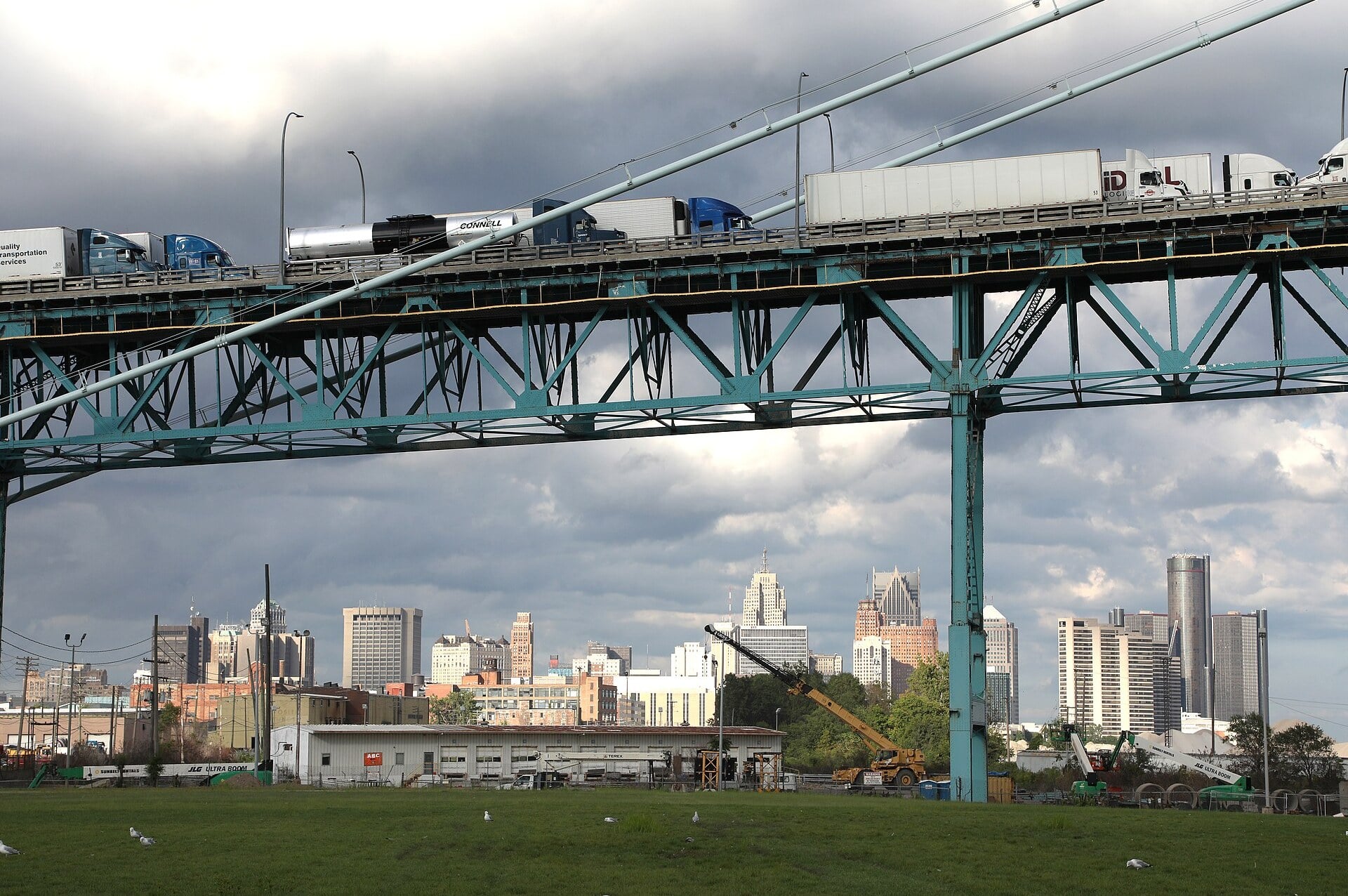
North America’s temper on Friday is brittle and accusatory, with Ottawa treating an American election-interference allegation as a wound to its sovereignty and Washington treating Canadian diplomacy as a campaign-season provocation. The same hours show Canada hardening its enforcement of industrial commitments against an American owner, signalling that the dispute is no longer confined to trade policy but is spreading into ownership, aid and diplomatic conduct.
The register is formal and defensive, with Prime Minister Mark Carney rejecting the allegations from Turkey while Canadian diplomats are quietly instructed to avoid appearing with US midterm candidates. Leaders speak of normal activity and unsubstantiated claims, but their actions, curtailed contacts, a ultimatum to Cleveland-Cliffs, and a search for European and Turkish alternatives, reveal a government preparing for a longer estrangement.
The through-line is that Canada is converting American pressure into a test of its own sovereignty, enforcing its rules at home while seeking new partners abroad. Washington’s election-season sensitivity and Ottawa’s defensive diversification are feeding each other, leaving businesses and diplomats to navigate a relationship in which routine contact can be recast as interference and ownership as leverage.
Key Facts
Interference allegation. The US Embassy alleged Canadian officials tried to influence the 3 November midterm elections.
Diplomatic restrictions. Canadian diplomats must avoid US midterm candidates until 3 November.
Stelco ultimatum. Ottawa gave Cleveland-Cliffs a deadline to protect Stelco jobs.
Trade talks stalled. Janice Charette said there is no timeline for formal negotiations to resume.
Carney in Turkey. The prime minister is pursuing diversification during a three-day visit.
Ottawa: Denial And Diplomatic Caution
Carney’s rejection of the US Embassy’s allegations as unsubstantiated, delivered from Turkey on Friday, projects confidence but cannot hide the caution now shaping Canadian diplomacy. Global Affairs Canada has told embassy and consular staff to avoid meetings, public appearances and photographs with US midterm candidates until 3 November, a restriction that treats ordinary political contact as a liability.
For a US reader, the episode shows how quickly a close ally can be pulled into the gravitational field of an American election. Ottawa is simultaneously denying wrongdoing and instructing its diplomats to behave as if the accusation could stick, a posture that reveals the asymmetry of power in the relationship.
Washington: Sovereignty As The Midterm Frame
The US Embassy’s fact sheet and the reported warning from Ambassador Pete Hoekstra have turned Canadian advocacy into a campaign-sensitive issue, with Washington treating foreign contact as potential interference. The allegation lands in a political environment already primed for sovereignty-first messaging ahead of the 3 November midterms.
The significance for a US reader is that the administration is extending its electoral-sovereignty frame from domestic voting enforcement to allied diplomacy. Canada’s denial and the curtailment of its diplomatic activity show that even a G7 partner is adjusting its behaviour to avoid becoming a midterm storyline.
Ontario: Industrial Sovereignty And The Stelco Test
Industry Minister Mélanie Joly’s ultimatum to Cleveland-Cliffs over its Stelco jobs commitments marks a harder Canadian line on foreign ownership. Ottawa could seek court-ordered remedies, potentially including forced divestiture of control, a step that would have been unthinkable in a more trusting bilateral climate.
The Stelco case reveals a government willing to enforce industrial conditions on American capital even as trade talks remain frozen. For a US reader, it signals that Canadian economic nationalism is no longer rhetorical; it is being operationalised through legal threats and ministerial deadlines.
Turkey And Europe: Diversification As Defence
Carney’s three-day visit to Turkey, which runs from Wednesday 21 October with talks in Ankara on Thursday and in Istanbul on Friday, is the most visible expression of Ottawa’s diversification strategy. The prime minister is seeking alternatives to American dependence while simultaneously managing a diplomatic crisis with Washington.
Secretary of State for International Development Randeep Sarai’s comments on closer cooperation with the European Union on aid, including leveraging private capital, point in the same direction. For a US reader, these moves suggest that Canada is building a more multipolar foreign policy, not merely reacting to the tariff dispute but restructuring its partnerships.
Ottawa: Aid Scrutiny And Domestic Pressure
The House finance committee’s reported scrutiny of aid allocations, including the finding that 17% of assistance supported refugees inside Canada, shows foreign policy becoming a domestic political issue ahead of the 5 November 2026 federal budget. The debate pits overseas development commitments against the visible cost of supporting displaced people at home.
For a US reader, the aid story illustrates how economic pressure and domestic politics are compressing Canada’s international ambitions. The government is trying to maintain a global role while answering to voters who see refugee costs and foreign aid as competing priorities.
What This Means From Latin America
Canada’s turn toward Turkey and the European Union, combined with its enforcement of industrial conditions on American capital, could open space for Latin American partnerships in trade, investment and supply-chain diversification. The Stelco case also signals that Ottawa is willing to scrutinise foreign ownership more aggressively, a precedent that could affect how Canadian capital behaves in the hemisphere.
The US Embassy’s election-interference allegations against Canada show how Washington’s sovereignty frame can be applied to any foreign government’s political activity, including lobbying and diaspora engagement from Latin American states. Governments in the region should expect heightened sensitivity around their own contacts with American politicians during the midterm period.
What We Are Watching
- Friday 23 October, 8:30 a.m. ET: Canada retail sales — August forecast 4.9% against 5.1% prior; a measure of household demand under tariff and price pressure.
- Friday 23 October, 8:30 a.m. ET: Canada retail sales ex autos — August forecast 1.0% against -0.7% prior; a gauge of underlying consumer resilience.
- Friday 23 October, 9:45 a.m. ET: S&P Global US composite PMI — October forecast 57.6 against 58.4 prior; a signal of American private-sector momentum and trade sensitivity.
- Wednesday 28 October, 9:45 a.m. ET: Bank of Canada interest rate decision — forecast 2.5% against 2.25% prior; a decision that follows the industrial package and export pivot.
- Wednesday 28 October, 2:00 p.m. ET: Federal Reserve interest rate decision — forecast 4.00% against 4.00% prior; a test of how the US central bank reads trade-driven inflation risks.
- Tuesday 3 November: US midterm elections — Canadian diplomatic restrictions remain in effect until this date; a potential inflection point for bilateral tensions.
Background: USMCA 2026 Trade Pact Guide.
Background: Oil and Energy in Latin America 2026: A Guide.
Frequently Asked Questions
What is the US Embassy alleging about Canadian politicians?
The US Embassy in Ottawa issued a fact sheet on 21 October 2026 alleging that Canadian officials and politicians were attempting to influence the US midterm elections. Prime Minister Mark Carney rejected the allegations as unsubstantiated and said Canada had no intention of interfering in US democratic processes.
What restrictions has Canada placed on its diplomats?
Global Affairs Canada instructed Canadian embassy and consular staff to avoid meetings, public appearances and photographs with US midterm candidates until 3 November 2026. The guidance was reported by CBC News and The Globe and Mail on 22 October 2026.
What is the Stelco ultimatum about?
Industry Minister Mélanie Joly warned Cleveland-Cliffs to protect jobs at Stelco, the Ontario steelmaker it owns. Ottawa could apply to the Superior Court for remedies, potentially including an order requiring Cleveland-Cliffs to relinquish control of Stelco.
Why is Carney visiting Turkey?
Carney travelled to Turkey for a three-day visit that runs from Wednesday 21 October, with talks in Ankara on Thursday and in Istanbul on Friday, intended to strengthen economic and political relations with the NATO ally and reduce Canada’s dependence on the United States. The visit is part of a broader diversification strategy that includes closer cooperation with the European Union on aid and private capital.
This article was produced by The Rio Times’ automated newsroom system. How we use AI · Report an error · Editorial responsibility: Matthias Camenzind, Editor-in-Chief